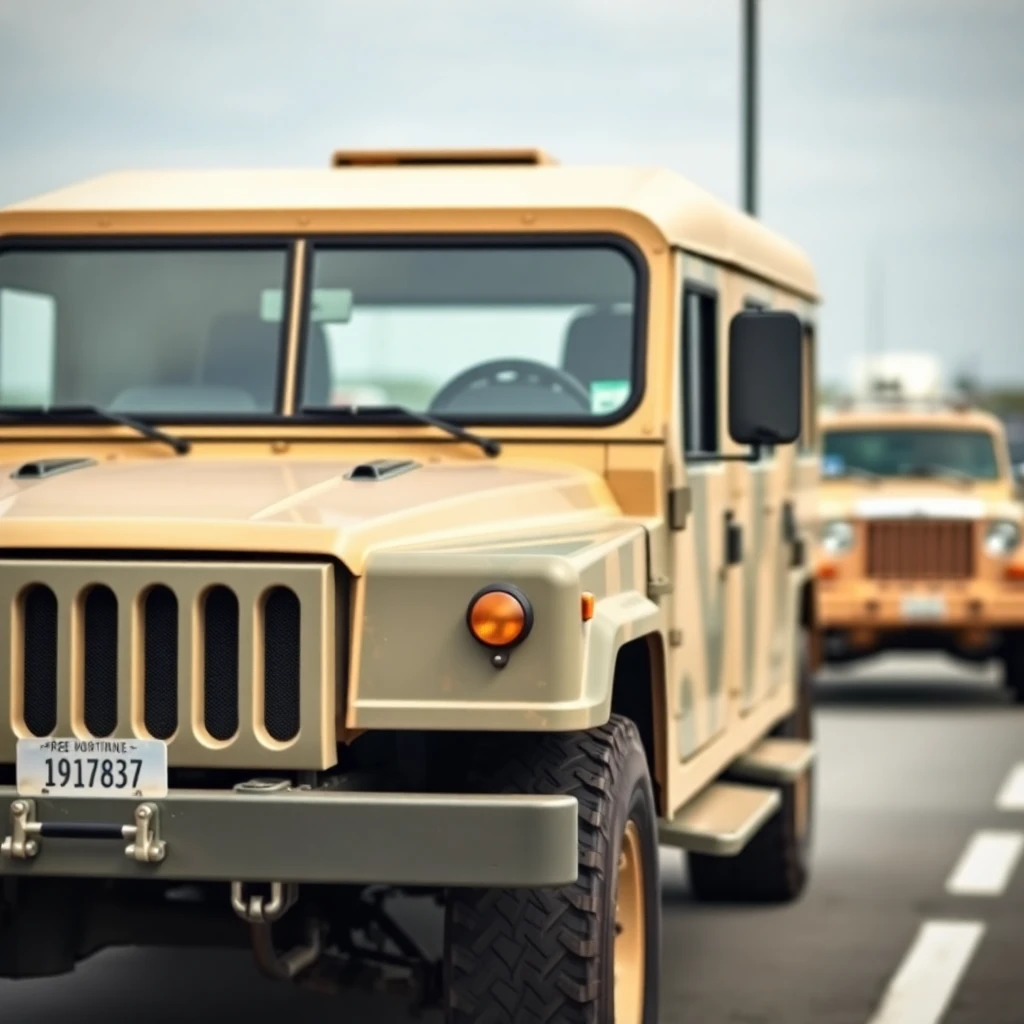
DOT requirements for military vehicles are the first wall most new HMMWV and surplus truck owners run into after taking delivery. The vehicle you just bought was built for the battlefield, not the boulevard, and federal and state transportation standards do not automatically grandfather it into street-legal status. Understanding exactly what applies, what does not, and where the real compliance gaps are will save you time, money, and a registration rejection.
This guide breaks down federal Department of Transportation standards, state-level requirements, and the practical steps owners of HMMWVs, M35 deuce-and-a-halves, M939 five-tons, and other surplus military vehicles need to take before hitting public roads. Whether your unit just left GovPlanet or has been sitting in your yard for years, the path to registration starts with knowing the rules.
Read through the full breakdown below, then reach out to the team at HMMWV Registration when you are ready to move forward.
What Federal DOT Requirements Apply to Military Vehicles?
Federal Motor Vehicle Safety Standards, administered by the National Highway Traffic Safety Administration under the DOT umbrella, were written for civilian vehicles entering commerce. Surplus military vehicles were not manufactured to FMVSS standards because they were government fleet assets, not commercially sold consumer products. That distinction matters enormously when you are working through registration.
Are Military Vehicles Exempt from FMVSS?
In most cases, yes. Vehicles manufactured for military use were produced under military specification contracts, not FMVSS compliance frameworks. NHTSA does not retroactively require military surplus vehicles to be brought into full FMVSS compliance simply because they have been transferred to civilian ownership. However, that federal exemption does not automatically carry over to state registration and road-use rules. States set their own street-legal equipment requirements, and that is where the compliance work actually happens.
Where the DOT Label Question Comes Up
Some states and some county clerks will ask whether your military vehicle has a DOT-compliant VIN plate and safety certification sticker. Most HMMWVs, deuce-and-a-halves, and five-tons carry a National Stock Number and a Vehicle Identification Number assigned by the military, but not a NHTSA certification label. That is normal. It does not mean the vehicle is unregisterable. It means your documentation path, specifically the SF-97 or DD-1348, carries more weight than a manufacturer's certificate of origin would for a civilian unit. For a thorough look at those documents, see our guide to military surplus vehicle SF-97 title documentation, which explains exactly what the SF-97 covers and why it substitutes for a standard title.
Commercial Vehicle DOT Numbers and Military Rigs
If you are operating a surplus military truck commercially, such as an M939 or M35 used for hauling, you may need a USDOT number under Federal Motor Carrier Safety Administration rules. Gross Vehicle Weight Rating thresholds trigger this requirement. Vehicles over 10,001 pounds GVWR used in interstate commerce generally fall under FMCSA jurisdiction. Most privately owned HMMWVs used for personal transport or off-road recreation do not cross that threshold into commercial operation. Know your use case before you assume you are clear.
State-Level Street-Legal Equipment Requirements for Military Vehicles
This is where the real work is. DOT requirements for military vehicles at the state level are actually collections of individual equipment mandates, each of which your surplus unit may or may not meet from the factory. Every state has its own list, but most share a core set of requirements.
Ready to register your vehicle?
Join thousands of vehicle owners who use HMMWV Registration to handle their registration quickly.
Get Started →Lighting and Reflector Standards
Military vehicles were built with combat lighting configurations that do not always match civilian road standards. Common gaps include:
- Headlights that do not meet civilian beam pattern or candela output requirements
- Missing or non-compliant turn signals and hazard flashers
- Brake lights that do not meet civilian activation standards
- Absent or non-standard reflectors on front, rear, and sides
Most HMMWV owners address these with civilian-spec replacement headlight assemblies and a basic wiring upgrade for turn signals and brake lights. For a complete breakdown of what modifications are typically required, see our full guide on humvee street legal modifications.
Braking System Requirements
Military vehicle braking systems are generally built to high performance standards and are rarely the primary compliance concern. However, some states require a brake inspection or certification as part of registration. If your HMMWV or truck has been sitting, brake line condition, wheel cylinder integrity, and booster function should be confirmed before any inspection. The M35 and M939 air brake systems require additional attention since most states treat air-braked vehicles differently than hydraulic systems, and CDL rules may apply to operators depending on the platform.
Mirrors, Windshield, and Wipers
Driver and passenger side mirrors meeting minimum field-of-view requirements are mandatory in virtually every state. Most military vehicles were configured with mirrors, but the mounts and glass may need replacement after decades of service. Windshield glass that is cracked, missing, or not DOT-rated will fail inspection in states that require it. Wiper systems need to be functional and clear the driver's field of vision adequately. These are straightforward fixes, but they matter at inspection time.
DEMIL Status and How It Affects Registration Eligibility
Before DOT compliance, there is a more fundamental question: is your vehicle eligible for civilian street use at all? DEMIL, or demilitarization, classification determines what can legally be transferred to civilian hands and in what condition. Most surplus HMMWVs sold through GovPlanet and other DLA disposal channels are DEMIL Code B or Q, meaning they are released for civilian ownership after specific modifications, usually the removal of weapons mounts, fire suppression systems, or other controlled components.
What DEMIL Code Means for Your Title
A vehicle that has been properly DEMIL'd and released will come with an SF-97 or a DD-1348-1A transfer document. That paperwork is your proof of civilian release. Without it, states will not issue a title. The SF-97 is the Certificate to Obtain Title to a Vehicle, the document that substitutes for a Manufacturer's Certificate of Origin in the military surplus world. If you purchased your vehicle and received only a DD-1348, that document can serve as title support in many states, but the path is more complex. See our detailed comparison in DD-1348 vs SF-97 military vehicle documents, which do you need for a side-by-side breakdown of how each document works in the registration process.
Armed Vehicle Variants and Registration Restrictions
Certain HMMWV variants, including M1025 and M1026 armament carriers, carry additional documentation scrutiny during title transfer. States want confirmation that weapons systems and controlled components have been removed and documented. Our guide on M1025 M1026 HMMWV armed military vehicle registration covers the specific steps for these variants in detail.
Summary: DOT and State Requirements by Vehicle Type
| Vehicle | Federal FMVSS Exempt? | Common State Requirements | DEMIL Docs Needed? | CDL May Apply? |
|---|---|---|---|---|
| HMMWV / M998 | Yes | Lights, signals, mirrors, wipers | Yes (SF-97 or DD-1348) | No (typically under CDL threshold) |
| M35 Deuce-and-a-Half | Yes | Lights, air brakes, mirrors, DOT number if commercial | Yes | Possibly (GVWR dependent) |
| M939 Five-Ton | Yes | Air brakes, lights, signals, DOT number likely required | Yes | Often yes (GVWR over threshold) |
| M1025 / M1026 | Yes | Lights, signals, weapons removal documented | Yes, with DEMIL verification | No (typically) |
| M1097 Heavy HMMWV | Yes | Lights, signals, mirrors, possible weight permits | Yes | No (typically) |
Registration Strategy: Montana LLC and the Military Vehicle Advantage
Once your vehicle clears the equipment and documentation hurdles, the registration question becomes where and how to title it for maximum advantage. Montana LLC registration is widely used by military vehicle owners because Montana has no sales tax, no emissions testing requirement, and no annual inspection mandate at the state level. That combination cuts thousands of dollars off the cost of titling a high-value HMMWV or surplus truck compared to registering in a high-tax state.
How Montana Registration Works for Military Vehicles
A Montana LLC is formed to hold the vehicle. The LLC registers the vehicle in Montana. The owner receives Montana plates and title with no sales tax paid on the purchase price, regardless of where the owner lives. The process is fully remote and works for owners in all 50 states. For a full walkthrough of the process from GovPlanet auction win to Montana plates in hand, see our guide to GovPlanet HMMWV auction to Montana plates complete walkthrough.
South Dakota as an Alternative
South Dakota offers a parallel path for owners who want a straightforward state registration without forming an LLC. SD has low fees, no state income tax, and a remote paperwork support process that works well for military vehicles with clean SF-97 documentation. Our full comparison between the two approaches is available in South Dakota vehicle registration vs Montana comparison.
State-Specific Inspection Rules Still Apply
Montana registration does not eliminate your home state's road-use rules. If you drive the vehicle in your state, you still need to meet that state's equipment requirements. Montana registration handles the title and plates. Your local street-legal compliance handles the right to operate the vehicle on public roads where you live. For a state-by-state breakdown of what equipment is required, see the HMMWV street-legal conversion checklist, state by state.
VIN Verification and Inspection for Military Vehicles
Many states require a physical VIN inspection before issuing a title to a surplus military vehicle. This is separate from a safety inspection. The VIN inspection confirms the number on the vehicle matches the number on the transfer documents. Military VINs are formatted differently than civilian VINs and some inspectors are unfamiliar with the format. Knowing this in advance prevents unnecessary delays.
What Happens at a VIN Inspection
An authorized inspector, often a state trooper, DMV officer, or licensed dealer, physically views the VIN plate, records the number, and certifies it matches your SF-97 or DD-1348. If the numbers match and your documents are in order, the inspection is typically straightforward. If there is a discrepancy or if the VIN plate has been damaged or replaced during military service, additional documentation may be required. Our FAQ on VIN verification for military vehicles covers the most common issues and how to address them.
Emissions Exemptions for Military Vehicles
Most states that have emissions testing programs exempt vehicles over a certain age or over a certain weight from mandatory testing. Military vehicles often Eligible for both exemptions simultaneously. Diesel-powered HMMWVs and trucks are also frequently handled under different rules than gasoline vehicles in states that do test. For a complete look at how emissions rules apply to surplus military vehicles, see our resource on emissions requirements for military vehicles.
Frequently Asked Questions: DOT Requirements for Military Vehicles
Do military vehicles need to pass a DOT inspection before being registered?
The term DOT inspection covers several different things. For registration purposes, most states require a VIN inspection and in some cases a safety equipment inspection, not a federal DOT inspection. Federal DOT inspections apply to commercial motor vehicles operated in interstate commerce. Most privately owned HMMWVs and surplus trucks used for personal or recreational purposes are not subject to mandatory federal DOT inspection cycles. Check your state's specific requirements before registering.
Can I drive a surplus military vehicle on public roads?
Yes, in most states, after proper titling and registration and after bringing the vehicle into compliance with state street-legal equipment requirements. The specific modifications required vary by state but typically include functioning turn signals, brake lights, mirrors, and DOT-compliant headlights. Some states have additional requirements for vehicles over certain weights. Our resource on military vehicle street legal requirements covers what is typically needed nationwide.
Is a HMMWV subject to commercial vehicle DOT regulations?
A standard M998 or M1097 HMMWV used for personal transportation is not typically subject to commercial vehicle DOT regulations. The GVWR of most HMMWV variants falls below the 10,001-pound threshold that triggers FMCSA commercial vehicle requirements when used in non-commercial operation. If you use the vehicle commercially or operate it across state lines as a for-hire vehicle, different rules may apply. Consult a transportation compliance professional if your use case is commercial.
What documents replace the Manufacturer's Certificate of Origin for military vehicles?
The SF-97, Certificate to Obtain Title to a Vehicle, is the primary substitute for an MCO in military surplus vehicle titling. It is issued by the government when a vehicle is transferred to civilian ownership. The DD-1348-1A is a secondary transfer document that can support titling in many states but may require additional steps. Both documents are explained in full in our guide to SF-97 form military vehicle title documentation.
Do I need a CDL to drive an M35 deuce-and-a-half or M939 five-ton on public roads?
Possibly. CDL requirements are triggered by GVWR thresholds and by the type of operation. For non-commercial personal use, many states do not require a CDL to operate a vehicle over 26,001 pounds GVWR. For commercial use or for operating a vehicle with air brakes for the first time, CDL endorsements may apply. Rules vary by state. Check with your state DMV and review your vehicle's GVWR against your state's CDL threshold before operating. For M35-specific guidance, see our M35 deuce-and-a-half street-Montana registration guide.
Does Montana registration exempt me from my home state's vehicle equipment laws?
No. Montana registration handles the title, plates, and no-sales-tax benefit. It does not override your home state's rules about what equipment a vehicle must have to be operated on public roads. You are still responsible for bringing your military vehicle into compliance with your state's lighting, braking, and signaling requirements before driving it on public streets. Montana registration and home-state compliance are separate issues that both need to be addressed.
How do I find out what my state specifically requires for military vehicle registration?
The best starting points are your state DMV's published requirements for specially constructed or non-standard vehicles, your state's vehicle code covering antique or military vehicle exemptions, and a specialist registration service that handles military surplus vehicles regularly. Our complete guide to how to register a military vehicle in the USA covers state-by-state variation in a single resource.
Are there weight restrictions for military vehicles on public roads?
Yes. Most states have posted weight limits for roads and bridges, and these apply to military vehicles the same as any other vehicle. The M939 five-ton and similar heavy platforms can exceed posted limits on local roads. Overweight permits are available in most states for occasional movement of heavy vehicles. For routine road use, you will need to plan routes that stay within posted limits or obtain the appropriate permits. The M939 five-ton military truck Montana registration guide addresses weight considerations in detail.
Get Your Military Vehicle Properly Registered
DOT requirements for military vehicles are manageable when you know what actually applies to your platform and your state. Federal FMVSS exemptions cover most of the big-ticket compliance concerns, and the real work happens at the state level with lighting, braking, mirrors, and proper transfer documentation. The SF-97 or DD-1348 clears the title hurdle. The equipment upgrades clear the road-use hurdle. And a Montana LLC registration clears the sales tax hurdle, often saving thousands of dollars on high-value military platforms.
HMMWV Registration handles the full process for owners of HMMWVs, deuce-and-a-halves, five-tons, and other surplus military vehicles across all 50 states. Our team knows the documents, knows the state requirements, and knows the registration paths that work. Reach out through the contact page and tell us what you have and where you are. We will map out the right approach for your vehicle.