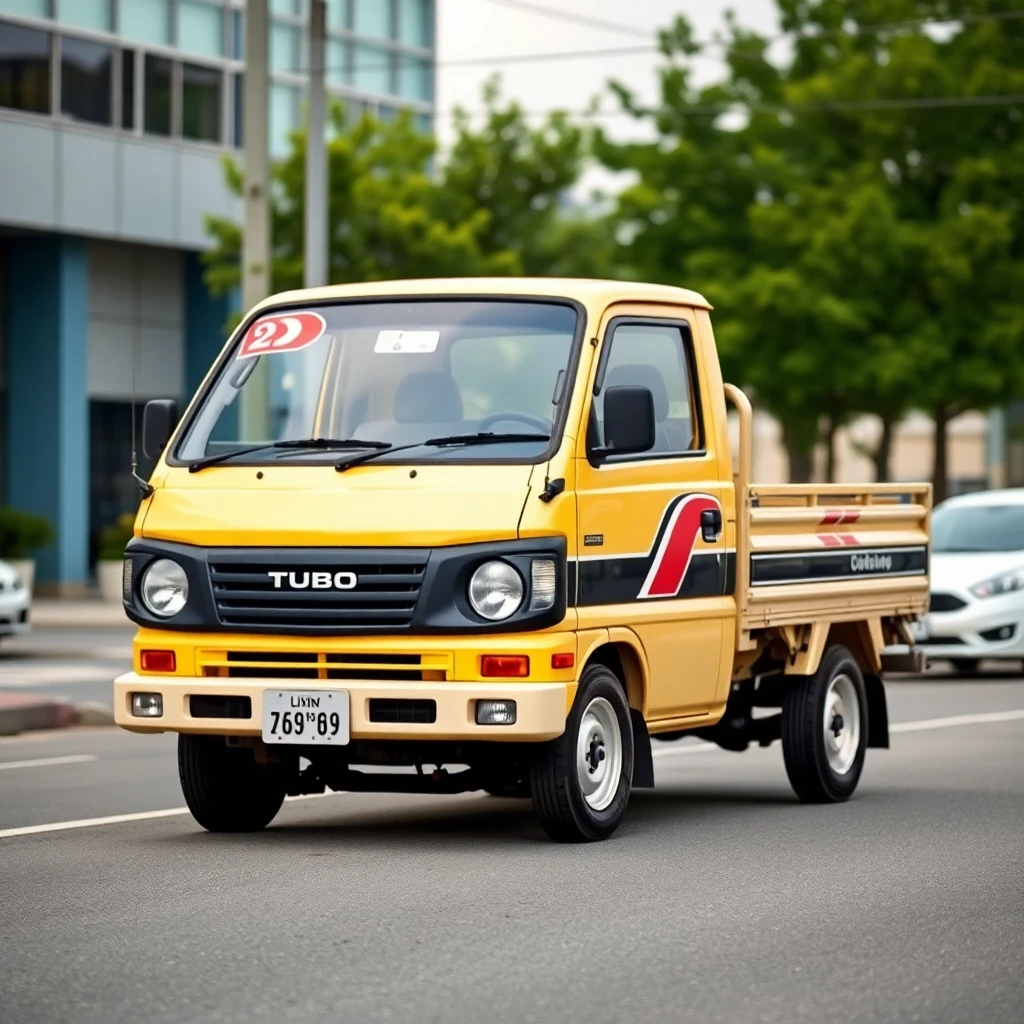
Japanese kei truck import registration trips up more buyers than almost any other vehicle category. You found a clean Subaru Sambar, Honda Acty, or Daihatsu Hijet, got it shipped stateside, and now you are staring at a stack of Japanese auction documents wondering what comes next. This guide walks you through every stage, from customs clearance to plates, so you know exactly what to expect.
Kei trucks occupy a unique space in American vehicle ownership. They are not cars, not UTVs, and not standard commercial trucks. That gray area creates real paperwork friction at the state DMV level. The good news is that Montana LLC registration cuts through most of that friction, eliminating sales tax and bypassing emissions testing in states that would otherwise reject your import outright.
By the time you finish reading, you will understand the 25-year import rule, what documents you need from Japan, how to assign a VIN, which states are friendliest to mini trucks, and how to get registered without ever visiting a DMV in person.
Understanding the 25-Year Import Rule for Kei Trucks
The foundation of Japanese kei truck import registration in the United States is the 25-year rule administered by the National Highway Traffic Safety Administration (NHTSA) and U.S. Customs and Border Protection. Vehicles that are 25 years old or older are exempt from Federal Motor Vehicle Safety Standards (FMVSS), meaning they can enter the country without costly safety modifications.
Most kei trucks hitting the market right now, especially early-1990s Honda Acty and Suzuki Carry models, clear this threshold easily. Anything built before the current year minus 25 qualifies. Newer models require FMVSS compliance modifications that typically cost more than the truck itself, so buyers almost always target 25-year-plus examples.
What Documents Come With the Vehicle From Japan?
When your kei truck arrives from Japan, the shipper typically provides a set of Japanese auction documents or export certificates. The key document is the Japanese Vehicle Export Certificate, sometimes called the Deregistration Certificate or shakken paperwork. This is your proof of prior foreign registration and serves a similar function to a title in the American system.
You will also need the Bill of Lading from the shipping company, the CBP Form 7501 (Entry Summary) from U.S. Customs, and EPA Form 3520-1 confirming the vehicle qualifies for import. Keep originals of all of these. State DMVs and Montana title processors will need copies to establish clean ownership history.
Does Your Kei Truck Need a U.S.-Assigned VIN?
Japanese kei trucks carry JDM VINs that do not conform to the 17-character NHTSA standard used in the United States. Most states will not process a registration without a compliant VIN. In many cases, the state DMV will assign a new VIN after a physical inspection. Montana handles this through a county-level process, and several other low-friction states do the same.
For military vehicle owners who have worked through VIN assignment before, the process feels familiar. If you want a breakdown of how VIN inspections work across different vehicle types, the VIN inspection military vehicle state requirements guide covers the core mechanics, and most of that logic applies directly to imported kei trucks as well.
Customs Clearance and EPA/DOT Compliance for Mini Trucks
Before your kei truck ever touches a U.S. road, it must clear two federal agencies: the EPA and the DOT (operating through NHTSA). For a 25-year-plus vehicle, both processes are straightforward but paperwork-intensive.
Ready to register your vehicle?
Join thousands of vehicle owners who use HMMWV Registration to handle their registration quickly.
Get Started →The EPA exemption (Box 1 on Form 3520-1) covers vehicles 21 years or older from their model year. DOT NHTSA exemption covers vehicles 25 years or older. If your truck straddles the line, you may need an EPA exemption but not yet a DOT exemption, or vice versa. Check the model year carefully before shipping.
Working With a Licensed Customs Broker
Most buyers use a licensed customs broker to handle CBP entry at the port. The broker files the entry summary, coordinates with the port inspector, and makes sure your Forms 3520-1 and HS-7 are completed correctly. Broker fees typically run $200 to $500 depending on port and complexity. This is money well spent. A paperwork error at customs can hold your truck at the port for weeks.
State-Level Compliance After Customs
Clearing federal customs does not mean your state will register the vehicle automatically. Each state has its own rules about what documents are required to issue a title to a foreign-origin vehicle. High-friction states like California require additional smog and safety inspections that a kei truck, even a federally exempt one, may struggle to pass. This is one of the primary reasons buyers choose Montana LLC registration instead.
Montana LLC Registration: The Smart Path for Kei Truck Owners
Montana has no sales tax. Full stop. On a $12,000 kei truck, that saves you $600 to $1,200 compared to registering in a 5-10% sales tax state. Montana also has no emissions testing requirement and no mandatory safety inspection at the state level for registered vehicles. For an imported Japanese mini truck that was never built to U.S. emissions standards, this matters enormously.
The mechanism is a Montana LLC. You form a single-member LLC through the Montana Secretary of State, then title and register the vehicle under that LLC. The truck gets Montana plates. You drive it in your home state. Montana registration is valid nationwide, and the plates are recognized in all 50 states.
This is the same approach used by HMMWV owners, RV buyers, and exotic car collectors who want to avoid punishing sales tax bills. The Montana LLC vehicle registration benefits page covers the full financial and practical case if you want to run the numbers on your specific situation.
What the Montana Title Process Looks Like for an Import
Montana titles imported vehicles by treating the foreign export certificate as the equivalent of a prior title. The county treasurer's office processes the application, assigns a Montana title, and issues registration. You do not need a state-assigned VIN in Montana the same way high-friction states demand one, which removes a major barrier for JDM vehicle owners.
The typical document package for a Montana kei truck title application includes:
- Japanese Vehicle Export Certificate (original or certified copy)
- CBP Form 7501 (U.S. Customs Entry Summary)
- EPA Form 3520-1 (signed exemption)
- NHTSA HS-7 Declaration Form
- Bill of Lading from the shipping company
- Montana LLC formation documents
- Completed Montana title application
South Dakota as an Alternative
South Dakota offers another path for owners who want to establish a physical-presence registration rather than an LLC-based one. South Dakota has no state income tax, low registration fees, and a straightforward title process for foreign vehicles. It works best for owners who are willing to establish South Dakota residency or who have a legitimate presence there. For a side-by-side look at both options, the South Dakota vehicle registration vs Montana comparison breaks down the key differences.
| Factor | Montana LLC | South Dakota Residency | Home State DMV |
|---|---|---|---|
| Sales Tax | None | None | Varies (0-10%+) |
| Emissions Test Required | No | No | Often yes |
| VIN Assignment Required | Typically no | May be required | Usually yes |
| Physical Presence Required | No | Yes (residency) | Yes |
| Remote Processing Available | Yes | Limited | Rarely |
| Works for Non-FMVSS Vehicles | Yes | Yes | Often no |
Kei Truck Street-Legal Status by State
Registering your kei truck through Montana is one thing. Operating it on public roads in your home state is another question that depends entirely on state law. The answer varies widely, and getting it wrong can mean an unregistered-vehicle citation even with valid Montana plates.
Most states permit road use for registered kei trucks as long as the vehicle has functioning headlights, taillights, brake lights, turn signals, mirrors, and a horn. The specific equipment list varies. A handful of states impose speed restrictions, limiting mini trucks to roads with posted limits of 35 or 45 mph. A few states are more permissive and impose no additional restrictions beyond standard registration.
States That Are Most Friendly to Mini Trucks
States with active agricultural communities tend to be the most permissive. Kansas, Nebraska, Wyoming, Montana, Idaho, and several southeastern states have either explicit mini truck provisions or simply apply standard vehicle laws without additional restrictions. Urban states like California, New York, and New Jersey are more restrictive and may limit kei trucks to specific road types.
The sister brand resource on whether kei trucks are street-legal provides a detailed breakdown of state-by-state rules and equipment requirements worth reviewing before you start driving.
Equipment Modifications That Help With Street-Legal Status
Most kei trucks come from Japan with JDM-spec lighting that is close to but not identical to U.S. DOT standards. Adding DOT-approved headlight assemblies, replacing JIS metric lug nuts with U.S.-standard hardware, and confirming your turn signals are amber rather than clear goes a long way toward satisfying state equipment inspections. A rear view mirror and working speedometer in mph are also commonly required.
If you have worked through street-legal conversion on a military vehicle, the equipment checklist logic is similar. The HMMWV street legal conversion checklist state by state gives you a model for how to approach the state-by-state equipment question methodically.
The Registration Process: Step by Step
Here is the full sequence for completing Japanese kei truck import registration through Montana, from the moment your truck clears customs to the day your plates arrive.
- Gather customs documents at the port of entry. Collect Form 7501, Form 3520-1, HS-7, and your Bill of Lading before the truck leaves the port.
- Form your Montana LLC through the Montana Secretary of State. This can be done online and typically takes 3-7 business days. See the official Montana Secretary of State business registration portal for current filing requirements.
- Prepare your title application package including the Japanese export certificate, all customs forms, and your LLC formation documents.
- Submit the application to the appropriate Montana county treasurer. This can be done by mail or through a registered agent service, so you never have to travel to Montana.
- Receive your Montana title typically within 4-8 weeks depending on county workload and document completeness.
- Receive your Montana registration and plates once the title is issued. Plates are mailed directly to you.
- Maintain your LLC annually by filing the Montana LLC annual report each year by April 15. Registration renewal is handled at the same time. More on that process in the Montana LLC annual renewal vehicle registration guide.
The entire process can be completed remotely. You do not need to visit Montana, hire a local agent in person, or take time off work. That is one of the primary operational advantages of this approach.
Frequently Asked Questions: Japanese Kei Truck Import Registration
Can I import a kei truck that is less than 25 years old?
Yes, but it is complicated and expensive. Vehicles under 25 years old must meet FMVSS safety standards to receive DOT clearance. Bringing a JDM kei truck into compliance typically requires modifications that cost more than the vehicle itself. Most importers stick strictly to 25-year-plus examples to use the NHTSA age exemption. The EPA age exemption kicks in at 21 years for emissions, so there is a short window where EPA exemption applies but DOT exemption does not. Confirm both before purchasing a vehicle from Japan.
Do I need a VIN assigned by a U.S. state to register my kei truck?
It depends on the state. Montana typically processes imported vehicle titles without requiring a U.S.-format VIN reassignment, which is a major reason owners choose Montana for kei truck registration. Other states require a physical VIN inspection and may assign a new 17-character VIN before issuing a title. If you register through Montana first, you establish a clean title that other states often accept when transferring registration later, though rules vary by state.
How much does Montana kei truck registration cost?
Montana LLC formation runs approximately $70 in state filing fees. Registration fees depend on the vehicle's declared value and age. Older kei trucks typically fall into lower fee brackets. Montana charges no sales tax, which is the primary financial advantage. Service fees for a registered agent or title processing service vary by provider. Total first-year costs including LLC formation and registration typically land in the $300-$600 range depending on the vehicle value and service provider chosen, significantly less than sales tax alone in most states.
Can I insure a kei truck registered in Montana if I live in another state?
Yes, and this is a common arrangement. Most specialty vehicle insurers and some standard insurers will write coverage on a Montana-registered kei truck for an owner in another state. You will typically need to disclose the LLC ownership structure. Coverage may be written as a commercial or specialty vehicle policy depending on the insurer. Shop with insurers familiar with imported and specialty vehicles rather than standard personal auto carriers, who often decline non-standard registrations.
Is it possible to register my kei truck directly in my home state instead of Montana?
Possibly, but the process is much harder in most states. You will typically need to complete a VIN inspection, provide all customs documentation, pay state sales tax, and in some states pass an emissions or safety inspection. States like California impose strict smog requirements that older JDM engines often cannot meet without costly modifications. Montana registration avoids all of these barriers. If you prefer home-state registration and your state is permissive, confirm the exact document requirements with your DMV before proceeding.
What happens to my Montana registration when I sell the kei truck?
When you sell the vehicle, the Montana LLC that holds the title transfers ownership to the buyer. This is handled through a standard title transfer process at the Montana county level. The buyer can either take over the LLC structure, purchase the vehicle out of the LLC (triggering a title transfer), or you can dissolve the LLC after the transfer completes. The title itself is a clean Montana title that conveys like any other state title. Document the sale properly to protect both parties.
Do kei trucks need to pass smog or emissions tests in Montana?
No. Montana has no statewide vehicle emissions testing program. This applies to all registered vehicles regardless of origin. For imported Japanese mini trucks running older carbureted engines, this is a significant advantage. Some Montana counties adjacent to specific air quality areas have historically had local requirements, but these are exceptions rather than the rule. Confirm current local requirements through the Montana Motor Vehicle Division for your specific county.
Ready to Get Your Mini Truck Plated?
Japanese kei truck import registration does not have to be a months-long battle with state bureaucracy. The path through Montana is well-established, fully remote, and available to owners in all 50 states. You skip the sales tax, bypass emissions hurdles, and end up with clean, recognized plates without ever leaving home.
At HMMWV Registration, we handle specialty vehicle titling and registration for owners of military trucks, imported vehicles, UTVs, and everything in between. Our team understands the document requirements for JDM imports, the Montana county title process, and how to get your application right the first time.
Call us at 406-500-8084 or use the contact form to tell us about your truck. We will map out the right registration path for your specific vehicle and situation.