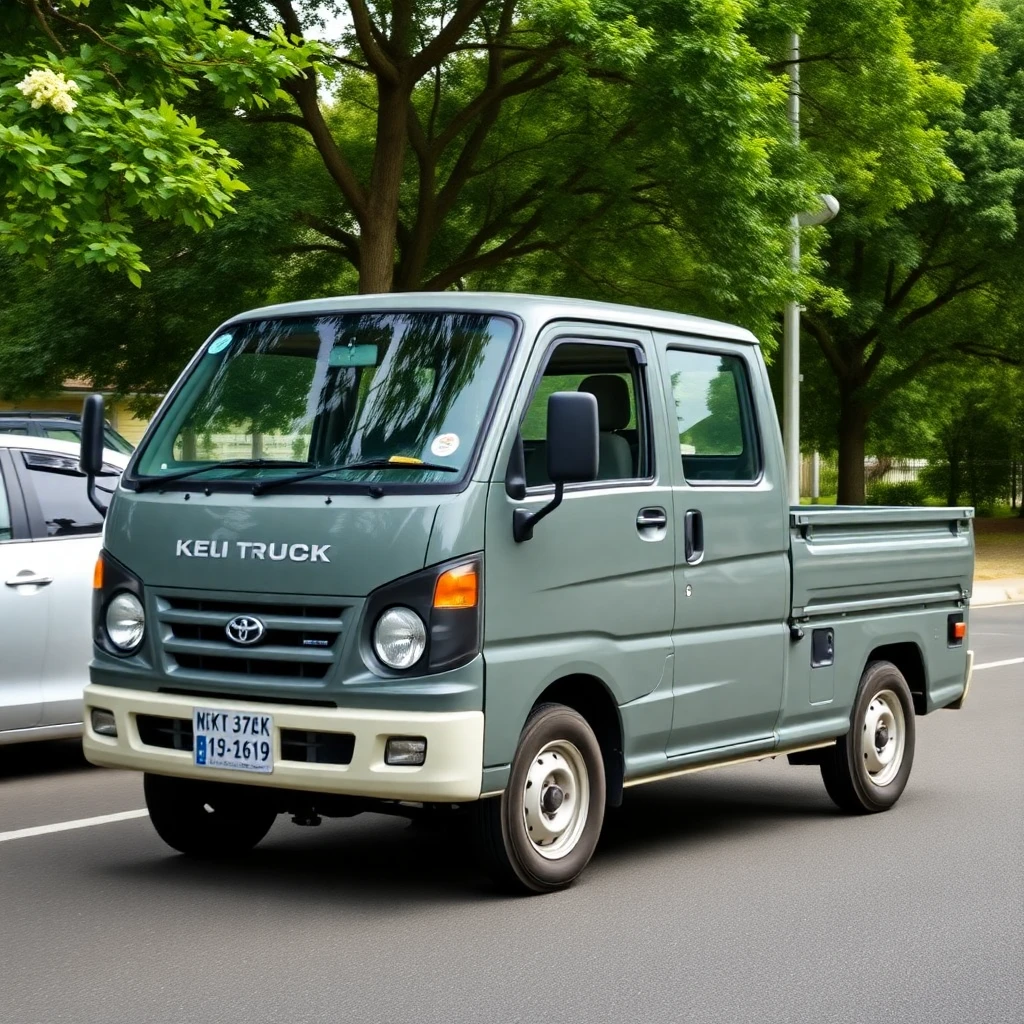
Kei truck registration is one of the most frequently misunderstood processes in the imported vehicle world. These compact Japanese mini trucks, including the Suzuki Carry, Honda Acty, Daihatsu Hijet, and Subaru Sambar, are built to Japanese domestic market specs that do not always line up with U.S. state DMV requirements. The result: owners get stuck, titles go missing, and trucks sit unregistered in driveways.
This guide cuts through the confusion. You will find out exactly which documents you need, which states are easiest to work through, and why a Montana LLC registration is the path most kei truck owners choose when their home state creates obstacles. Whether you bought your truck at auction, imported it directly, or picked it up from a dealer, this is where you get your answers.
Read on for a direct breakdown of the kei truck registration process, state-by-state realities, and what to do when your paperwork does not fit a standard DMV form.
What Makes Kei Truck Registration Different from Standard Vehicle Registration
Kei trucks are purpose-built for Japan's domestic market under the Japanese government's keijidosha standards. Engine displacement is typically under 660cc, dimensions are tightly controlled, and the vehicles were never built to meet U.S. Federal Motor Vehicle Safety Standards (FMVSS). That gap is what causes headaches at the DMV.
Why Most Kei Trucks Lack a Standard U.S. Title
When a kei truck is imported, it typically arrives with a Japanese export certificate or a Manufacturer Certificate of Origin (MCO), not a U.S.-style title. Some states accept these documents directly. Others require a bill of sale, a translated export certificate, and a VIN inspection before they will issue a title. A small number of states will simply turn you away at the counter.
The 25-Year Import Rule and What It Means for Registration
Under federal law, any vehicle 25 years or older is exempt from FMVSS compliance requirements for importation. Most kei trucks being registered today easily clear this threshold, since trucks from the late 1990s and early 2000s are now eligible. Once the vehicle clears U.S. Customs legally, it can be titled in states that accept non-conforming or imported vehicles, though not all states handle this the same way.
VIN Challenges on Imported Mini Trucks
Japanese domestic market vehicles do not have a standard 17-digit VIN. Many kei trucks carry a shorter chassis number assigned by the manufacturer. Some states will accept this number as-is, some require a VIN assignment from law enforcement or a certified inspector, and others will reject the vehicle at the title stage entirely. Knowing your state's policy before you show up at the DMV saves significant time.
State-by-State Reality: Where Kei Truck Registration Is Easier or Harder
Not every state treats imported kei trucks the same way. The registration experience can vary from a straightforward single-visit process to months of back-and-forth with the DMV. Understanding the landscape before you start saves real time and money.
Ready to register your vehicle?
Join thousands of vehicle owners who use HMMWV Registration to handle their registration quickly.
Get Started →States With Flexible Import Title Policies
States like Montana, South Dakota, Oregon, and Vermont have historically been more flexible with imported and non-standard vehicles. Montana in particular has no emissions testing requirement and no mandatory safety inspection for registration. South Dakota offers a similar approach with low fees and a straightforward title process. Both states will work with imported vehicle documentation when properly presented.
States That Create Registration Obstacles
California, New York, Florida, and several other high-population states apply stricter standards to imported vehicles. California's Bureau of Automotive Repair and its Air Resources Board add layers to the process for non-CARB-compliant imports. New York requires a state police VIN inspection. Florida has its own imported vehicle title requirements that can stall the process if your paperwork is not in order. If you live in one of these states, a Montana LLC registration is worth serious consideration.
Montana LLC as a Kei Truck Registration Solution
Registering a kei truck through a Montana LLC is a fully recognized approach used by thousands of imported vehicle owners across all 50 states. Montana has no sales tax, no emissions inspections, and accepts imported vehicle documentation more consistently than most states. The LLC holds title to the vehicle, Montana issues the plates, and the owner operates the truck in their home state under Montana registration. This is not a workaround. It is a recognized structure under Montana law, and it works well for kei trucks, military vehicles, RVs, and other non-standard registrations alike.
For a side-by-side look at how Montana compares to South Dakota for this type of registration, see South Dakota Vehicle Registration vs Montana Comparison, which breaks down fees, timelines, and best-fit scenarios for each state.
| State | Accepts Import Docs | Emissions Required | VIN Inspection Required | Sales Tax |
|---|---|---|---|---|
| Montana | Yes | No | No (in most cases) | None |
| South Dakota | Yes | No | Yes | 4% |
| Oregon | Case by case | Yes (metro areas) | Yes | None |
| California | Restricted | Strictly enforced | Yes | 7.25%+ |
| New York | Restricted | Yes | State Police required | 4%+ |
| Florida | With additional docs | No (most counties) | Yes | 6% |
Documents You Need for Kei Truck Registration
Getting your paperwork right is half the battle. The specific documents required depend on your state and how the truck was imported, but the list below covers what is typically needed across most registration paths.
Core Documents for Imported Kei Trucks
- Japanese Export Certificate or MCO: This is the primary ownership document when no U.S. title exists. Have it translated by a certified translator if it is in Japanese.
- Customs Entry Form (CBP Form 7501): Proves the vehicle cleared U.S. Customs ly. Keep the original, as states will often want to see it.
- Bill of Sale: Needed to establish purchase price, which may affect any applicable fees even in states that do not charge sales tax.
- Odometer Statement: Required in most states even for imports. If the odometer reads in kilometers, note that clearly.
- Proof of Insurance: Required before plates are issued in every state.
Additional Documents Some States Require
- EPA and DOT compliance forms (for vehicles under 25 years old)
- VIN assignment paperwork from a state patrol or DMV-authorized inspector
- Translated and notarized copies of Japanese title or registration history
- Importer of Record documentation if a licensed importer handled the entry
What to Do If You Are Missing Documents
Missing documents are common with kei trucks, especially those purchased privately or at auction without full paperwork. Options include a bonded title process, a court-ordered title in some states, or forming a Montana LLC and registering through Montana's more flexible imported vehicle process. If you have already tried your home state DMV without success, the Montana path is likely your next step.
For owners working through non-standard title situations, the process shares similarities with ATV and off-road vehicle registration challenges covered in ATV Registration Without Title Montana LLC, which details how Montana handles vehicles with incomplete or missing title documentation.
The Montana LLC Registration Process for Kei Trucks
The Montana LLC approach is straightforward once you understand the structure. You do not have to live in Montana, own property there, or ever visit the state. The LLC is formed under Montana law, holds title to your kei truck, and receives Montana license plates. The vehicle is then legally operated in your home state.
Step-by-Step: Forming a Montana LLC for Your Kei Truck
- Form the Montana LLC: The LLC is registered with the Montana Secretary of State. This is a standard business formation filing. A registered agent is required in Montana.
- Assign the Vehicle to the LLC: The kei truck is purchased in the name of the LLC, or ownership is transferred to the LLC. The import documents, bill of sale, and customs paperwork are submitted in the LLC's name.
- Apply for Montana Title and Registration: The LLC applies to the Montana Motor Vehicle Division for a title and registration. Montana fees are among the lowest in the country. See the Montana Vehicle Title and Registration page for current fee schedules.
- Receive Montana Plates: Once approved, Montana issues plates that are valid nationwide. The vehicle can be driven in your home state under this registration.
- Maintain the LLC Annually: Montana LLCs require an annual report filed with the Secretary of State. This is a simple compliance step handled by your registered agent or registration service.
Cost Savings on Kei Truck Registration Through Montana
The financial case for Montana is strongest in high-tax states. A kei truck purchased for $8,000 in California would trigger over $600 in sales tax at the state's base rate, plus local additions. In Montana, there is no sales tax at all. The Montana LLC formation and registration fees are a fixed cost that typically pays for itself on the first vehicle. For owners planning to add more vehicles to their fleet, the savings multiply quickly.
A detailed breakdown of how registration cost savings stack up is available in the Military Vehicle Registration Cost Savings Calculator, which applies equally to imported non-military vehicles including kei trucks.
Street-Legal Requirements for Kei Trucks: What You Still Need
Getting registered is one part of the equation. Making sure your kei truck meets the street-legal requirements in your home state is a separate step that applies regardless of where the vehicle is registered.
Common Equipment Requirements for Kei Trucks
Most states require the following to operate any vehicle on public roads, and kei trucks are no exception:
- Working headlights, taillights, and brake lights
- Turn signals front and rear
- Horn
- Mirrors (driver's side at minimum, often both sides)
- Windshield and windshield wipers
- Speedometer (in MPH for U.S. roads)
- Seat belts (varies by state and vehicle age)
Speed and Road-Type Restrictions
Some states limit kei trucks to lower-speed roads or restrict them from interstate highways based on their engine size and top speed capability. This is separate from the registration question. Check your state's specific rules on low-speed or non-standard vehicle operation. Most kei trucks are capable of 55-65 mph, which satisfies the requirements for most state roads.
For a broader look at what street-legal vehicle operation requires at the state level, the guide on Military Vehicle Street Legal covers the core framework that applies to non-standard and imported vehicles across most states.
Frequently Asked Questions About Kei Truck Registration
Can I register a kei truck in my home state if it does not have a U.S. title?
In many states, yes, but the process requires more documentation than a standard registration. You will typically need a translated Japanese export certificate, your CBP customs entry form, and a bill of sale. Some states will also require a VIN inspection or assignment before they issue a title. States with stricter imported vehicle policies may require additional steps. If your home state is not cooperative, a Montana LLC registration is a well-established alternative that works in all 50 states.
Do kei trucks have to pass emissions testing?
It depends on your state and county. Montana has no emissions testing requirement, which is one reason it is popular for kei truck registration. States like California and parts of Oregon have strict emissions testing that imported kei trucks may not easily pass due to non-U.S.-market engine calibration. If emissions testing is a concern in your area, registering through a Montana LLC removes that obstacle entirely since Montana does not require it.
Are there weight or size restrictions that affect kei truck registration?
Kei trucks are generally well within standard weight limits for road registration. Most weigh under 2,500 lbs and measure under 12 feet in length, which does not trigger any special permitting requirements. The main challenges are documentation-related rather than size or weight. That said, check your specific state's rules on low-speed vehicles if your truck's top speed is below 45 mph, as some states have separate registration categories for those vehicles.
What is the cheapest state to register a kei truck?
Montana is typically the lowest-cost state for kei truck registration when you factor in no sales tax and low annual fees. South Dakota is a competitive option for owners who establish residency there, offering low flat registration fees and no personal property tax on vehicles. For most out-of-state owners who do not plan to move, Montana via an LLC is the more practical path since it does not require changing your residency or driver's license.
Can I use Montana registration for my kei truck if I live in California?
Montana LLC registration is used by vehicle owners in California and other high-tax states. The structure is a Montana LLC owning the vehicle, which is registered in Montana. California does have rules about vehicles registered out of state that are primarily garaged in California, and owners should be aware of those rules. This is a widely used approach and HMMWV Registration can walk you through the specifics for your situation. Consulting with a registration specialist before you start is always the right move for California-based owners.
How long does kei truck registration take through a Montana LLC?
The Montana LLC formation typically takes 3-7 business days. Title and registration processing in Montana adds another 1-3 weeks depending on volume. In total, most owners have their Montana plates in hand within 3-5 weeks from the time they submit all required documents. Incomplete paperwork is the most common cause of delays, so having your import documents organized before you start speeds the process significantly.
Do I need to visit Montana to register my kei truck there?
No. The entire Montana LLC registration process is handled remotely. You never need to visit Montana. Your registered agent handles the LLC formation and filing, and all title and registration applications are submitted by mail or electronically. Plates and title documents are mailed directly to you. This is one of the primary reasons the Montana LLC path works well for kei truck owners across all 50 states.
Does a Montana-registered kei truck need to be insured?
Yes. Insurance is required to operate any vehicle on public roads, regardless of where it is registered. Your Montana-registered kei truck needs to meet the minimum liability insurance requirements for the state where you operate it. Most standard auto insurers can write a policy on a kei truck. Some owners work with specialty insurers who handle imported or non-standard vehicles. Make sure your insurer knows the vehicle is registered to a Montana LLC so the policy is written correctly.
Get Your Kei Truck Registered the Right Way
Kei truck registration does not have to be a multi-month ordeal. With the right documents and the right registration path, most owners can have their mini truck titled and plated within a few weeks. The Montana LLC route removes the biggest obstacles: no sales tax, no emissions testing, and a title process that accepts imported vehicle documentation without the friction most state DMVs create.
HMMWV Registration handles non-standard and imported vehicle registration for owners across all 50 states. Our team knows kei trucks, military vehicles, right-hand drive imports, and the full range of vehicles that do not fit a standard DMV form. If your kei truck is sitting unregistered, reach out and we will tell you exactly what path makes sense for your situation.