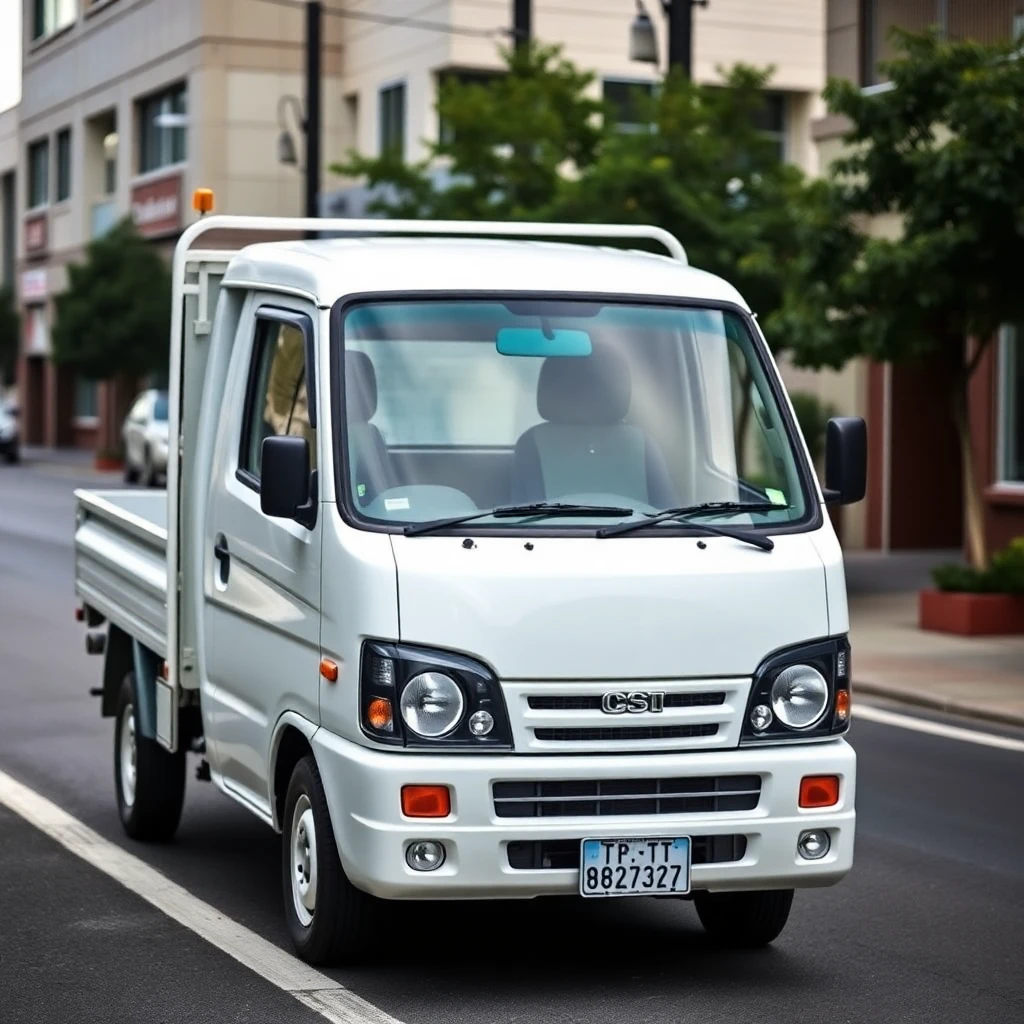
A kei truck street legal conversion is one of the more involved registration projects an owner can take on, but thousands of people run their Japanese mini trucks on public roads every year. The path depends heavily on your state, your truck's year, and how it was imported. This guide covers the physical requirements, the title and registration process, and why Montana LLC registration has become a go-to solution for kei truck owners across the country.
Kei trucks, known in Japan as kei-tora, include popular models like the Subaru Sambar, Honda Acty, Daihatsu Hijet, and Suzuki Carry. Most were built for farm and light commercial use and were never federally certified for U.S. road use. That means the conversion process involves two parallel tracks: making the vehicle physically compliant and getting it properly titled and registered. Both matter equally.
Whether you bought your mini truck at auction, imported it yourself, or picked one up from a local dealer, this guide gives you a clear picture of what comes next.
What Makes a Kei Truck Street Legal in the U.S.
Most Japanese mini trucks were never designed to meet U.S. Federal Motor Vehicle Safety Standards (FMVSS). That does not mean they cannot be registered, but it does mean many states require specific equipment before they will issue street-legal plates. Requirements vary by state, so always confirm with your state DMV before spending money on modifications.
What Equipment Do You Typically Need to Add?
- Headlights meeting SAE or DOT standards many JDM headlights do not Eligible out of the box
- Turn signals front and rear required in every state
- Brake lights and tail lights must meet minimum brightness standards
- Mirrors left exterior mirror required; some states require both sides
- Horn audible from at least 200 feet in most states
- Windshield wipers and washers required in most states
- Speedometer in MPH Japanese trucks show km/h; conversion sticker or gauge swap may be required
- Seat belts lap belts at minimum; shoulder belts where required
- Reflectors rear red reflectors required in virtually every state
Speed Restrictions and Road Access
Several states that allow kei truck registration impose speed or road-type restrictions. Some limit them to roads under 55 mph, which rules out most interstates but covers the majority of farm-to-market, county, and rural state roads. A few states treat them as low-speed vehicles (LSVs), which comes with its own set of requirements and limitations.
Before committing to your build, check whether your state classifies kei trucks as passenger vehicles, light trucks, LSVs, or farm vehicles. The classification determines which inspection checklist applies and what registration fee schedule you fall under.
Emissions and Inspection Considerations
Emissions testing is one of the bigger variables. States with strict OBD-II testing requirements, like California, create real friction for older Japanese imports because the OBD port standard did not exist when most kei trucks were built. Montana and South Dakota have no emissions testing requirements at all, which is one reason so many import owners register through those states. For more detail on how emissions rules apply to imported vehicles, see emissions requirements for military vehicles, which covers the same core exemptions that often apply to imported and surplus vehicles.
Titling a Kei Truck: The Import Documentation Challenge
Getting a clean title is often harder than the physical conversion. Japanese mini trucks come with Japanese title documents, not American MSOs or certificates of origin. Translating those documents into a U.S.-recognized title requires a specific process that depends on how the vehicle entered the country and how old it is.
Ready to register your vehicle?
Join thousands of vehicle owners who use HMMWV Registration to handle their registration quickly.
Get Started →The 25-Year Import Rule
Vehicles 25 years old or older can be imported under the 25-year exemption from FMVSS standards. This covers a large portion of the kei trucks currently in the U.S. market. If your truck was manufactured in 2000 or earlier, it qualifies today. Trucks manufactured in 2001 become eligible in 2026, and so on. Once you clear the federal import threshold, titling becomes much more manageable at the state level.
Vehicles Under 25 Years Old
If your truck is newer than 25 years, importation required compliance with FMVSS at time of entry, or it came in under a narrow show-and-display or research exemption. These trucks are significantly harder to title for road use. If you purchased one domestically and are trying to title it now, consult a registration specialist before assuming a clean title is possible in your state.
What Documents You Will Need
- Japanese deregistration document (jidosha tsukotoroku shomeisho) or equivalent export certificate
- U.S. Customs entry documentation (CBP Form 7501)
- EPA and DOT conformance declarations (if applicable to the import year)
- Bill of sale from the importer or dealer
- VIN assignment if the vehicle lacks a U.S.-format 17-digit VIN
Some kei trucks arrive with a Japanese chassis number that does not match the 17-digit VIN format required by U.S. states. In those cases, a state-assigned VIN is typically required before titling can proceed. This is a common step, not a dealbreaker, but it adds time to the process.
State-by-State Overview: Where Kei Trucks Are Easiest to Register
Not all states approach kei truck registration the same way. A handful have created specific pathways. Others require fitting the truck into existing vehicle categories. A few make the process genuinely difficult. The table below gives a working summary.
| State | Kei Truck Street-Legal Status | Key Notes |
|---|---|---|
| Montana | Yes, via LLC registration | No sales tax, no emissions test, fully remote process, all 50 states benefit |
| South Dakota | Yes | Low fees, straightforward titling for imports, no emissions requirement |
| Arkansas | Yes (farm use or road use depending on classification) | Historically friendly to kei trucks; verify current rules with AR DMV |
| Idaho | Yes | Allowed on roads under 55 mph in many counties; check local rules |
| Kansas | Yes | Registered as light trucks; standard equipment requirements apply |
| California | Very difficult | CARB emissions compliance required; OBD-II mismatch is a major barrier |
| New York | Difficult | Strict safety inspection; many kei trucks fail without significant modification |
| Texas | Possible but complex | Requires safety and emissions inspection in most counties; verify by county |
Why Montana LLC Registration Works for Kei Trucks
Montana LLC registration has become one of the most widely used solutions for vehicle owners who face difficult registration hurdles in their home state. Montana charges no sales tax on vehicle purchases, requires no emissions testing, and does not require a physical inspection to register a vehicle through a Montana LLC. The LLC owns the vehicle, and you operate it as a member of that LLC.
For a kei truck owner in California, Texas, or New York, this approach can represent thousands of dollars in avoided sales tax alone. A $15,000 mini truck carries an $1,800 sales tax bill in a 12% state. Montana charges zero. For owners with multiple vehicles, the savings compound quickly.
How the Process Works
- A Montana LLC is formed in your name (typically within a few business days)
- The kei truck is titled in the LLC's name using your import documents and bill of sale
- Montana issues plates and registration to the LLC
- You drive on Montana plates from wherever you live
The Montana LLC approach is fully established under Montana state law. Montana does not require LLC members to be Montana residents, and the state has no general sales tax. Registration fees are low and annual renewal is straightforward. If you want a side-by-side look at how Montana compares to South Dakota for this type of registration, see South Dakota vehicle registration vs. Montana comparison for a clear breakdown of the differences.
What Montana Registration Does Not Do
Montana registration does not exempt you from your home state's physical equipment requirements. If your state requires DOT headlights and a speedometer in MPH for road use, those requirements still apply when you drive the vehicle there. Montana handles the title and registration side. The physical conversion is still your responsibility. These are parallel tracks, and both matter.
Montana LLC registration is confirmed as a valid approach by the Montana Motor Vehicle Division, which administers vehicle title and registration for all vehicles titled in the state, including those owned by LLCs.
The Registration Process: Step by Step
If you are working through a kei truck street legal conversion and plan to register through Montana or another specialist-friendly state, the process typically follows this sequence. Timelines vary based on document completeness and state processing speeds.
Step 1: Gather Your Import Documents
Before anything else, locate your CBP Form 7501, your Japanese export certificate, and any EPA or DOT conformance statements. If you purchased the truck domestically, your dealer or importer should have provided these. Missing documents can be obtained through the original importer, though it takes time. Do not skip this step, because it is the foundation of your title application.
Step 2: Determine VIN Status
Check whether your truck has a 17-digit VIN or a Japanese chassis number. If it is a chassis number only, you will need a state-assigned VIN before titling. This typically requires a physical inspection by a law enforcement officer or DMV official. Montana and South Dakota both have processes for assigning VINs to imported vehicles without U.S. VINs. Your registration specialist can coordinate this.
Step 3: Complete the Physical Conversion
Install the required equipment for your state of operation. Keep receipts. If your state requires a physical inspection before issuing street-legal plates, you will need to demonstrate compliance at that inspection. If you are registering through Montana and operating in a state with no inspection requirement, this step is still worth doing to keep your truck compliant wherever you drive it.
Step 4: Title and Register
Submit your documents, VIN information, and application. If you are working through a Montana LLC, your specialist handles the state filing. If you are titling in your home state, submit directly to your state DMV. The off-road title to street legal guide covers the broader process of moving a vehicle from a non-road title to a street-Montana registration, which applies directly to kei trucks starting from import documentation.
Common Mistakes to Avoid During Your Kei Truck Conversion
Most conversion problems come down to skipping steps or misreading state requirements. Here are the errors that cause the most delays and cost the most money to fix.
Buying a Truck Without Confirming Its Import Documentation
A kei truck without proper CBP entry documents is a major problem. Without proof of import, you cannot get a clean title in most states. Always ask for CBP Form 7501 and verify the import was recorded before you hand over money. Private sellers sometimes do not have these documents, which means the truck may have entered the country improperly.
Assuming Your State Will Treat It as a Farm Vehicle Forever
Some states allow kei trucks to be registered as farm-use vehicles with minimal requirements. But farm-use registration typically restricts where and how you can drive the vehicle. If you want to use your kei truck on public roads for general transportation, you need a standard street-Montana registration. Farm plates are not a workaround for avoiding the conversion process.
Ignoring Annual Renewal Requirements
Montana LLC registrations require annual renewal, both for the LLC itself and for the vehicle registration. Missing the renewal puts your plates in a lapsed status. The Montana LLC annual renewal for vehicle registration guide covers what is due, when it is due, and how to stay current without scrambling every year.
Kei Truck Street Legal Conversion: Frequently Asked Questions
Are kei trucks street legal in the United States?
Kei trucks can be street legal in the U.S., but the rules depend on your state and the truck's age. Vehicles 25 years or older Eligible under the federal import exemption, which makes titling far easier. Many states allow kei trucks on roads under certain speed limits. States with no emissions testing, like Montana and South Dakota, are the most accessible for kei truck registration. Physical equipment requirements, including DOT lights, mirrors, and a speedometer in MPH, typically still apply. A state-by-state breakdown of kei truck street-legal rules is a useful reference when researching your specific state.
What is the 25-year rule for importing kei trucks?
Under federal law, vehicles manufactured at least 25 years ago are exempt from complying with FMVSS at the time of importation. This exemption makes it possible to import older Japanese mini trucks without meeting crash test or emissions certification standards that would otherwise block entry. The truck still must comply with your state's equipment requirements for road use, but the federal barrier is removed. Most kei trucks popular in the U.S. today, including 1990s-era Sambars, Actys, and Hijets, clear this threshold.
Can I register my kei truck in Montana if I do not live there?
Yes. Montana allows non-residents to register vehicles through a Montana LLC. The LLC is formed under Montana law, the vehicle is titled in the LLC's name, and Montana plates are issued. You do not need to be a Montana resident. This approach is used by vehicle owners across all 50 states and is fully valid under Montana state law. It is especially useful for owners in states with high sales tax, strict emissions testing, or difficult inspection requirements for imported vehicles.
What equipment do I need to make my kei truck street legal?
Requirements vary by state, but the most commonly required equipment includes DOT-compliant headlights, front and rear turn signals, brake lights, tail lights, mirrors, a horn, windshield wipers, a speedometer marked in MPH, and seat belts. Some states require additional items like side marker lights or specific reflectors. Always verify the specific checklist with your state DMV before starting your modification work, because installing the wrong equipment and then having to redo it costs time and money.
How do I get a title for a kei truck with no U.S. VIN?
If your kei truck has a Japanese chassis number instead of a 17-digit U.S. VIN, you will need a state-assigned VIN before titling. This typically requires a physical inspection by a law enforcement officer or authorized DMV official, who records the chassis number and assigns a U.S.-format VIN. Montana and South Dakota both accommodate this process for imported vehicles. Your registration specialist can coordinate the inspection and make sure the VIN assignment is recorded correctly before submitting your title application.
Is Montana LLC registration legitimate for kei trucks?
Yes. Montana LLC registration is a fully established process under Montana state law. Montana has no general sales tax, no emissions testing requirement, and does not require vehicle inspections to register through an LLC. The LLC owns the vehicle as a business asset, and the member operates it. This approach is used by thousands of vehicle owners nationally for everything from kei trucks and Japanese imports to RVs and military surplus vehicles. The Montana vehicle registration legality guide for 2024 covers this topic in full detail.
How long does the kei truck registration process take through Montana?
With complete documentation, the process typically takes two to three weeks from LLC formation to receiving your plates. LLC formation in Montana usually completes within a few business days. Title processing and plate issuance adds additional time depending on current state processing volumes. If your truck requires a state-assigned VIN, factor in extra time for that inspection step. Working with a registration specialist who knows the Montana process reduces delays significantly compared to doing it independently for the first time.
Do I still have to pay sales tax if I register through Montana?
Montana has no general sales tax, so no sales tax is collected at the time of registration. This applies whether you are a Montana resident or registering through a Montana LLC as a non-resident. However, your home state may have use tax rules that technically apply to vehicles you bring in. The applicability and enforcement of use tax on Montana-registered vehicles varies by state. Consult a tax professional familiar with your state's rules if this is a concern for your situation.
Ready to Get Your Kei Truck on the Road?
A kei truck street legal conversion involves two tracks working in parallel: the physical equipment modifications your state requires for road use, and the title and registration process that puts legal plates on the vehicle. Neither track is impossible, but both require attention to detail. Getting the documents wrong at the title stage, or skipping equipment requirements for your state, creates expensive problems later.
HMMWV Registration works with owners of Japanese mini trucks, kei trucks, military surplus vehicles, and a wide range of specialty imports and non-standard vehicles. We handle the title and registration side, including Montana LLC formation, VIN documentation coordination, and annual renewals, so you can focus on getting your truck ready to drive. Our verified customer reviews reflect a track record of handling exactly these kinds of complex registration cases, and nearly all cases we take on result in clean, valid registration.
Reach out through the link below to tell us about your kei truck. We will assess your documents, identify the right registration path, and walk you through every step from here to plates.