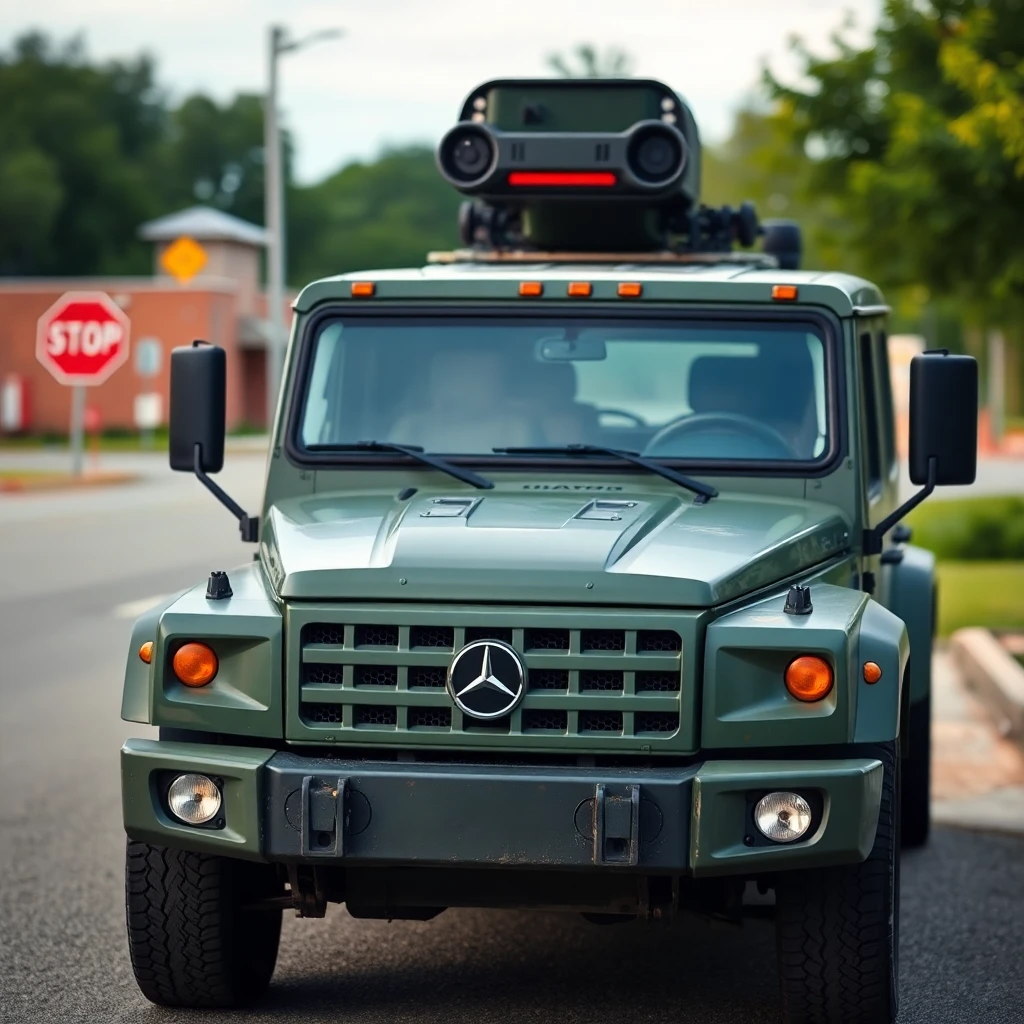
Getting an LSSV, LMTV, or MRAP registered for street use is one of the more complex title challenges in the military surplus vehicle world. These platforms sit in a different category than the HMMWV or M35 deuce-and-a-half, and the registration path reflects that. This guide covers the full picture, from title documentation and DEMIL classification to Montana LLC registration and state-specific requirements, so you know exactly what to expect before your vehicle arrives.
Whether you picked up a Light Service Support Vehicle through a GSA auction, an LMTV from GovPlanet, or an MRAP through a sheriff department surplus transfer, the process starts with the right paperwork. Get that right, and the rest of the registration path opens up considerably. Get it wrong, and you may be chasing a bonded title for months.
This guide covers documentation requirements, registration strategies, weight and size considerations, and what separates vehicles that can get street-legal plates from those that stay off-road only.
Understanding Your Military Vehicle: LSSV, LMTV, and MRAP Registration Basics
These three platforms have very different origins, weights, and DEMIL statuses, and those differences directly shape the registration process. Knowing which category your vehicle falls into saves time and prevents dead ends at the DMV.
What is the LSSV (Light Service Support Vehicle)?
The LSSV is based on a commercial Chevrolet Silverado or GMC Sierra chassis, built to military specifications by AM General. Because the LSSV uses a commercial platform, it often has a standard 17-digit VIN and may come with manufacturer documentation closer to a civilian title than a typical military surplus item. This makes the LSSV one of the more registration-friendly military vehicles. Many states will accept the commercial-chassis VIN directly, and in some cases owners have registered an LSSV through standard civilian DMV channels without needing a Montana LLC workaround. For a detailed breakdown of the LSSV registration path, see the LSSV Light Service Support Vehicle Registration Guide, which covers documentation specifics and state-by-state considerations.
What is the LMTV (Light Medium Tactical Vehicle)?
The LMTV and its larger sibling, the FMTV series, are purpose-built military trucks manufactured by BAE Systems and Stewart and Stevenson. These vehicles carry a military serial number, not a standard civilian VIN, and typically come with a DD-1348 release document or an SF-97 (Certificate to Obtain Title to a Vehicle). At approximately 15,000 to 18,000 lbs GVWR, the LMTV crosses into commercial truck territory in most states. That affects registration fees, inspection requirements, and in some states, which agency handles the title at all. Review the DD-1348 vs SF-97 military vehicle documents guide to confirm which document applies to your specific acquisition channel.
What is the MRAP (Mine-Resistant Ambush Protected Vehicle)?
MRAPs represent some of the heaviest and most complex surplus military vehicles in civilian hands. These vehicles, including the Cougar, MaxxPro, and Caiman variants, typically weigh between 20,000 and 40,000 lbs, making full street registration in most states either impractical or outright prohibited for civilian use. A smaller number of MRAPs have been titled and registered by specialized collectors, typically through Montana, with registration as heavy trucks or special purpose vehicles. DEMIL classification is a critical factor here. MRAPs released through the 1033 program to law enforcement may have transfer restrictions that prevent civilian titling entirely.
Title Documentation for Surplus Military Vehicles
The title document is the foundation of any military vehicle registration. Without the right paperwork, no can issue a civilian title, and no registration can follow. The document you receive depends on how the vehicle was transferred out of military inventory.
Ready to register your vehicle?
Join thousands of vehicle owners who use HMMWV Registration to handle their registration quickly.
Get Started →SF-97: The Primary Title Document for Military Surplus Vehicles
Standard Form 97 (SF-97) is the federal government's equivalent of a manufacturer's certificate of origin for military surplus vehicles. When DoD transfers a vehicle through DLA Disposition Services and it is released for civilian use, the SF-97 accompanies that transfer. States recognize the SF-97 as the basis for issuing a civilian title. The SF-97 must list the vehicle's national stock number, serial number, year, make, and DEMIL code. For a complete breakdown of what this document contains and how to use it, the SF-97 form military vehicle title document guide is the right starting point.
DD-1348 and MSO Documentation
Some surplus vehicles, particularly those sold through GovPlanet or other commercial auction channels, come with a DD-1348 release document rather than an SF-97. The DD-1348 is a materiel release order, not a title document on its own, but some states will accept it as supporting documentation when combined with a bill of sale and VIN verification. If you received a DD-1348 with your LMTV or LSSV and need to understand how to convert it into a civilian title, the military surplus vehicle SF-97 title documentation guide covers the conversion process in detail.
VIN Assignment for Military Serial Numbers
Vehicles like the LMTV do not carry a standard 17-digit VIN from the factory. States handle this differently. Some assign a new state-issued VIN after a physical inspection. Others accept the military serial number as a unique identifier for title purposes. Montana, in particular, has a practical process for assigning VINs to vehicles that arrive without one, which is one reason Montana LLC registration is a preferred path for LMTV and MRAP owners. See the VIN verification military vehicle guide and the VIN inspection military vehicle state requirements guide for state-specific details.
Montana LLC Registration for LSSV, LMTV, and MRAP Vehicles
Montana has no sales tax, no emissions testing, and no safety inspection requirement for vehicle registration. For heavy and unusual military vehicles, Montana registration through an LLC is one of the most practical paths available, regardless of where the owner lives. This approach is used by collectors, operators, and veterans across all 50 states.
How Montana LLC Registration Works for Military Vehicles
You form a Montana LLC, then register the vehicle in the LLC's name. Montana issues plates to the LLC, and those plates are valid nationwide. Because Montana has no sales tax, you pay no state sales tax on a vehicle purchase, which on a $40,000 LMTV represents a substantial savings compared to states with 5 to 10 percent sales tax rates. Montana also has no emissions program, meaning military diesel vehicles with smoke that would fail other states' emissions tests are not a concern. The register military vehicle Montana LLC guide covers the full formation and registration process.
Weight Class Considerations for LMTV and MRAP Registration
Montana registers vehicles by weight class, and heavy trucks carry higher fees. The LMTV, at approximately 15,000 to 18,000 lbs GVWR, falls into a commercial weight class in Montana. Registration fees for commercial trucks in Montana are based on declared gross vehicle weight, and the official Montana Vehicle Title and Registration fee schedule outlines the fee tiers. MRAPs at 25,000 lbs or more will carry higher registration costs, but the absence of sales tax and the flexibility of the Montana titling process still make it a compelling option for most owners.
South Dakota as an Alternative Registration State
South Dakota is another strong option for military vehicle registration, particularly for owners who want to establish actual residency rather than an LLC structure. South Dakota has low registration fees, no sales tax on private-party vehicle sales in most situations, and a straightforward title process for unusual vehicles. The South Dakota vehicle registration vs Montana comparison covers the trade-offs in detail, including which platform is better for different vehicle types and ownership situations.
| Vehicle | Typical GVWR | Common Title Document | Montana LLC Eligible | Street Registration Difficulty |
|---|---|---|---|---|
| LSSV (Chevrolet-based) | 8,600 lbs | Commercial VIN, MSO, or SF-97 | Yes | Low to Moderate |
| LMTV / FMTV | 15,000-18,000 lbs | SF-97 or DD-1348 | Yes | Moderate to High |
| MRAP (Cougar, MaxxPro) | 20,000-40,000 lbs | SF-97 (if DEMIL A/B released) | Case by case | High |
| HMMWV / M998 | 7,700-11,000 lbs | SF-97 | Yes | Low to Moderate |
| M35 Deuce-and-a-Half | 12,500 lbs | SF-97 | Yes | Moderate |
State-Specific Requirements and Street-Legal Considerations
Even with Montana plates, street-legal operation of a heavy military vehicle requires the vehicle itself to meet certain standards. Montana plates allow you to register the vehicle, but each state has its own rules about what can physically operate on public roads.
Width, Height, and Oversize Load Rules
The LMTV is approximately 8.5 feet wide and may require an oversize load permit in some states for routine road use. The MRAP can reach 9 to 10 feet in width, well beyond standard lane width limits. Most states set the legal vehicle width at 8.5 feet without a permit. Owners operating LMTVs or MRAPs on public roads should check their state's oversize vehicle regulations before driving, as permit requirements, route restrictions, and time-of-day limitations vary. This is separate from the registration question and applies to any vehicle of that size regardless of plate origin.
Safety Equipment Requirements
Street-legal operation also requires functional lighting, mirrors, and in many states, a working horn and windshield wipers. Military vehicles are sometimes delivered with combat lighting configurations that do not meet civilian requirements. Headlights, taillights, brake lights, turn signals, and reflectors all need to be present and functional. The military vehicle safety requirements guide covers the standard equipment list that applies across most states. For vehicles that need a full conversion checklist, the HMMWV street-legal conversion checklist state by state provides a practical framework that applies to other military platforms as well.
Emissions Considerations for Military Diesel Vehicles
Most LMTVs run a Caterpillar 3116 or similar military-spec diesel. These engines were not built to meet civilian emissions standards. States with active emissions programs, including California, New York, and several northeastern states, present challenges for these vehicles. Montana and South Dakota have no emissions programs, which is one reason Montana LLC registration remains popular for military diesel operators. For a full look at how emissions rules affect military vehicle registration, the emissions requirements for military vehicles guide covers the current state landscape.
Buying at Auction: GovPlanet, GSA, and 1033 Program Transfers
Where you buy your military vehicle directly affects what title documents you receive and what your registration options are. The three primary channels for surplus military vehicles each have different documentation workflows.
GovPlanet and DLA Auctions
GovPlanet is the largest commercial auction platform for DoD surplus vehicles. Vehicles sold through GovPlanet are typically released with a bill of sale and either an SF-97 or a DD-1348, depending on the vehicle's history. GovPlanet works with DLA Disposition Services to make sure DEMIL requirements are met before a vehicle is released to a civilian buyer. For a complete walkthrough of the post-purchase registration process for GovPlanet acquisitions, the GovPlanet HMMWV auction to Montana plates complete walkthrough is the most thorough resource available.
GSA Auctions and Other Federal Channels
GSA Auctions handles General Services Administration surplus, which includes some military-adjacent vehicles but primarily covers civilian federal fleet vehicles. The LSSV, because of its commercial chassis origins, sometimes appears in GSA channels. Documentation from GSA auctions tends to be more straightforward and closer to a standard title transfer than DLA surplus documentation.
1033 Program and Law Enforcement Transfers
Some MRAPs and other tactical vehicles enter civilian hands through the Department of Defense 1033 program, which transfers surplus equipment to law enforcement agencies. When those agencies later dispose of the vehicles, the transfer history can complicate civilian titling. Some 1033-transferred vehicles carry restrictions that survive the law enforcement disposal. Always verify the full transfer history and DEMIL status before purchasing a vehicle with a 1033 origin. The surplus military vehicle title guide addresses situations where the title chain is unclear or complicated.
Cost Savings and Registration Fees
One of the most practical reasons to use Montana LLC registration for an LSSV, LMTV, or MRAP is the total cost comparison against home-state registration. For vehicles in this category, the savings are significant.
Sales Tax Elimination
A used LMTV in good condition may sell for $25,000 to $60,000 depending on configuration and hours. In states with 6 to 10 percent sales tax, that represents $1,500 to $6,000 in tax liability at the point of registration. Montana charges no sales tax on vehicle purchases. Forming a Montana LLC typically costs $500 to $1,000 all-in, making the math straightforward for any vehicle above $10,000 in value. Use the military vehicle registration cost savings calculator to run the numbers for your specific vehicle and state.
Annual Renewal and Ongoing Costs
Montana requires an annual LLC report filed with the Secretary of State, due April 15 each year. The fee is modest. Vehicle registration renewal fees depend on weight class. For the LMTV, annual renewal will be higher than a passenger vehicle but still typically lower than the combination of registration fees and personal property tax that some states impose on commercial vehicles. For a full breakdown of what annual Montana LLC maintenance involves, see the Montana LLC annual renewal vehicle registration guide. For LLC formation support, DMVEz offers LLC and corporation formation services that work alongside the registration process.
Frequently Asked Questions: LSSV, LMTV, and MRAP Registration
Can I register an LMTV for street use in my home state?
In most cases, yes, with the right documentation. The LMTV requires an SF-97 or converted civilian title, a VIN assignment if one is not already present, and compliance with your state's commercial vehicle requirements. Some states are more receptive than others. Montana and South Dakota are consistently the most practical options for owners who want to avoid the friction of home-state registration for unusual military vehicles. If you live in a restrictive state, Montana LLC registration lets you hold valid plates regardless of where you operate the vehicle.
Is an MRAP street-legal?
This depends on the specific vehicle, its DEMIL status, your state's laws, and the physical configuration. Some MRAP variants have been successfully titled and registered for street use, typically in states with minimal inspection requirements. Others are too wide for standard road use without oversize permits, or carry DEMIL restrictions that prevent civilian titling. An MRAP with a DEMIL code of A or B and a clean SF-97 has the best chance of being street-registered. Consult with a specialist before purchasing if street use is your goal.
What documents do I need to title an LSSV?
Because the LSSV is built on a commercial Chevrolet or GMC chassis, it often carries a 17-digit VIN and may have documentation closer to a standard manufacturer's certificate of origin. In some cases, a bill of sale from the auction plus the SF-97 is sufficient to obtain a civilian title directly. In others, a VIN inspection is required. The specific documents needed depend on how the vehicle was acquired and which state or registration path you are using. Montana is consistently flexible with military vehicle documentation requirements.
Do I need a commercial driver's license to drive an LMTV on public roads?
Possibly. The CDL requirement is based on the vehicle's gross vehicle weight rating and its intended use. Vehicles over 26,001 lbs GVWR generally require a CDL for commercial use. The LMTV's GVWR sits below that threshold in most configurations, but local rules vary. If you are operating an LMTV for personal, non-commercial use, many states do not require a CDL. Consult your state's motor vehicle agency for the specific rule that applies to your vehicle's GVWR and your intended use.
Can I use a Montana LLC to register an MRAP if I live in California?
Montana LLC registration is a valid registration strategy used by vehicle owners across all 50 states, including California. However, California has specific rules about vehicles operated primarily in the state, and there are risks to be aware of. California may challenge the registration status of a vehicle that is garaged and used primarily in California under a Montana LLC. That said, for a collector or specialty vehicle that is not daily-driven in California, the Montana path is used regularly. Consult with a registration specialist and, if needed, a tax professional familiar with California vehicle use tax rules.
How long does the Montana LLC registration process take for a military vehicle?
LLC formation in Montana typically takes 7 to 15 business days through standard processing. Expedited formation is available. After formation, vehicle registration is submitted to the county treasurer. For military vehicles with complete documentation, registration is typically issued within 2 to 4 weeks. Vehicles with incomplete title chains, missing SF-97s, or VIN issues can add time to the process. Starting with clean documentation at the point of purchase is the single most effective way to keep the timeline short.
What happens if my LMTV or MRAP fails a VIN inspection?
A failed VIN inspection typically means the inspector could not verify the vehicle's identity from the submitted documentation, or the VIN plate was missing or damaged. The resolution depends on the state. Montana has processes for assigning new VINs to vehicles that arrive without a standard identifier. In some cases, additional documentation, including military service records, national stock number lookup results, or a letter from the original manufacturer, can support a successful re-inspection. The VIN inspection military vehicle state requirements guide covers the resolution process in detail.
Get Your Military Vehicle Registered the Right Way
The LSSV, LMTV, and MRAP present different challenges, but the path to street-Montana registration follows the same core principles: clean documentation, the right registration state, and a clear understanding of your vehicle's weight class and DEMIL status. Montana LLC registration remains the most practical and widely used path for owners across all 50 states, eliminating sales tax and bypassing emissions and inspection programs that these vehicles were never designed to pass.
HMMWV Registration works with military vehicle owners daily, from straightforward LSSV registrations to complex LMTV and MRAP title situations. If you have the vehicle, we can work through the paperwork. For owners just starting out, the HMMWV new owner complete registration guide 2025 provides a strong foundation, and the military vehicle registration FAQ covers the questions that come up most often.
This LSSV LMTV MRAP military vehicle registration guide covers the core decisions every owner faces. When you are ready to move forward, the team at HMMWV Registration is standing by to help you through every step.