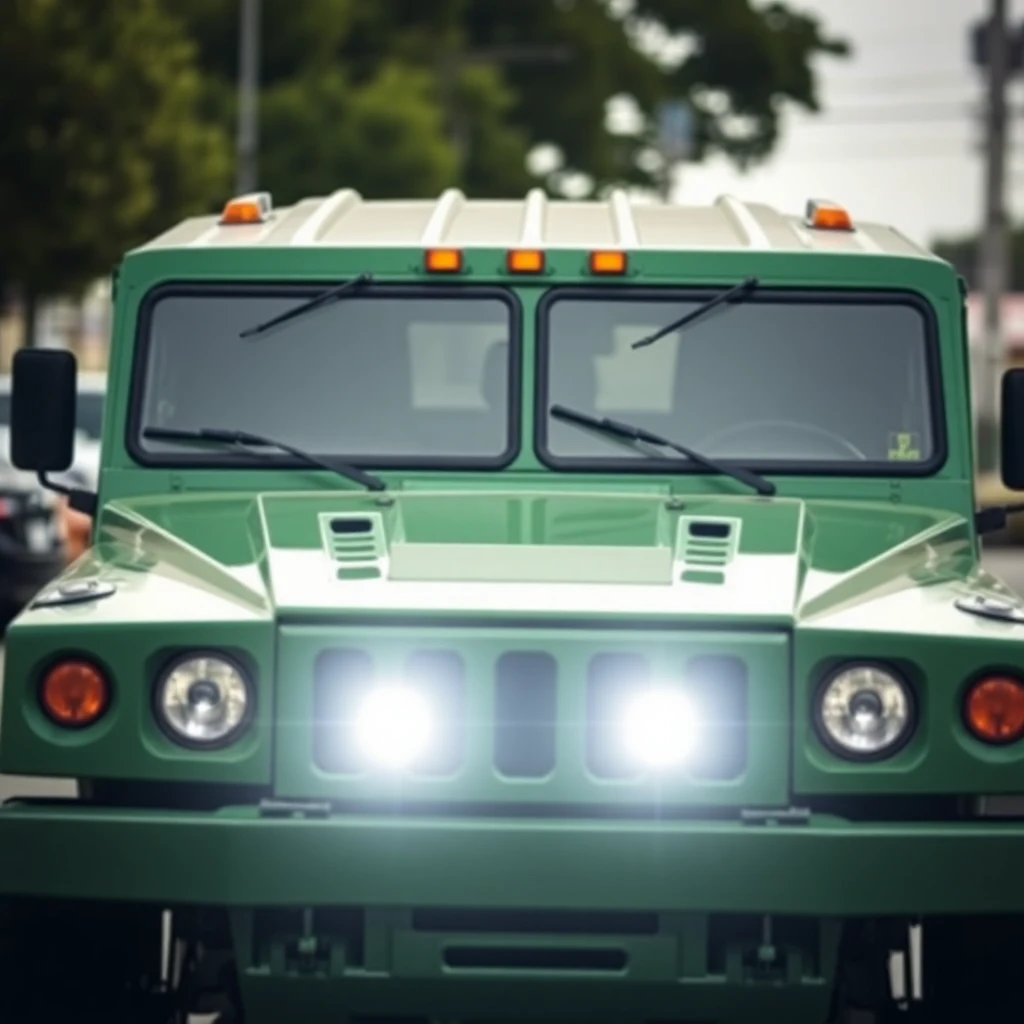
Picture this: you've just hauled home a surplus military Humvee, an honest-to-goodness HMMWV, and it's sitting in your driveway looking absolutely incredible. Maybe you picked it up at a government auction. Maybe a buddy tipped you off to a deal you couldn't pass up. Either way, it's yours now, and the only thought running through your head is whether you can drive it to the hardware store on Saturday morning without getting pulled over.
The short answer is yes, you probably can, but there's a real process involved, and skipping steps tends to get expensive fast. Street legal Humvee requirements vary depending on your state, the year the vehicle was made, and what modifications (if any) have already been done. What works in Montana might not fly in California, and what was fine for the previous owner might not be properly documented for you. So let's walk through what you actually need to know, from the mechanical checklist to the title and registration piece that a lot of new Humvee owners underestimate.
Think of this as the conversation you'd have with a friend who's been through it, no legal jargon, no runaround, just the real story of what it takes to get your HMMWV road-legal and keep it that way.
Why Street Legal Status for a Humvee Is More Complicated Than You'd Think
Here's the thing most people don't realize until they're already deep into the process: a military Humvee wasn't built for civilian roads. It was built to cross rivers, haul troops across desert terrain, and survive things that would total a regular truck. The people who designed it weren't thinking about turn signals or speedometers calibrated in miles per hour for a state DMV. That's not a flaw, it's just a different purpose, and bridging that gap is what the street legal conversion process is all about.
Federal motor vehicle safety standards, or FMVSS, are the baseline rules that all road vehicles have to meet in the United States. For vehicles manufactured after 1968 that were originally built for civilian use, those standards are baked in at the factory. But a military Humvee? It was exempt from those requirements when it rolled off the line. That exemption doesn't automatically transfer to you as a private owner who wants to drive it on public roads.
This is where state law takes over. Each state sets its own rules for what counts as street legal, and those rules often include a combination of equipment requirements (lights, brakes, mirrors, horn, windshield wipers), emissions testing in some states, and a valid registration and title in your name. The title piece is particularly important for military vehicles because the chain of ownership can be murky, government auctions don't always produce clean civilian titles, and a vehicle without a proper title is just a very expensive lawn ornament.
The stakes here are real. Drive an unregistered or improperly equipped Humvee on a public road and you're looking at fines, impoundment, and in some cases liability issues if anything goes wrong. Getting it right upfront saves you from all of that, and honestly, it makes the whole ownership experience a lot more enjoyable when you're not looking over your shoulder every time you pull out of the driveway.
If you've got questions about what the inspection side of this looks like, our detailed breakdown of inspection requirements for Humvees walks through exactly what inspectors are looking for and how to prepare.
Not sure where your Humvee stands? We can help you figure out the next step. →The Actual Equipment Checklist, What Makes a Humvee Street Legal
Let's get into the specifics, because this is where most people have the most questions. The good news is that the core equipment requirements are pretty consistent across states, even if the details vary. Here's what you're generally looking at street legal Humvee requirements on the mechanical and equipment side.
Ready to register your vehicle?
Join thousands of vehicle owners who use HMMWV Registration to handle their registration quickly.
Get StartedLighting is usually the first thing inspectors and law enforcement look for. Your Humvee needs working headlights (both high and low beam), taillights, brake lights, and turn signals, front and rear. Military Humvees often have the basic lighting infrastructure in place, but the systems may run on 24-volt military electrical rather than the 12-volt civilian standard. Some owners do a full electrical conversion; others use voltage reducers to make existing lights compatible with standard civilian bulbs. Either approach can work, but it needs to be done correctly and reliably.
Mirrors are another requirement that often gets overlooked. Most states require at least one exterior mirror on the driver's side, and many require a passenger-side mirror as well, especially on vehicles with limited rear visibility. Given how wide a Humvee is, we're talking about 7 feet plus across, good mirrors aren't just a legal requirement, they're genuinely important for safe driving.
Brakes need to meet your state's minimum stopping distance requirements, and for a vehicle that can weigh 5,000 to 7,000 pounds or more depending on the configuration, this is serious business. Military Humvees have disc brakes all around, which is actually a point in their favor, but the system needs to be properly maintained and functional. Many states also require a working parking brake as a separate system.
Tires need to be road-rated, not just military-spec. The aggressive off-road tires that come standard on military Humvees may or may not meet state requirements for highway use, and they can be noisy and harsh on pavement anyway. A lot of owners switch to highway-rated all-terrain tires, which keeps the look while meeting civilian road standards.
A few other items that commonly come up: a functioning horn, windshield wipers with a clear unobstructed windshield, a speedometer (in mph, not just kph), and in many states, a valid emissions test. Emissions is where things can get tricky, because the diesel engines in most HMMWVs don't always play nicely with state emissions testing equipment designed for civilian diesels. This is one of the reasons Montana registration is so popular among Humvee owners, Montana Registration Services can walk you through a registration approach that sidesteps emissions testing entirely, legally, through a Montana LLC.
The Title and Registration Piece, Don't Skip This Part
Here's where a lot of Humvee owners hit a wall. You can have every piece of equipment perfectly installed, and it won't matter if you can't prove you legally own the vehicle or if it isn't properly registered in your state. The title situation with military surplus vehicles is genuinely one of the more complicated parts of this whole process, and it's worth spending some time on.
When the federal government sells surplus military vehicles, they typically issue a Standard Form 97 (SF-97), which is the Certificate to Obtain Title to a Vehicle. This document is essentially your starting point, it proves the vehicle was legitimately transferred from government ownership to civilian ownership. But an SF-97 is not a title. You still need to convert it into a civilian title through your state's DMV process, and that process isn't always straightforward.
Some states are very familiar with military vehicle titling and have a clear process. Others are not, and you can end up spending months chasing paperwork. If the vehicle has changed hands a few times since leaving military service, the documentation chain can get messy fast. This is where working with a service that specializes in military vehicle registration genuinely pays for itself.
VIN verification is another step that often surprises people. Military vehicles have their own identification systems that don't always map neatly to the civilian VIN format. Before a state can issue a title, they typically need to verify the vehicle's identity, and VIN verification for military vehicles has its own specific requirements and quirks. Getting this done correctly upfront prevents delays down the line.
The official NHTSA VIN decoder at nhtsa.gov can be a useful starting point for checking what the federal database shows for your vehicle's identifier, though military vehicles won't always appear in civilian systems the way standard vehicles do.
For owners who want to register through Montana, a popular choice because Montana has no sales tax, no emissions testing requirements, and a well-established process for non-resident vehicle registration through LLCs, the Montana Department of Justice Motor Vehicle Division has its own specific steps. The official fee schedule is posted at dojmt.gov, and it's worth reviewing before you start the process so you know what to expect.
| Requirement | Typical Status on Military HMMWV | Action Usually Needed |
|---|---|---|
| Headlights (hi/lo beam) | Present, but often 24V military spec | Voltage conversion or reducer |
| Turn signals (front/rear) | Sometimes present | Add or upgrade to civilian spec |
| Brake lights | Usually present | Verify function, update wiring if needed |
| Mirrors | Driver-side often present | Add passenger-side mirror |
| Horn | Usually present | Verify function |
| Speedometer (mph) | May be kph or non-functional | Replace or recalibrate |
| Road-rated tires | Military off-road spec | Often replaced for highway use |
| Emissions | Exempt in many states | Check state requirements, Montana option avoids this |
| Title/Registration | SF-97 from government auction | Convert to civilian title through DMV or specialist service |
Real Talk, What Experienced HMMWV Owners Say About This Process
One thing you hear consistently from people who've gone through this process is that the equipment side is actually the easier part. Yes, tracking down the right lighting kit or finding someone to properly convert the electrical system takes time and money, but it's a defined problem with a defined solution. You work through the list, you check the boxes, you're done.
The paperwork side is where people get frustrated. One owner in our community described spending the better part of a year trying to get a clean title through his home state after buying a Humvee at a government auction, only to eventually route the registration through Montana instead and have the whole thing wrapped up in a matter of weeks. His words: "I wish someone had just told me upfront that Montana was an option. I would have done it that way from day one."
That story isn't unusual. Montana's vehicle registration process through an LLC has become genuinely popular among military vehicle enthusiasts precisely because it's designed to handle non-standard situations. Companies like Dirt Legal have built entire businesses around helping people work through Montana registration for vehicles that don't fit neatly into a state's standard DMV process. If your Humvee is giving you documentation headaches, it's worth at least understanding what that option looks like before you spend months fighting with your local DMV.
South Dakota is another state worth knowing about. The South Dakota Division of Motor Vehicles has a reputation for being straightforward and efficient with non-standard vehicle registrations, and for people who establish residency there, the fees tend to be lower than most states. It's a less common route for Humvee owners than Montana, but it's a legitimate option depending on your situation.
Bringing It All Together, Your Humvee, Street Legal, Done Right
When you step back and look at the full picture, street legal Humvee requirements aren't actually that mysterious. There's an equipment side, lights, brakes, mirrors, tires, and a handful of other items that need to meet civilian road standards, and there's a paperwork side, title documentation, VIN verification, and registration in a state that works for your situation. Both sides are manageable if you approach them systematically and get the right help where you need it.
The biggest mistake people make is treating this as a one-or-the-other problem. They get laser-focused on the mechanical side and assume the paperwork will sort itself out, or they spend all their energy chasing the title and then find the vehicle still isn't equipped to pass inspection. You really do need to work both tracks in parallel, and having a clear picture of what each state requires before you start saves a lot of time and frustration.
If you're early in the process, maybe the Humvee is already home but you haven't started on the paperwork yet, the best thing you can do is get a clear read on your vehicle's documentation situation before you invest heavily in equipment modifications. An SF-97 that's missing signatures, a VIN that doesn't match the documentation, or a gap in the ownership chain can all create problems that need to be solved before registration can happen regardless of how well-equipped the vehicle is mechanically.
And if you're in a state with challenging emissions requirements, no-sales-tax Montana registration through an LLC is genuinely worth understanding. It's legal, it's well-established, and for a lot of Humvee owners it's simply the most practical path to getting on the road without spending years wrestling with a bureaucracy that wasn't designed with military vehicles in mind.
Frequently Asked Questions
Can I drive a military Humvee on public roads legally?
Yes, in most states you can drive a military Humvee on public roads once it meets your state's equipment requirements and is properly titled and registered. The specific requirements vary by state, but the core checklist typically includes working lights, brakes, mirrors, horn, and a valid registration. Some states also require emissions testing, which is one reason Montana registration is popular among Humvee owners.
Do military Humvees have to pass emissions tests?
It depends on the state. Some states exempt older vehicles or vehicles that weren't originally manufactured for civilian use. Others require testing regardless. Montana has no emissions testing requirement, which is why many Humvee owners register through a Montana LLC even if they don't live in Montana. This is a legal and well-established approach.
What is an SF-97 and do I need one?
An SF-97 is the Standard Form 97, or Certificate to Obtain Title to a Vehicle, that the federal government issues when it sells surplus military vehicles. If you bought your Humvee through a government auction or from someone who did, the SF-97 is the document that starts the civilian titling process. It's not a title itself, you need to convert it into a civilian title through your state DMV or through a registration service.
How do I handle the VIN situation on a military Humvee?
Military vehicles use identification systems that don't always align with civilian VIN formats. Before a state can issue a title, they typically need to verify the vehicle's identity, and this can involve a physical inspection by law enforcement or a DMV official. Working with a service that specializes in military vehicle registration can help you work through this process correctly the first time. Our article on VIN verification for military vehicles covers this in detail.
Is Montana registration really an option if I don't live in Montana?
Yes. Non-residents can register vehicles in Montana by forming a Montana LLC that owns the vehicle. This is a legal structure that's been used for decades and is well-understood by registration professionals. It means no sales tax on the purchase, no emissions testing, and a registration process that's generally more flexible for non-standard vehicles like military Humvees. The Montana Motor Vehicle Division handles these registrations regularly.
How long does the street legal conversion process typically take?
It varies a lot depending on your starting point. If your Humvee already has most of the required equipment and the documentation is clean, you could be registered and on the road in a few weeks. If you're starting from scratch on both the equipment and paperwork side, or if there are documentation issues to resolve, it can take several months. Getting professional help with the registration side in particular tends to shorten the timeline significantly.
Ready to get your Humvee registered the right way? We make it straightforward, get started today.