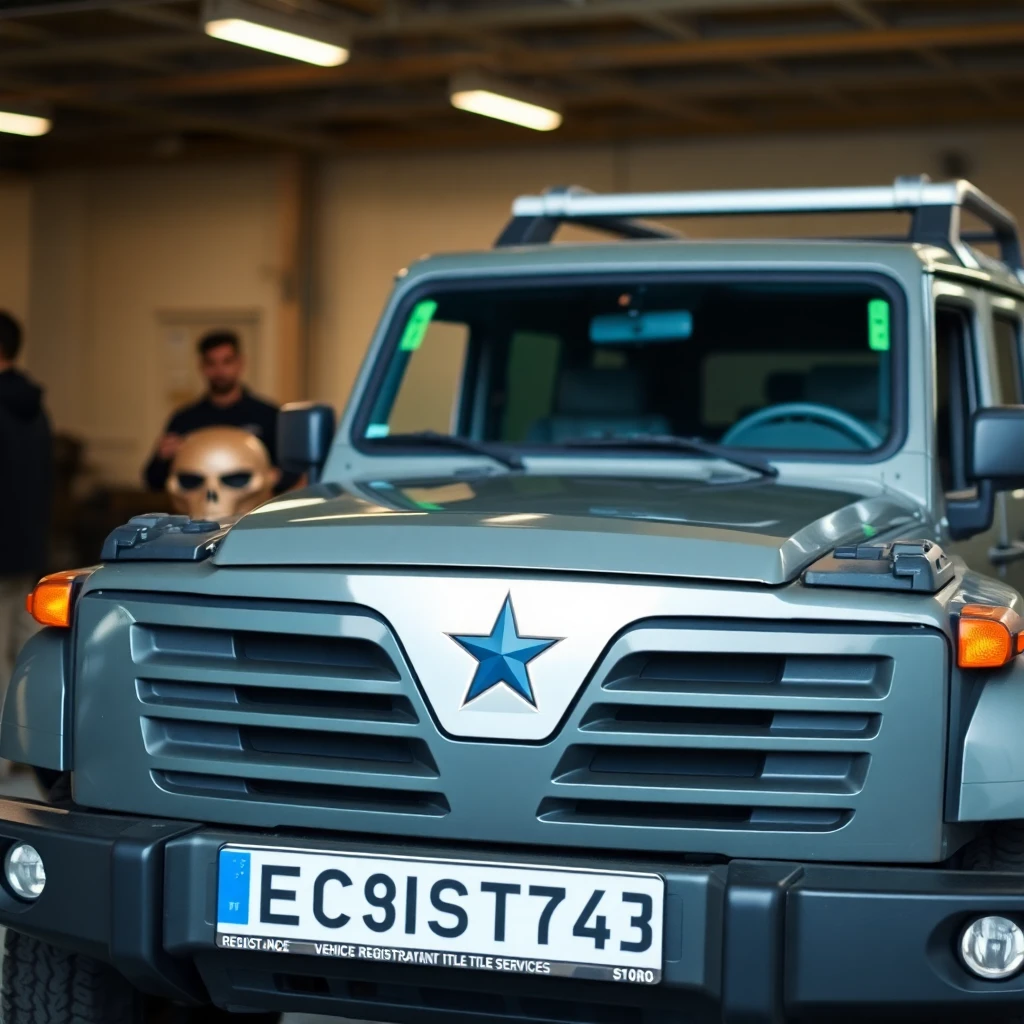
Picture this: you've just pulled the trigger on something most people only dream about, a genuine ex military vehicle. Maybe it's a boxy, battle-worn HMMWV sitting in a government surplus lot, or a decommissioned M35 cargo truck with more history than most museums. Whatever it is, you got it home, you're staring at it in the driveway, and then it hits you, you have absolutely no idea how to make it street legal.
You're not alone in that feeling. Thousands of people buy surplus military vehicles every year through auctions like GovPlanet and Public Surplus, and a huge chunk of them spend weeks (sometimes months) spinning their wheels trying to figure out the title and registration process. It's not like registering a used pickup truck. Military vehicles come with their own set of quirks, unusual VIN formats, no traditional manufacturer's certificate of origin, and a registration process that varies pretty dramatically depending on which state you're dealing with.
The good news? Ex military vehicle registration is absolutely achievable, and once you understand the path forward, it's a lot less intimidating than it looks. This is the guide we wish existed when people first started asking us these questions. Let's walk through it together.
Why Ex Military Vehicles Are a Different Animal Registration
Most of the vehicles Americans buy and sell were built for the civilian market. They came with a Manufacturer's Certificate of Origin (MCO), got titled at a dealership, and have followed a relatively predictable paper trail ever since. Military vehicles didn't take that path. They were built for the Department of Defense, assigned to a unit, and tracked through military property management systems, not civilian DMV databases.
When the military decommissions a vehicle and releases it to the surplus market, it doesn't come with a clean civilian title. Instead, you typically receive a DD Form 1348-1A (the government's disposal release form) or sometimes a SF-97 (which is the government's version of a certificate of title for motor vehicles). Those documents are the starting point for your civilian title application, but many state DMVs have never seen them before and aren't quite sure what to do with them.
There's also the VIN question. Military vehicles often have National Stock Numbers (NSNs) or serial numbers that don't match conventional civilian VIN formats. Some states require a VIN verification inspection before they'll issue a title, and that can get complicated when your vehicle's identification system doesn't fit neatly into the inspector's checklist. You can read more about how that process works in our detailed guide to VIN verification for military vehicles.
Then there are the emissions and inspection hurdles. A diesel-powered military truck built in the 1980s isn't going to pass a modern emissions test in California. Some states have exemptions for older vehicles or vehicles above a certain weight, but you need to know your state's rules before you assume you're in the clear.
The stakes here are real. Drive an unregistered military vehicle on public roads and you're looking at fines, potential impound, and a title mess that could be even harder to untangle after the fact. Getting this right from the start is worth every bit of the effort.
Not sure where your vehicle stands? We can help you figure out the right path forward.The Registration Roadmap: How This Process Actually Works
Every ex military vehicle registration journey starts with the same question: what paperwork did you get when you bought it? Your answer to that question shapes everything that follows.
Ready to register your vehicle?
Join thousands of vehicle owners who use HMMWV Registration to handle their registration quickly.
Get StartedIf you bought from a government surplus auction and received a SF-97, you're in relatively good shape. That document is the government's equivalent of a title, and most states will accept it as the basis for issuing a civilian certificate of title. You'll take the SF-97 to your local DMV or county treasurer's office, pay the applicable title transfer fee, and apply for a new state title in your name.
If you bought from a private seller who already converted the vehicle to civilian use, they should have a state-issued title in hand. Treat this like any other used vehicle purchase, you'll do a standard title transfer, though you may still run into VIN inspection requirements depending on your state.
If you bought through a dealer or broker who sold you the vehicle without any title documentation at all, you've got more work ahead. You may be looking at a bonded title process, a path where you purchase a surety bond equal to a percentage of the vehicle's value, file it with the state, and essentially vouch for your ownership until the state is satisfied. It's not as scary as it sounds, but it takes time and there are costs involved.
Once the title question is sorted, the registration itself follows a more familiar pattern, but the details vary significantly by state. Some states are genuinely military-vehicle-friendly. Montana, for example, has no emissions testing requirements and a relatively straightforward process for registering unusual vehicles. South Dakota is similarly pragmatic. Other states, think California, New York, or Illinois, can be much more demanding.
If you're registering in a state that makes the process unnecessarily difficult, a Montana LLC registration is worth understanding. By forming a Montana LLC and registering your vehicle through it, you can legally title the vehicle in Montana regardless of where you live. Montana has no sales tax on vehicle purchases, no emissions testing, and no annual inspections required. For a high-value military vehicle, the savings alone can be substantial. Our partners at Dirt Legal specialize in exactly this kind of Montana registration, and Montana Registration Services offers full-service LLC formation and registration support as well.
For state-by-state details on how to register your specific military vehicle, our guide on how to register a military vehicle by state breaks down the requirements in plain language.
The Details That Trip People Up (And How to Handle Them)
Here's where we get into the real-world edge cases, the stuff that doesn't show up in the official instructions but that experienced registrants learn the hard way.
The VIN situation is probably the most common sticking point. Many military vehicles, especially HMMWVs, have a 17-character VIN that looks normal on paper but wasn't submitted to NHTSA's database the way a civilian vehicle would be. When a DMV clerk runs the VIN and gets nothing back, they sometimes panic. The solution is patience and documentation, bring every piece of paper you got with the vehicle, and consider using the NHTSA VIN decoder before your DMV visit so you understand what the database will show. Some states require a physical VIN inspection by law enforcement or a licensed inspector before they'll process the title, we cover what that looks like in detail in our article on inspection requirements for a Humvee.
Weight and classification matter more than most people expect. A HMMWV that tips the scales at over 10,000 pounds GVWR may be classified as a commercial vehicle in certain states, which triggers a completely different registration pathway, commercial plates, potentially a DOT number, and different fee structures. If your military vehicle is a cargo truck or something larger, this is a real consideration.
Here's a comparison of what the registration experience looks like across a few common scenarios:
| Situation | Documents Needed | Typical Timeline | Complexity |
|---|---|---|---|
| Bought from gov surplus with SF-97 | SF-97, ID, payment | 2–6 weeks | Moderate |
| Bought from private seller with state title | Signed title, ID, bill of sale | 1–3 weeks | Low |
| No title documentation (bonded title route) | Surety bond, bill of sale, affidavit | 4–12 weeks | High |
| Montana LLC registration (any state resident) | LLC docs, purchase docs, ID | 2–4 weeks | Low–Moderate (with help) |
One more thing worth mentioning: insurance. Some standard auto insurance providers won't touch a military surplus vehicle, or they'll massively overvalue or undervalue it. You'll want a specialty insurer who understands agreed-value policies for collector or surplus vehicles before you start driving. Getting registered is only half the battle, being properly insured is the other half.
We've heard from more than a few HMMWV owners who said they were relieved to finally find a resource that laid this out honestly. As one customer put it: "I spent three months getting the runaround from my county DMV. Once I understood the Montana LLC option, the whole thing was sorted in under a month." That kind of clarity is exactly what we aim to provide.
Bringing It All Together, Your Vehicle Deserves to Be on the Road
Here's the thing about ex military vehicles: they were built to last. These machines survived deployment conditions that would destroy a civilian truck, and they're often sitting in a driveway or a barn getting dusty because their owner got frustrated with the paperwork and gave up. That's a shame, because with the right guidance, the registration process is genuinely manageable.
Whether you're working with a SF-97 from a government auction, inheriting a private title situation, or exploring the Montana LLC route to avoid the headaches of a difficult home state, there's a path forward for your vehicle. The key is understanding which path applies to your specific situation and following it step by step without cutting corners.
Montana remains one of the most popular registration destinations for military vehicle owners nationwide, and for good reason. The Montana Vehicle Title and Registration system is built to accommodate unusual vehicles, there's no sales tax, and the state doesn't require emissions testing. The annual LLC maintenance is straightforward too, you can check the filing requirements directly through the Montana Secretary of State's annual report page.
South Dakota is another strong option if you're looking to establish residency and register there, the South Dakota Division of Motor Vehicles has a reputation for being pragmatic and efficient, with low registration fees and a process that doesn't punish you for owning something unusual.
At HMMWV Registration, this is what we do every day. We've helped owners work through the full spectrum of ex military vehicle registration situations, from clean SF-97 title transfers to complicated bonded title cases to Montana LLC setups for owners in all 50 states. We know where the friction points are, and we know how to work through them.
Frequently Asked Questions About Ex Military Vehicle Registration
Can I register a military surplus vehicle in any state?
In most cases, yes, but the process and requirements vary significantly by state. Some states are straightforward and military-vehicle-friendly; others require emissions testing, specific inspection protocols, or commercial vehicle classification for heavier trucks. If your home state is making it difficult, a Montana LLC registration is a legal alternative available to residents of all 50 states.
What is a SF-97 and do I need one?
A SF-97 is Standard Form 97, the U.S. government's version of a Certificate of Title for motor vehicles sold through surplus disposal. If you bought your vehicle directly from a government auction, you should receive one. It's your primary document for applying for a civilian state title. Without it (or without a state-issued title from a previous civilian owner), you'll likely need to pursue a bonded title or other alternative route.
What if my military vehicle doesn't have a standard VIN?
This is more common than people realize. Some military vehicles use serial numbers or National Stock Numbers instead of a traditional 17-character VIN. Most states have a process for assigning a new VIN in these cases, which typically involves a physical inspection by law enforcement or a certified inspector. Our guide on VIN verification for military vehicles walks through what to expect.
How does a Montana LLC registration work for an out-of-state resident?
A Montana LLC registration works by forming a limited liability company in Montana (which any U.S. resident can do) and then registering the vehicle under that LLC's name. Because the LLC is a Montana entity, the vehicle is titled and registered in Montana, meaning no sales tax, no emissions testing, and no annual inspection requirements. You keep your home state driver's license; it's the vehicle that's registered in Montana, not you personally.
How long does ex military vehicle registration typically take?
It depends on your route. A straightforward SF-97 title transfer at a cooperative state DMV can take two to six weeks. A Montana LLC registration with professional assistance typically runs two to four weeks. A bonded title situation can take anywhere from one to three months depending on your state's process. Starting with complete, organized documentation always speeds things up.
Do I need a special license to drive a military vehicle on public roads?
For most surplus military vehicles in the HMMWV class, a standard driver's license is sufficient for personal use. However, larger military trucks, particularly those with a Gross Vehicle Weight Rating (GVWR) above 26,000 pounds, may require a Commercial Driver's License (CDL) depending on how you're using the vehicle and which state you're in. Check your state's specific requirements before you drive.
Ready to get your ex military vehicle registered? Get started today, we'll make sure you're on the right path from the beginning.