Why Military Vehicle Registration Goes Wrong So Often
Registering a surplus military vehicle is one of those processes where the cost of getting it wrong is not just frustration — it is real money, real time, and sometimes a vehicle sitting unplated in your driveway for months while paperwork bounces between agencies that do not know what to do with it.
After helping thousands of surplus vehicle owners through the registration process, we have seen every mistake in the book. These nine are the ones that cause the most damage, and every one of them is avoidable.
Mistake 1: Going to Your Local DMV First
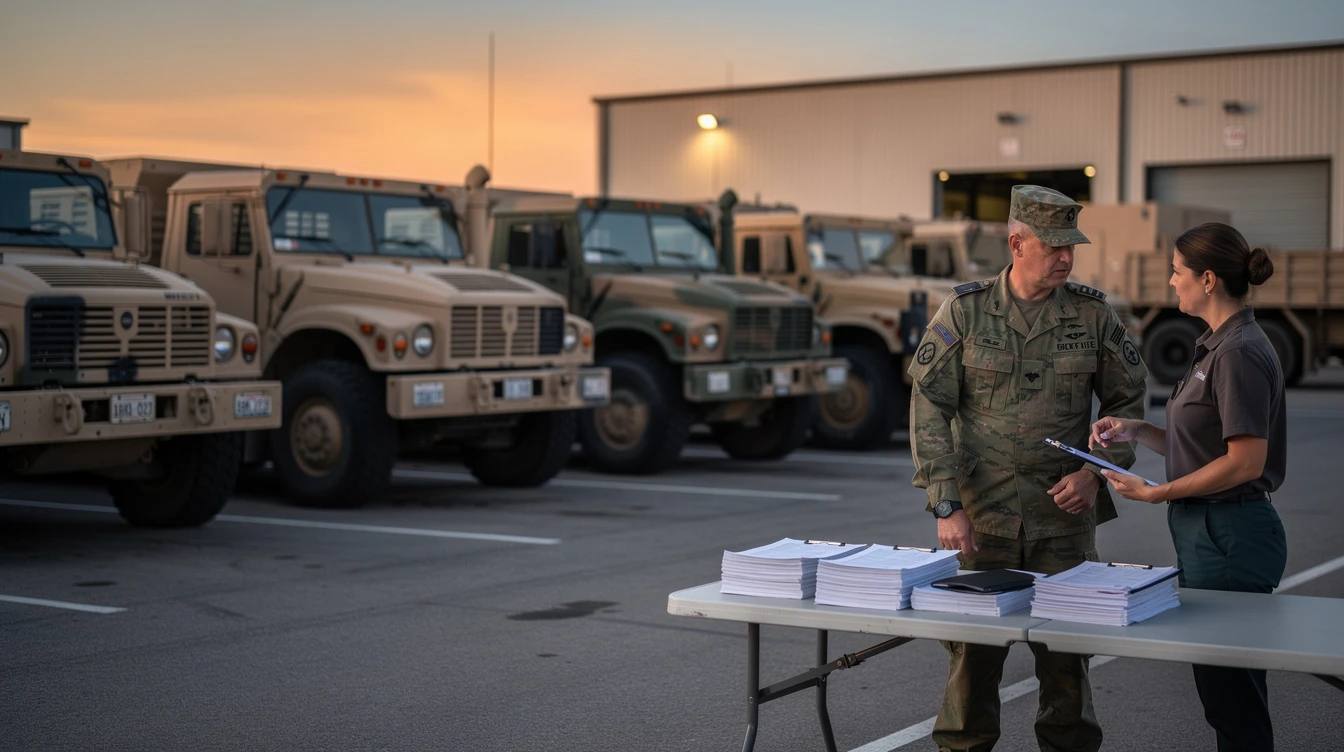
This is the single most common mistake, and it sets off a chain reaction of problems. The owner loads up their SF-97, bill of sale, and vehicle photos, drives to the county DMV, takes a number, and sits down with a clerk who has never seen an SF-97 in their career.
The clerk does not know how to enter a non-standard serial number into the system. The vehicle does not match any category in the dropdown menu. The application gets flagged, delayed, or rejected outright. The owner leaves with no plates, no clear next steps, and a wasted afternoon.
The fix: Register through a state that processes military vehicles routinely. Montana's Motor Vehicle Division handles thousands of surplus registrations annually — their system accepts SF-97 forms, non-standard VINs, and military-spec vehicles without confusion. See our Montana LLC registration guide.
Mistake 2: Not Verifying the SF-97 Before Purchase
The SF-97 is the foundation of the entire titling process. Buying a vehicle without confirming that the SF-97 is complete, correctly signed, and matches the vehicle is like buying a house without checking the deed.
SF-97 Verification Checklist
| Check | What to Verify | Red Flag |
|---|---|---|
| Signatures | Both transferor and transferee blocks signed | Unsigned or only partially signed |
| Serial number | Matches the data plate on the actual vehicle | Numbers do not match or are illegible |
| DEMIL code | Code A or B (cleared for civilian sale) | Code C or higher (may have unresolved compliance issues) |
| Vehicle description | Make, model, year match the physical vehicle | Description does not match what you are buying |
| Condition | Clean, legible, no alterations | Crossed-out fields, white-out, or handwritten corrections |
Our SF-97 documentation guide walks through every field on the form. Our title red flags guide covers what else to verify before buying.
Mistake 3: Paying Sales Tax When You Do Not Have To
Owners who register in their home state pay whatever sales tax rate that state charges — typically 4-10% of the vehicle's purchase price. On a $35,000 HMMWV, that is $1,400 to $3,500 in tax that cannot be recovered if you later transfer the registration to a Montana LLC.
The fix: If you plan to use a Montana LLC (or any zero-sales-tax registration path), do it from the start. Do not register in your home state "temporarily" and plan to switch later — the tax is paid and gone.
| Vehicle Value | Tax at 6% | Tax at 8% | Montana LLC |
|---|---|---|---|
| $20,000 | $1,200 | $1,600 | $0 |
| $35,000 | $2,100 | $2,800 | $0 |
| $50,000 | $3,000 | $4,000 | $0 |
Mistake 4: Assuming Emissions Will Not Be a Problem
Military diesel engines — the 6.2L, 6.5L, and multifuel variants — were built to military specifications, not EPA civilian standards. States with emissions testing requirements (California, Colorado, parts of New York, and others) will fail these engines every time without expensive modifications that compromise the vehicle's original configuration.
The fix: Register in a state with no emissions testing. Montana has no emissions requirement for any vehicle, regardless of age, fuel type, or engine specification. See our emissions requirements guide.
Mistake 5: Skipping Street-Legal Modifications
Some owners title and register their vehicle, slap on plates, and start driving — without installing the safety equipment required for road use. This creates two problems: you are driving an unsafe vehicle, and you are vulnerable to citations and impoundment.
The core street-legal modifications most surplus vehicles need:
- DOT-compliant headlights, tail lights, turn signals, and brake lights
- Side mirrors meeting state minimum visibility requirements
- Laminated safety windshield glass
- Three-point seat belts for all seating positions
- DOT-rated tires with appropriate load ratings
- Audible horn
Our HMMWV street-legal conversion guide covers every modification with part numbers, costs, and installation notes.
Avoid these mistakes from the start
HMMWV Registration handles the entire process — Montana LLC formation, document review, title application, and plates — so nothing falls through the cracks.
Start Your Registration →Mistake 6: Using Standard Auto Insurance
Standard auto insurance policies value vehicles at depreciated market value. A restored HMMWV worth $45,000 in parts and labor might be insured at $12,000 under a standard policy because that is what a non-running auction vehicle sells for. If the vehicle is totaled, you lose $33,000.
The fix: Get an agreed-value policy from a specialty insurer like Hagerty, American Collectors Insurance, or Grundy. These policies lock in a specific dollar amount based on your vehicle's condition and investment. See our HMMWV insurance guide.
Mistake 7: Not Keeping Copies of Everything
Owners send their only copy of the SF-97 to a DMV or registration service and then have no backup when the document gets lost in processing. This happens more often than it should, and recovering a lost SF-97 can add months to the process.
The fix: Before submitting any original document, make at least three certified copies and store the originals in a fireproof container. Keep digital scans in cloud storage. Our records to keep guide covers the full documentation system.
Mistake 8: Creating Separate LLCs for Each Vehicle
Collectors sometimes form a new Montana LLC for every vehicle they purchase. This creates unnecessary complexity — multiple annual reports, multiple registered agent fees, and multiple renewal dates to track.
The fix: One LLC can hold title to unlimited vehicles. Form one entity and add vehicles to it as you acquire them. All vehicles share the same renewal cycle and management structure.
Mistake 9: Letting Registration Lapse
Owners who put a vehicle in storage sometimes let the registration expire to save the annual renewal fee. When they want to drive it again, they discover that re-registering a lapsed vehicle is more expensive and time-consuming than maintaining continuous registration.
The fix: Maintain active registration even on vehicles in storage. The annual renewal cost is minimal compared to the re-registration process. For renewal details, see our Montana LLC annual renewal guide.
The Cost of Getting It Wrong vs. Getting It Right
| Mistake | Typical Cost | Time Lost |
|---|---|---|
| Wrong state registration + sales tax | $1,500 - $4,000 | 4-8 weeks wasted |
| Missing SF-97 (bonded title needed) | $300 - $2,700 bond premium | 6-12 extra weeks |
| Underinsured vehicle (total loss claim) | $15,000 - $40,000 gap | Permanent loss |
| Lapsed registration (re-registration) | $200 - $500 extra fees | 2-4 weeks |
Frequently Asked Questions
What is the most common military vehicle registration mistake?
Attempting to register at a local DMV that has no process for military surplus vehicles. Most state DMV offices are built to handle civilian cars with standard VINs and manufacturer titles. When you walk in with an SF-97 form and a non-standard serial number, the clerk has no procedure to follow.
Can I fix a registration mistake after my application has been submitted?
Yes, but it adds time and cost. If your application was rejected for a documentation error, you can correct the issue and resubmit. If the error resulted in an incorrect title (wrong VIN, wrong owner name), you will need to file a title correction with the issuing state.
Why do so many military vehicle registrations get rejected?
The three most common rejection reasons are: missing or incomplete SF-97 forms, VIN format errors (military serial numbers do not match the 17-character format that state databases expect), and incorrect vehicle classification.
Is it a mistake to register my military vehicle in my home state?
Not always, but it depends on your state. States with no emissions testing, low or no sales tax, and DMVs familiar with military paperwork work fine. States with strict emissions, high sales tax, and unfamiliar DMV offices create unnecessary barriers.
How much money can registration mistakes cost?
Direct costs include reapplication fees, bond premiums, and potential sales tax in the wrong state. Indirect costs include months of delays, storage fees for an unregistered vehicle, and lost use. Owners who register in a high-tax state and later switch to Montana LLC have paid $2,000-$5,000 in unrecoverable sales tax.
Get it right the first time
HMMWV Registration has helped thousands of surplus vehicle owners avoid these mistakes. We handle Montana LLC formation, document review, and the full titling process.
Start Your Registration →