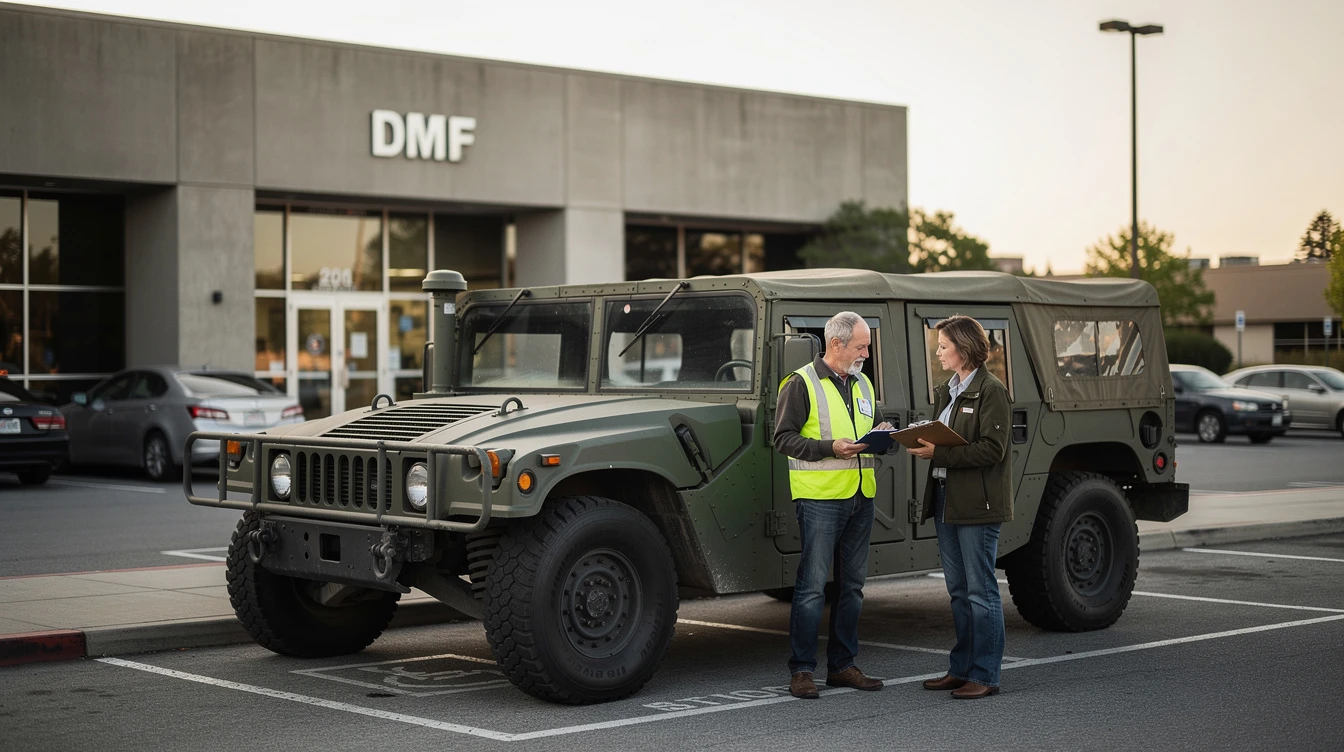
Yes, you can register a military vehicle without a title — but the path depends on what documentation you do have, what state you are in, and how much time and money you are willing to invest. Military surplus vehicles regularly end up without titles because they were never titled after leaving government service, because titles were lost in the years since, or because the chain of ownership was never properly documented through private sales.
This is one of the most common problems in the military vehicle community, and there are proven solutions for every situation.
Why Military Vehicles Often Lack Titles
Understanding why the title is missing determines which solution works best:
| Situation | Why It Happens | Best Solution Path |
|---|---|---|
| Purchased at auction, never titled | Owner received SF-97 but never applied for state title | Title using SF-97 in a friendly state |
| SF-97 lost or never received | Documentation lost, or auction did not include ownership docs | DLA replacement request or bonded title |
| Bought private-party, no title signed over | Handshake deal, seller kept title, or title was already missing | Contact seller for title, or bonded title |
| Inherited, no title found | Previous owner passed away without organized paperwork | Estate process or bonded title |
| Title jumped (skipped) | Multiple private sales without proper title transfers | Track down last titled owner or bonded title |
Option 1: Title with an SF-97 (Best Case)
If you have the SF-97 (Certificate of Release of a Motor Vehicle), you have the most important ownership proof. Many states will issue a title based on an SF-97 and a completed title application — no previous state title needed.
States That Accept SF-97 for Original Titling
- Montana: Accepts SF-97 as primary ownership documentation. Combined with LLC formation, this is the most popular path for military vehicle owners nationwide.
- South Dakota: Accepts disposal documents for titling.
- Vermont: Issues a transferable registration (not a title) based on a bill of sale, which can then be used to get a title in another state.
- Texas: Accepts SF-97 with additional forms and VIN inspection.
For the complete state comparison, see our best states for military vehicle registration guide.
Option 2: Bonded Title
When you have no SF-97, no title, and no way to get either, a bonded title is the most common fallback. Approximately 35 states offer this process.
How It Works
- Apply for a bonded title at your state's DMV with whatever documentation you have — bill of sale, previous registration, auction receipt, photographs, VIN verification.
- Get a VIN inspection by law enforcement. This verifies the vehicle is not stolen and the serial number matches your documentation.
- The state determines the vehicle's value for bond calculation purposes.
- Purchase a surety bond for 1.5x the vehicle's assessed value. The premium you pay is 1–3% of the bond amount. For a $10,000 HMMWV: bond amount = $15,000, your cost = $150–$450.
- The state issues a bonded title. The "BONDED" brand is printed on the title. It is a valid title — you can register, insure, and sell the vehicle.
- After 3–5 years (varies by state) with no claims against the bond, you can request a clean title.
Bonded Title Pros and Cons
- Pro: Works when all other options fail
- Pro: Results in a valid title
- Pro: Bond cost is relatively low (1–3% of vehicle value)
- Con: "BONDED" brand on the title can reduce buyer confidence when selling
- Con: Not available in every state
- Con: The waiting period (3–5 years) before the brand is removed
Option 3: Vermont Registration Path
Vermont does not issue titles for vehicles over 15 years old. Instead, it issues a transferable registration that can be obtained by mail from out of state with just a bill of sale. This registration can then be used to apply for a title in many other states.
The Process
- Complete Vermont's registration form (Form VD-119) by mail
- Include a bill of sale (even a self-written one documenting the transaction)
- Pay Vermont sales tax on the declared value plus registration fees
- Vermont issues a registration in your name
- Use the Vermont registration to apply for a title in your home state or through a Montana LLC
This path is popular on forums like r/HMMWV because it works by mail, does not require VIN inspection in Vermont, and provides a valid state-issued ownership record. The catch: you pay Vermont sales tax (6%) on the declared value, which adds cost on higher-value vehicles.
Option 4: Court-Ordered Title
In some states (California is the most notable), you can petition the court for a title when standard DMV processes fail. The court reviews your evidence of ownership — purchase documentation, affidavits from witnesses, proof of possession, VIN verification — and issues a court order directing the DMV to issue a title.
This process is more time-consuming and expensive than bonded titles (court filing fees, potential need for a lawyer), but it results in a clean title with no "BONDED" brand.
Option 5: Mechanics Lien
Some states allow a mechanics lien process where a repair shop can claim ownership of a vehicle after performing work when the owner fails to pay and retrieve it. This process has been used (and sometimes misused) to obtain titles for vehicles with broken ownership chains.
Important: the mechanics lien process is intended for legitimate repair situations. Using it fraudulently is illegal in most states. If you pursue this route, the work and the lien must be genuine.
What Documentation Helps Even Without a Title
The more documentation you have, the more options are available:
- Bill of sale: Any bill of sale from any transaction in the ownership chain
- Previous registrations: Even expired registrations from any state
- Insurance records: Proof that the vehicle was previously insured in someone's name
- SF-97 or DD-1348: Even copies (not originals) help establish provenance
- Auction records: Printouts from GovPlanet or other auction sites
- Photographs: Photos showing the vehicle at different times and locations help establish continuous possession
- Witness affidavits: Written, notarized statements from people who can attest to your ownership
For complete guidance on organizing these papers, see our military vehicle records guide.
Common Mistakes to Avoid
- Do not buy a military vehicle without verifying title status first. Ask for the title or SF-97 before sending money.
- Do not assume your state's DMV will figure it out. Many DMV clerks have never processed a military surplus vehicle. Go prepared.
- Do not forge or fabricate records. Title fraud is a felony in every state.
- Do not wait. The longer an untitled vehicle sits, the harder it becomes to title. Start the process as soon as you take possession.
Frequently Asked Questions
Can I register a military vehicle with just a bill of sale?
In some states, yes. Vermont issues registration based on a bill of sale for vehicles over 15 years old. Other states may accept a bill of sale combined with a VIN inspection and affidavit of ownership. Most states require more documentation than a bill of sale alone.
How much does it cost to get a bonded title?
The surety bond premium costs 1–3% of the bond amount, which is typically 1.5x the vehicle's assessed value. For a vehicle valued at $10,000: bond = $15,000, premium = $150–$450. Plus state title and registration fees ($50–$200). Total out-of-pocket: typically $200–$700.
Is a bonded title as good as a regular title?
It conveys the same ownership rights. The "BONDED" brand can make some buyers nervous, potentially reducing resale value by 5–10%. After the bond period expires (3–5 years), you can get a clean title with no brand.
Can I insure a military vehicle without a title?
Very difficult. Most insurers require a title or at minimum a registration to write a policy. Some specialty military vehicle insurers will write storage-only coverage based on an SF-97 or bill of sale, but driving coverage typically requires registration.
What is the fastest way to get a title for an untitled military vehicle?
If you have an SF-97: title directly in Montana through an LLC — typically 2–4 weeks. If you have only a bill of sale: Vermont registration by mail (3–6 weeks), then use that to title elsewhere. If you have nothing: bonded title process (4–8 weeks).