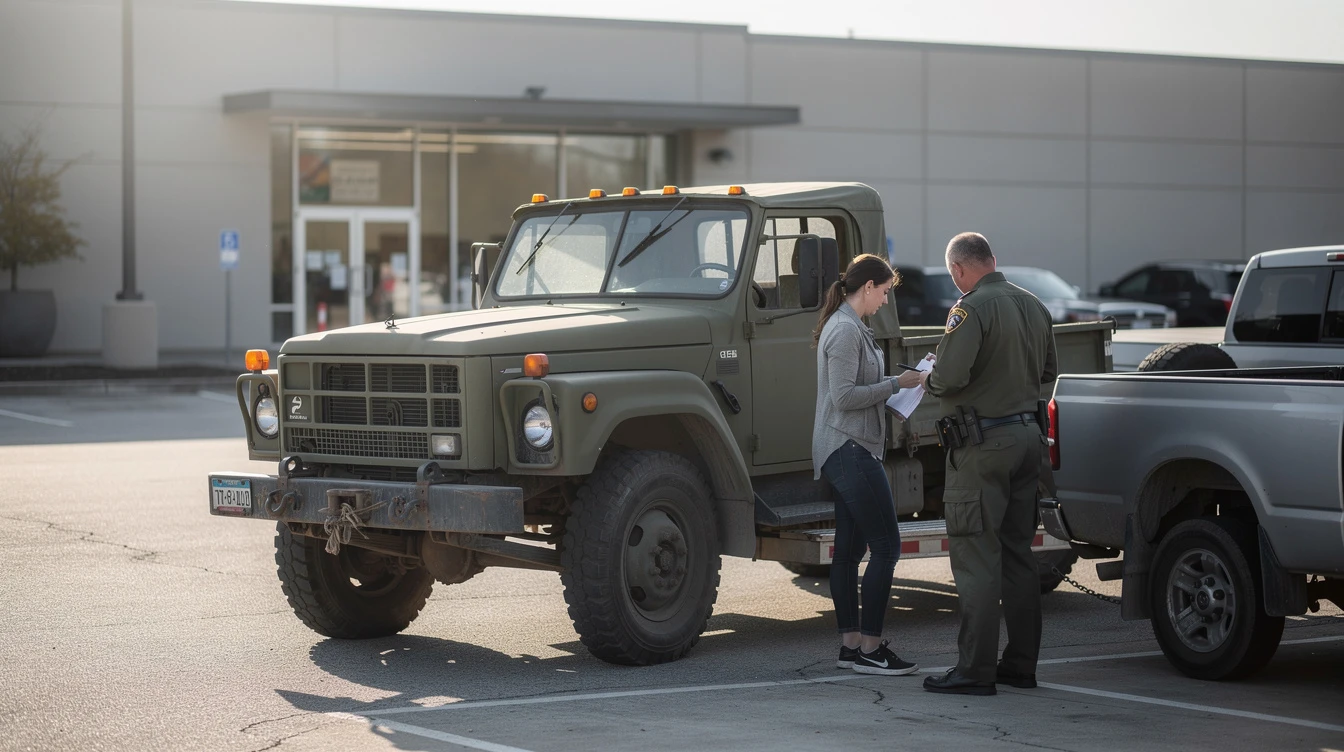
Yes, you can transfer a military vehicle title across state lines — but it is rarely as simple as walking into the new state's DMV with your current title. Military surplus vehicles create unique complications: states classify them differently, some require inspections that surplus vehicles struggle to pass, and the documentation chain (SF-97, DD-1348) can confuse DMV clerks who have never processed one before.
Here is how to move your military vehicle's title from one state to another without getting stuck in bureaucratic limbo.
Why Military Vehicles Complicate State Transfers
Standard vehicles transfer smoothly because every state recognizes a 17-digit VIN, a standard title format, and a consistent vehicle classification system. Military surplus vehicles break all three of those assumptions:
| Issue | Standard Vehicle | Military Surplus Vehicle |
|---|---|---|
| VIN Format | Standard 17-character VIN | Military serial numbers (non-standard length and format) |
| Vehicle Classification | Car, truck, SUV — universally recognized | May be classified as "truck," "special equipment," "assembled," or "other" |
| Title Origin | Previous state title | May be SF-97, DD-1348, or title from a state that no longer matches current classification |
| Emissions | Must meet state standards | Military diesels are often exempt, but exemption rules vary |
| Safety Equipment | DOT headlights, signals, bumpers | Military lighting is not DOT-compliant; blackout lights do not count |
Step-by-Step Transfer Process
Step 1: Check the New State's Classification Rules
Before you start any paperwork, find out how the destination state classifies military surplus vehicles. This determines which forms you need, whether inspections are required, and what fees apply.
Common classifications for military vehicles by state:
- "Truck" or "Pickup": Some states title HMMWVs as trucks based on their GVW (Gross Vehicle Weight). This is the most favorable classification because it follows standard truck registration paths.
- "Special Equipment" or "Special Mobile Equipment": Some states put military vehicles in utility/equipment categories, which may restrict road use.
- "Assembled Vehicle": If the receiving state does not recognize the military manufacturer (AM General, for example), it may classify the vehicle as assembled — triggering additional inspections.
- "Off-Highway Vehicle": The least favorable classification. Some states will only register military surplus for off-road use, not street-legal road use.
Check our guide on best states for military vehicle registration for a breakdown of which states are most accommodating.
Step 2: Gather Your Documentation
For a cross-state transfer, you will need at minimum:
- Current state title — signed by all listed owners if transferring ownership simultaneously
- SF-97 and/or DD-1348 — the original military release documentation. Some states require this even if you already have a state title, to verify the chain of ownership from the government.
- Bill(s) of sale — every private-party transaction in the ownership chain
- Valid photo ID
- Proof of insurance in the new state — you typically need insurance before you can register
- VIN verification form — most states require a physical VIN inspection by law enforcement or a DMV-designated inspector when titling a vehicle from out of state
Keeping organized ownership records makes this process dramatically smoother.
Step 3: Handle Inspection Requirements
Many states require safety inspections and/or emissions inspections for vehicles being titled from out of state. Military vehicles face specific challenges here:
Safety Inspections
Standard safety inspections check headlights, taillights, turn signals, horn, brakes, mirrors, and windshield wipers. Military vehicles in their stock configuration often fail because:
- Military headlights are not DOT-compliant
- Turn signals may not be installed
- The horn may operate at military specification (louder or different tone)
- Mirrors may be missing or non-standard
You will likely need a street legal conversion before the vehicle can pass inspection in a new state. Do this before attempting the transfer — not after.
Emissions Inspections
Military diesel engines (the 6.2L and 6.5L GM diesels in most HMMWVs) are generally exempt from emissions testing because they predate modern emissions standards. However, the exemption rules vary:
- Most states: Vehicles over 25 years old are emissions-exempt
- Some states: Diesel vehicles under a certain GVW are exempt regardless of age
- California: Has the strictest rules — military vehicles may face CARB compliance issues even with age exemptions
See our military vehicle emissions guide for state-specific details.
Step 4: Visit the New State's DMV
With all documentation and inspections complete:
- Complete the new state's title application
- Submit your out-of-state title (it will be surrendered)
- Present the VIN verification form
- Present proof of insurance
- Pay title fees and registration fees (varies by state — typically $50–$200 total)
- Pay any applicable sales or use tax (if the vehicle was recently purchased)
Common Problems and How to Solve Them
The DMV Does Not Recognize the VIN
Military serial numbers often do not fit the standard 17-character VIN format. The DMV's computer system may reject the number, display errors, or flag the vehicle as "not found." Solutions:
- Ask for a supervisor who has processed military vehicles before
- Bring a printout of the vehicle's NSN (National Stock Number) and nomenclature
- Some states will assign a state-issued VIN plate if the military serial number cannot be processed
The DMV Questions the Vehicle's Legality
Some DMV clerks are unfamiliar with military surplus vehicle sales and may question whether you own a "military Humvee" lawfully. The SF-97 is your definitive answer — it is the federal government's certification that the vehicle was released for civilian ownership. Having the original SF-97 documentation on hand resolves this immediately.
Sales Tax on Cross-State Transfers
When you transfer a title to a new state, that state may assess sales or use tax based on the vehicle's fair market value — even if you already paid sales tax in the original state. Some states offer credits for taxes paid in other states; others do not. Military vehicles can be difficult to value because they are not in standard pricing guides, so having a recent appraisal or documented purchase price helps.
The Montana LLC Alternative
Many military vehicle owners choose to title through a Montana LLC specifically to avoid the complications of cross-state transfers. A Montana LLC title stays valid regardless of where you physically live — you are not transferring the title to a new state when you move, because the LLC (a Montana entity) remains the titled owner.
This approach is particularly popular among military vehicle owners who:
- Move frequently (active-duty military, remote workers)
- Live in states with difficult classification or emissions rules
- Want to avoid repeated re-titling fees
- Own multiple military vehicles and want them all under one registration umbrella
Frequently Asked Questions
Can I transfer a military vehicle title to any state?
You can transfer to any state, but some states make it significantly simpler than others. States like Montana, South Dakota, and Texas have straightforward processes. States like California, New York, and New Jersey have more requirements. The vehicle must meet the receiving state's safety and classification standards.
Do I need a VIN inspection for a cross-state title transfer?
Most states require a physical VIN inspection when titling a vehicle from out of state. For military vehicles, this is done by law enforcement or a DMV-designated inspector who physically verifies the serial number on the vehicle matches your title documentation.
Will I pay sales tax when transferring to a new state?
Possibly. Many states assess use tax when you title a vehicle from out of state, based on the vehicle's fair market value. Some states credit taxes paid in the originating state. Bring documentation of any sales tax you previously paid to claim the credit.
What if the new state classifies my vehicle differently?
This happens frequently with military vehicles. A HMMWV titled as a "truck" in Texas might be classified as "special equipment" in California. The classification affects what registration type you get, whether you can drive it on all roads, and what inspections are required. Research the new state's classification before starting the transfer.
How long does a cross-state military vehicle title transfer take?
If you have all documentation ready and the vehicle passes any required inspections, the DMV visit itself takes 30–90 minutes. The new title document arrives by mail in 2–6 weeks depending on the state. If documentation issues arise, the process can take months to resolve.