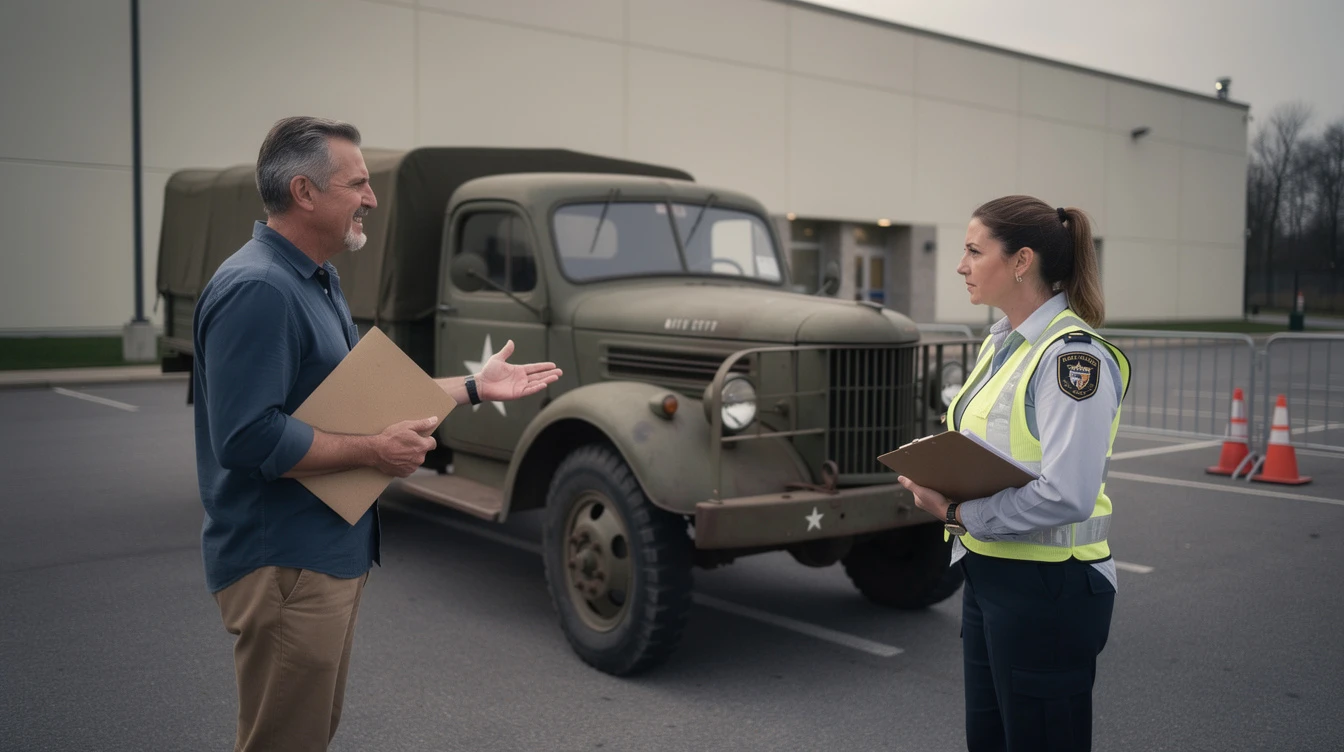
Why Antique Vehicle Laws and Military Vehicles Do Not Mix
If you own a 1989 M998 HMMWV and it is over 25 years old, you might assume it qualifies for antique or historic vehicle plates. That assumption makes sense on the surface — the vehicle is old enough, and antique plates often come with reduced fees, emissions exemptions, and special status at the DMV.
The problem is that antique vehicle registration laws were written for civilian cars and trucks, not for surplus military equipment. The gap between what those laws cover and what military vehicles actually are creates confusion at the DMV counter, wasted application fees, and months of delays for owners who go down the wrong path.
This guide explains exactly how antique registration laws interact with military vehicles, which states offer exceptions, and why most surplus vehicle owners bypass the antique system entirely.
How Antique Vehicle Registration Laws Work in Most States
Every state has some form of antique, historic, or classic vehicle registration. The details vary, but the core structure is consistent:
| Requirement | Typical State Rule | Military Vehicle Problem |
|---|---|---|
| Age threshold | 25-30 years old | Most surplus HMMWVs meet this, but age alone is not enough |
| Manufacturer origin | Must be a production civilian vehicle | HMMWVs were built under DoD contract, not for consumer sale |
| VIN format | Standard 17-character VIN | Military vehicles use non-standard serial numbers |
| Title history | Existing title or manufacturer certificate | SF-97 replaces title; many DMVs do not recognize it |
| Condition | Original or restored to factory spec | Most surplus vehicles have been modified for street use |
| Use restrictions | Parades, shows, occasional personal use | Many owners want unrestricted daily driving |
The fundamental issue is classification. State DMV systems categorize vehicles based on their manufacturer, model year, and intended use. A 1967 Ford Mustang fits neatly into the "antique civilian vehicle" box. An M998 HMMWV does not fit into any standard box, because it was built for the Department of Defense, sold through government surplus channels, and was never part of the civilian vehicle market.
Why Most Military Vehicles Cannot Get Antique Plates
When a surplus vehicle owner walks into a DMV and requests antique plates, the application typically fails at one of three checkpoints:
Checkpoint 1: Vehicle Classification
Most states classify military vehicles as "non-conforming," "specially constructed," or "government surplus" — none of which fall under the antique vehicle category. The antique designation is reserved for vehicles that were originally manufactured and sold for civilian road use. An HMMWV was manufactured for the U.S. military under a defense contract, which puts it in a fundamentally different category from the start.
Checkpoint 2: Title Documentation
Antique vehicle applications require a title or manufacturer certificate of origin. Military surplus vehicles come with an SF-97 (Certificate of Release of a Motor Vehicle) instead of a title. Many DMV clerks have never seen an SF-97 and have no procedure for accepting it. The application gets flagged, delayed, or rejected because the document does not fit the system. For details on the SF-97 process, see our SF-97 form documentation guide.
Checkpoint 3: Use Restrictions
Even if a state allows a military vehicle to receive antique status, the plates typically restrict usage to shows, parades, club events, and limited personal driving. Some states cap mileage at 1,000-5,000 miles per year. Owners who want to use their HMMWV as a regular vehicle — commuting, trail running, weekend trips — find that antique plates do not support that level of use.
State-by-State Antique Registration Comparison for Military Vehicles
The rules vary significantly across states. Here is how some of the most common registration states handle antique status for military surplus:
| State | Antique Plates for Military Vehicles? | Key Limitation |
|---|---|---|
| Montana | Not needed — standard registration has no restrictions | None |
| Texas | Possible for 25+ year vehicles, but DMVs often refuse | Parade/exhibition use only |
| California | Rarely approved for military surplus | Emissions testing still required in many counties |
| Florida | Available if titled, but restricted use | Cannot be used for daily transportation |
| Ohio | Historic plates available for 25+ year vehicles | Annual mileage cap; show/hobby use only |
| New York | Rarely processed for military surplus | Inspection requirements often block approval |
For a complete state-by-state breakdown of registration rules for military vehicles, see our state-by-state registration guide.
The Montana Alternative: Why Antique Status Is Not Necessary
Most military vehicle owners skip the antique registration path entirely and register through a Montana LLC. Here is why this path solves the problems that antique registration creates:
No Vehicle Classification Issues
Montana's Motor Vehicle Division processes thousands of surplus military registrations every year. Their system accepts SF-97 forms, non-standard VIN formats, and military-spec vehicles without the classification confusion that other states face.
No Sales Tax
Montana has no state sales tax on vehicle purchases — period. Antique plates in other states may reduce registration fees but do not eliminate sales tax on the purchase itself. On a $35,000 HMMWV, the sales tax savings alone exceed the cost of LLC formation in most cases.
No Emissions Testing
Montana does not require emissions testing for any vehicle. Military diesel engines were built to MIL-SPEC standards, not EPA civilian standards, and cannot pass emissions testing without expensive modifications that compromise the vehicle's original configuration. Montana removes this barrier entirely.
No Use Restrictions
Standard Montana registration has no mileage limits and no restrictions on how you use the vehicle. Drive it daily, tow with it, take it off-road, or park it in a collection — the plates are valid for all lawful use without the hobby-only limitations of antique plates.
Our Montana LLC for military vehicle registration guide walks through the full process from LLC formation to plates in hand.
Skip the antique plate confusion
HMMWV Registration handles Montana LLC formation and surplus vehicle titling for owners in all 50 states. No classification headaches, no emissions tests, no use restrictions.
Start Your Registration →When Antique Registration Actually Makes Sense for Military Vehicles
There are a few narrow scenarios where pursuing antique or historic plates for a military vehicle is worth the effort:
- Your state explicitly allows it: A handful of states have broadened their historic vehicle definitions to include military surplus. If your state is one of them and the use restrictions fit your plans, antique plates can reduce your annual registration cost
- You only use the vehicle for shows: If your M35 or HMMWV is strictly a show piece and you trailer it to events, the parade-and-show restrictions of antique plates are not a limitation
- You already have a Montana LLC registration and want local plates too: Some owners maintain Montana LLC registration for legal ownership and get local antique plates for convenience at shows and local events
For most owners who want to actually drive their vehicle, standard Montana registration is the better fit. For a side-by-side comparison of antique, historic, and collector registration types, see our antique vs historic vs collector registration guide.
Safety and Compliance: Required Regardless of Plate Type
Whether you pursue antique plates or standard registration, making a military vehicle street-legal requires the same safety modifications. The plate type does not change what the vehicle needs to be roadworthy:
- DOT-compliant headlights, tail lights, turn signals, and brake lights
- Side mirrors meeting state minimum visibility requirements
- Laminated safety windshield (not ballistic acrylic panels)
- Three-point seat belts for all seating positions
- DOT-rated tires with appropriate load ratings
- An audible horn meeting NHTSA Federal Motor Vehicle Safety Standards
Our military vehicle safety requirements guide covers every modification with specific part recommendations and installation notes.
Frequently Asked Questions
Can I put antique plates on a military HMMWV?
In most states, no. Antique or historic plates typically require the vehicle to be a civilian-manufactured car or truck that is 25-30 years old and maintained in original or restored condition. Military surplus vehicles like the HMMWV are classified differently — as non-conforming, government-surplus, or specially constructed vehicles — which puts them outside the antique plate category. A few states make exceptions, but the majority route military vehicles through a separate registration process.
What is the difference between antique registration and standard registration for military vehicles?
Antique registration offers reduced fees, exemptions from emissions testing, and sometimes special plates, but it restricts usage to shows, parades, and occasional personal driving. Standard registration through a Montana LLC provides full road-use privileges with no mileage restrictions, no emissions testing, and no sales tax — without the use limitations that antique plates impose.
Why do state DMVs struggle with military vehicle registration?
State DMVs are built to process civilian vehicles with standard 17-character VINs, manufacturer titles, and EPA-compliant engines. Military surplus vehicles have non-standard VIN formats, SF-97 forms instead of titles, and diesel engines built to military specifications rather than EPA civilian standards. Most DMV clerks have no training or procedures for these vehicles, which leads to rejections, delays, and incorrect classifications.
Do military vehicles qualify for emissions exemptions under antique vehicle laws?
Some states exempt antique vehicles from emissions testing, but the exemption only applies if the vehicle qualifies for antique status — which most military vehicles do not. Montana sidesteps the issue entirely because the state has no emissions testing requirement for any vehicle, regardless of age, fuel type, or classification.
Is a Montana LLC the only way to register a military vehicle?
No. Some states will register military vehicles directly if you have the right paperwork (SF-97, bill of sale) and the vehicle meets safety requirements. However, many states either lack a clear process for military surplus or impose sales tax and emissions testing that make registration difficult or expensive. Montana LLC registration is the most commonly used path because it eliminates these barriers consistently across all vehicle types.
Need help with your military vehicle registration?
HMMWV Registration works with surplus vehicle owners across the country. We handle the paperwork from SF-97 to Montana plates.
Get Started Today →