Military vehicle safety requirements are the first thing that trips up new HMMWV owners, and I know this firsthand. When I picked up my surplus Humvee three years ago, I thought the hard part was the restoration. Turns out, figuring out what the state actually wanted from a 10,000-pound ex-military machine was its own project entirely. This guide walks through the core safety requirements for army surplus military vehicles, what differs by state, and how Montana registration can give you a cleaner path forward.
You'll learn what equipment you need, how VIN verification works on M-series vehicles, what documents the DoD provides at transfer, and where lighting and braking standards actually matter for street use. Whether you're running an M998, an M1097, a deuce-and-a-half, or something heavier, the fundamentals are consistent enough that this applies across the board.
Let's get into it.
What Military Vehicle Safety Requirements Actually Cover
Here's the thing: military vehicles weren't built for civilian roads. They were built for mission performance, which means some features that matter for street use, like turn signals, speedometers, and DOT-approved lighting, were never factory installed or were stripped out during service. That gap is where safety requirements come in.
State motor vehicle codes generally require that any vehicle operating on public roads meets minimum equipment standards. For surplus HMMWV and M-series owners, that means retrofitting several systems before titling or registration will go through cleanly.
Core Equipment Checklist for Street-Legal Operation
- Front and rear turn signals (DOT-approved)
- Brake lights and tail lights meeting federal standards
- Working horn
- Windshield with wipers (where applicable by body style)
- Speedometer in miles per hour
- Mirrors (driver-side at minimum, often both sides required)
- Functional parking brake
- DOT-rated tires (varies by state, but almost universal for road use)
Not every state inspects all of these at registration. Montana, for example, does not require a safety inspection for most vehicles registered through an LLC. But if you plan to drive in states that do inspect, you need all of this sorted before you hit the road.
A more detailed breakdown of what inspectors specifically look for is available in the HMMWV inspection requirements Montana guide, which covers what Montana county offices actually check during the title process.
Why HMMWV Bodies Complicate Compliance
The M998 cargo/troop carrier, the M1025 armament carrier, and the M1097 heavy variant all have different body configurations. An open-top M998 with no windshield is going to face different questions than a hard-top M1097. Some states will title an open-body HMMWV as an off-road vehicle, which limits where you can drive it. Others will title it as a truck, which opens up more road access but may require a DOT physical or commercial endorsement depending on GVWR.
Knowing your variant matters. The M1097 HMMWV registration vs M998 differences guide breaks down how these variants affect your registration path and what to expect from each configuration.
Lighting Requirements for Street-Legal Military Vehicles
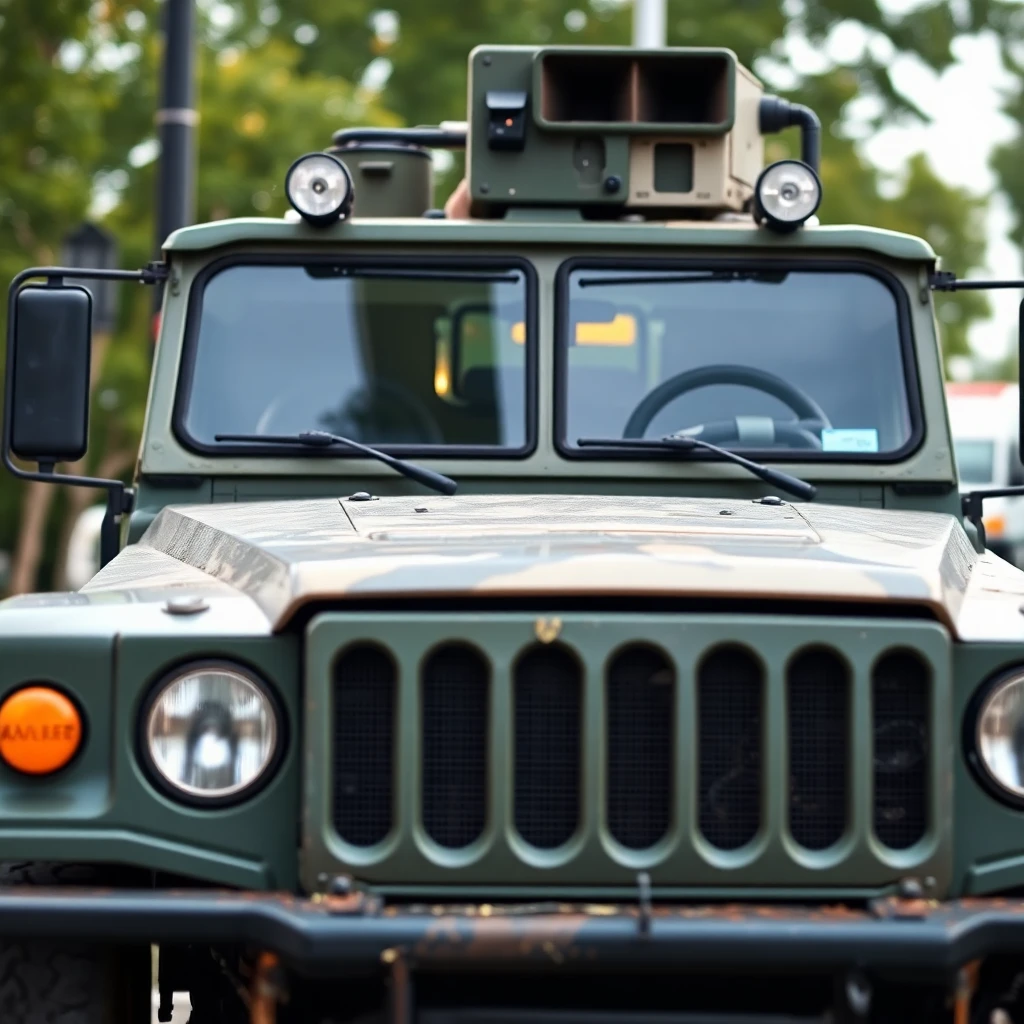
Lighting is the most common sticking point for surplus HMMWV owners trying to get street-legal. Military lighting systems were designed for convoy blackout conditions and combat zones, not DOT compliance. If your Humvee rolled off a GovPlanet auction with blackout lights intact and no civilian turn signals, you've got some work ahead.
What DOT-Approved Lighting Means in Practice
DOT-approved lighting means the lens and lamp assembly are certified to Federal Motor Vehicle Safety Standards (FMVSS). Look for a DOT stamp on the lens. For HMMWVs, aftermarket use kits are widely available and install in a few hours if you're comfortable with military wiring (which is its own language, honestly). Amber turn signals front and rear are the most commonly flagged missing item during inspections.
Headlights on the M998 and M1097 are usually fine since the military used sealed beam units that are road-legal. The problem is typically the auxiliary systems: marker lights, brake lights wired to a different circuit than civilian norms, and missing reflectors.
The Humvee lighting requirements street-legal guide goes deep on the exact standards, which variants need what upgrades, and where to source compliant hardware.
Lighting Requirements by Common M-Series Variants
| Vehicle | Turn Signals Stock? | Brake Lights Stock? | Typical Upgrade Needed |
|---|---|---|---|
| M998 HMMWV (cargo) | No | Partial | Full civilian use + amber signals |
| M1097 HMMWV (heavy) | No | Partial | Full civilian use + amber signals |
| M1025/M1026 HMMWV (armament) | No | No | Full lighting rebuild required |
| M35 Deuce-and-a-Half | Sometimes | Yes (military spec) | DOT marker lights, reflectors |
| M939 5-Ton | Sometimes | Yes (military spec) | DOT reflectors, clearance lights |
Braking and Mechanical Safety Standards for Surplus Military Vehicles
Brake systems on HMMWV and M-series trucks are by design, but they weren't serviced by a fleet shop. They were used hard, then surplused. Before you drive anything on the road, the brake system deserves a full inspection regardless of what the title paperwork says.
HMMWV Brake System Basics
The M998 uses an inboard four-wheel hydraulic disc brake system, which is different from anything you'd find on a civilian truck. The caliper assemblies are mounted inboard at the gearbox, not at the wheel hub, which means brake work is less intuitive if you're used to conventional setups. Fluid condition and caliper function should be the first thing you check on any auction-sourced HMMWV.
Air brake variants (more common on the M35 and M939 series) add another layer: air dryer condition, reservoir integrity, and slack adjuster travel all need to be within spec. Air brake systems on surplus trucks haven't always been maintained by the book.
Tire and Wheel Safety Checks
The run-flat inserts on HMMWV wheels are a common failure point. They degrade over time and can cause handling problems you won't expect. If your HMMWV came with the original central tire inflation system (CTIS), make sure it's functional or disabled cleanly. A CTIS that's partially working can drop tire pressure unexpectedly at highway speeds.
DOT tire ratings are required for road use in most states. Military spec tires (NDT, MSS, or XML) may or may not carry a DOT rating depending on the age and manufacturer. Check the sidewall before assuming compliance.
Honest take: get a pre-title mechanical inspection from someone who knows military vehicles before you put plates on it. The money you spend there is a lot cheaper than finding out a brake caliper is seized at 55 mph.
VIN Verification and Documentation for Military Vehicle Safety Compliance
Most states require a VIN verification before they'll issue a title for a surplus military vehicle. The process varies significantly by state, but it almost always involves a physical inspection of the VIN plate or stamping on the frame to confirm it matches the paperwork.
How VIN Verification Works on M-Series Vehicles
HMMWV VINs are stamped on a data plate riveted to the vehicle body, and also stamped on the frame rail. The DoD typically transfers the vehicle with an SF-97 (Certificate to Obtain Title to a Vehicle) or a DD-1348 (issue/transfer document). The SF-97 is the document that most states recognize as the equivalent of a certificate of origin for titling purposes.
Some states require a state trooper or DMV agent to physically inspect and certify the VIN before they'll process the title. Others accept a notarized VIN inspection form. Montana and South Dakota have more straightforward processes than high-scrutiny states like California or Texas.
The complete breakdown of VIN inspection processes by state is covered in the VIN inspection military vehicle state requirements guide, which is worth reading before you drive to your county office expecting a quick stamp.
Sorting out which document you actually have and what it covers is step one. The DD-1348 vs SF-97 military vehicle documents, which do you need article explains the difference and what each document accesss in the title process.
Why Montana Registration Simplifies the Safety Compliance Path
Montana does not require emissions testing or a state safety inspection for most vehicle registrations. That matters for surplus military vehicle owners because it removes the most unpredictable variable in the registration process. You still need to meet the mechanical standards to drive the vehicle safely, but Montana doesn't gate your registration on a pass/fail inspection that varies by county.
Registering through a Montana LLC also means no sales tax, which on a $15,000, $40,000 surplus HMMWV represents real money. The Montana LLC vehicle registration benefits page covers the complete cost picture.
Ready to cut through the paperwork on your military vehicle registration? Find out how we can help with your HMMWV or M-series title and plates.
See How We Can Help With Your Military Vehicle Registration →State-by-State Differences in Military Vehicle Safety Requirements
There's no single federal standard that governs surplus military vehicles on public roads. Each state writes its own rules, and some have created specific exemptions for historic military vehicles while others apply full commercial truck standards to anything over 10,000 lbs GVWR.
High-Scrutiny States vs. Low-Barrier States
California requires emissions compliance and a referee inspection for any vehicle that doesn't have a confirmed CARB exemption. Texas requires a safety inspection and applies state sales tax at registration, though the SF-97 pathway has historically worked for titling. If you're dealing with military vehicle registration in Texas, the HMMWV registration Texas SF-97 Montana LLC guide covers the specific process and where Montana LLC registration fits in.
Florida and Ohio have their own quirks. The register Humvee in Florida guide and the HMMWV registration Ohio Indiana midwest states guide both address state-specific requirements that aren't obvious from reading the motor vehicle code.
Historic Military Vehicle Exemptions
Several states offer historic or antique vehicle plates for military vehicles over 25 years old. These typically come with mileage restrictions (often limited to parades, exhibitions, and occasional use) but exempt the vehicle from safety inspections and sometimes emissions. If you're not planning daily driver use, this can be a practical path that avoids the full street-legal modification process.
The tradeoff is that historic plates restrict how and when you can use the vehicle. If you want full road access, you need full compliance. For collectors who want weekend use only, historic exemptions are worth considering.
A state-by-state FAQ is available at how to register military vehicle by state FAQ, which covers requirements across all 50 states in a readable format.
Frequently Asked Questions About Military Vehicle Safety Requirements
Do surplus military vehicles need to pass a safety inspection to get titled?
It depends on the state. Montana does not require a safety inspection for most vehicle registrations, which is one reason many military vehicle owners register through a Montana LLC. States like California and Texas do require inspections, and the specific requirements vary based on the vehicle's GVWR and use classification. If you're in a high-scrutiny state, getting a mechanical inspection from a shop familiar with military vehicles before starting the title process is a smart move. Check your state's motor vehicle code or consult a registration specialist to confirm what applies to your specific vehicle.
What lighting does a HMMWV need to be street-legal?
At minimum, you need DOT-approved front and rear turn signals, brake lights, tail lights, headlights, and side marker lights. Most stock HMMWV configurations don't include compliant civilian turn signals, so a use upgrade is almost always required. Some states also require reflectors at specific positions on the body. The exact standard is Federal Motor Vehicle Safety Standard (FMVSS) 108, which covers lighting equipment for motor vehicles. Aftermarket compliance kits designed specifically for the M998 and M1097 are available from military vehicle suppliers and install without major modification to the body.
What documents do I need from the DoD to title a surplus HMMWV?
The primary document is the SF-97, which is the Certificate to Obtain Title to a Vehicle. This is issued by the DoD or the disposal agency (typically DLA Disposition Services) at the time of transfer. Some vehicles come with a DD-1348 instead, which is a material issue document and may require additional processing to convert to a title-ready document. Most states will accept the SF-97 as proof of ownership. If you purchased through GovPlanet, they typically include the SF-97 in the transfer package. Missing documents are one of the most common causes of registration delays for ex-military vehicle owners.
Are HMMWV tires DOT-rated for road use?
Not always. Military tires like the Goodyear XML and similar spec tires used on M998 HMMWVs may or may not carry a DOT sidewall marking depending on the production run and supplier. If the tire doesn't have a DOT stamp on the sidewall, it's not rated for highway use under federal standards and could create issues during a state inspection. Before registering for road use, check each tire sidewall and replace any that lack the DOT marking. This is also a good time to inspect tread depth and check the run-flat inserts, which degrade over time even when stored.
Can I register a military vehicle in Montana if I don't live there?
Yes. Montana allows non-residents to register vehicles through a Montana LLC. The LLC is formed as a Montana business entity, and the vehicle is titled in the LLC's name. This is a well-established process used by collectors across all 50 states. It means no sales tax, no emissions testing, and no safety inspection requirement at registration. You receive Montana plates and registration documents by mail. The process is fully remote, meaning you don't travel to Montana to complete it. The HMMWV registration complete guide walks through the full process step by step.
What are the braking requirements for a street-legal HMMWV?
A HMMWV must have a functioning service brake system and a working parking brake to be road-compliant. The M998's inboard hydraulic disc brake system meets service brake standards when properly maintained, but many surplused vehicles have neglected brake fluid, worn caliper seals, or deteriorated hoses. Most states don't specify the brake architecture, just that the brakes must stop the vehicle within a defined distance. Have the full system inspected and serviced before road use. This isn't just a compliance issue, it's a safety one. The HMMWV is heavy, and degraded brakes on a 10,000-pound vehicle are not a small risk.
Does a deuce-and-a-half have different safety requirements than a HMMWV?
Yes, and the differences matter. The M35 deuce-and-a-half and the M939 5-ton trucks fall into commercial truck territory under most state vehicle codes due to their GVWR. This means they may require a commercial driver's license (CDL) to operate on public roads, air brake endorsement if the vehicle has an air brake system, and more rigorous inspection standards. Some states have exemptions for farm vehicles or historic military vehicles that reduce these requirements. Montana registration can help with the title and plates, but CDL requirements are a driver licensing issue that registration doesn't change. The M35 deuce-and-a-half Montana registration guide covers the full compliance picture for these vehicles.
Where can I find the Montana registration assistance fee schedule?
The Montana Vehicle Title and Registration page through the Montana DOJ Motor Vehicle Division publishes the current fee schedule for all vehicle types. Fees for military vehicles registered through a Montana LLC are based on the vehicle's age and weight. Older vehicles typically Eligible for a flat-rate permanent registration, which means no annual renewal fee. This is one of the significant cost advantages of Montana registration for surplus military vehicles, which tend to be 20 to 30 years old.
You've got the vehicle. Now get it properly titled, plated, and on the road. Our team works with HMMWV and M-series owners across all 50 states to work through the registration paperwork, from SF-97 to Montana plates arriving at your door.
Start Your Military Vehicle Registration Today, No Hidden Fees →Military vehicle safety requirements aren't designed to keep you off the road. They're the checklist that gets you there compliantly and safely. Whether you're running an M998 HMMWV, an M1097, or a deuce-and-a-half, the path to street-legal operation follows the same core logic: get the lighting right, confirm the brakes work, verify the VIN documents are clean, and choose a registration state that doesn't add unnecessary friction to the process. Montana checks that last box better than almost anywhere else in the country, and it's the reason most serious military vehicle collectors end up here eventually.