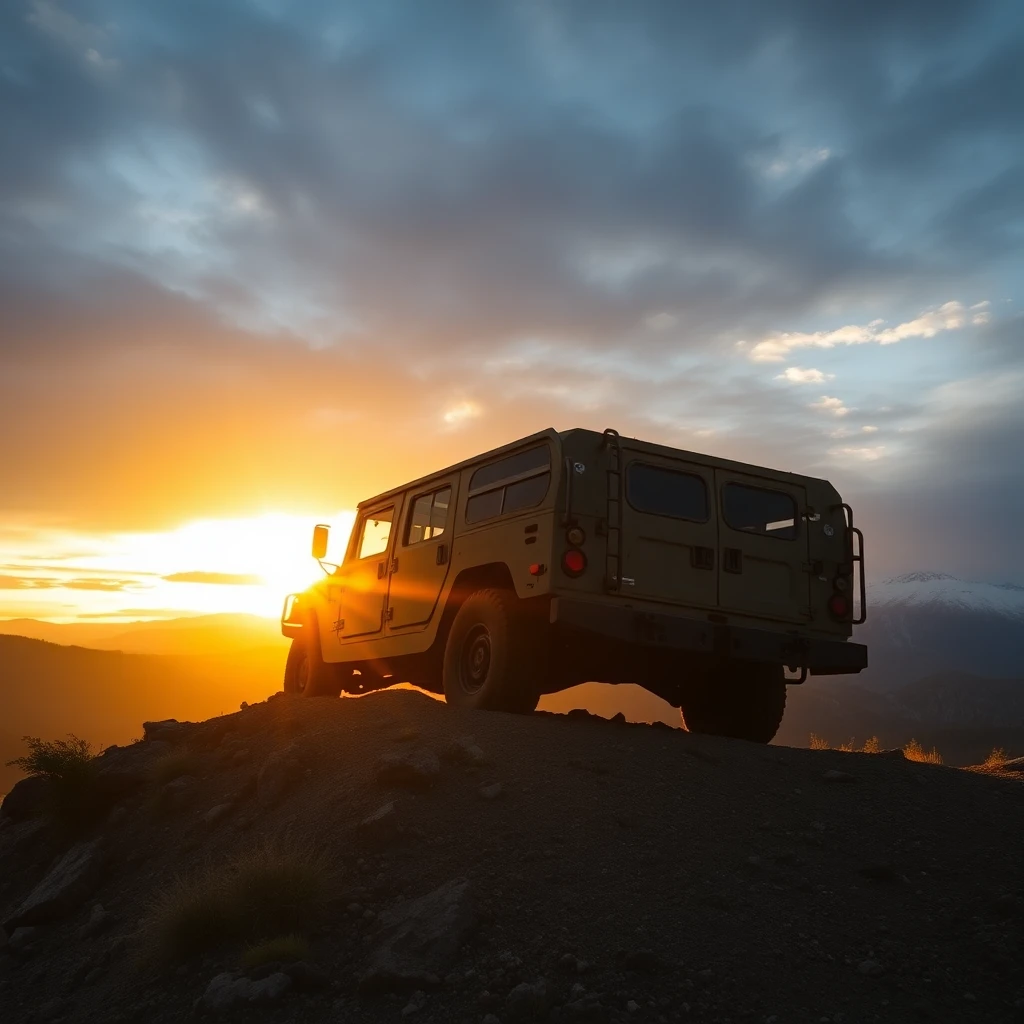
The HMMWV, which most people know as the Humvee, has been the backbone of U.S. military ground operations for over four decades. Designed in the early 1980s to replace the aging Jeep fleet, the High Mobility Multipurpose Wheeled Vehicle answered a very specific need: one platform that could handle dozens of missions, from troop transport to weapons carrier to ambulance. The question of why the U.S. Military still relies on this platform in 2024 has a surprisingly layered answer.
This article breaks down the engineering behind the HMMWV military vehicle, its battlefield history, how it compares to newer platforms, and what that means if you're a civilian owner looking to get yours registered and street-legal.
Honestly, the HMMWV's staying power isn't an accident. It's the result of deliberate design choices that have proven hard to replace at scale.
Own a surplus HMMWV and ready to get it plated? We provide complete registration assistance for military vehicles in all 50 states.
Get Started →The Engineering Case for the HMMWV Military Vehicle
AM General first delivered the HMMWV to the Army in 1985. The platform was built around a wide, low-slung chassis with a high ground clearance and a 6.2-liter diesel V8 at its core. That basic architecture has remained largely unchanged for good reason: it works.
What Makes the HMMWV's Design So Durable?
The vehicle's central tire inflation system (CTIS) lets drivers adjust tire pressure on the move, adapting to sand, mud, or hard pack without stopping. The independent suspension at all four corners means one wheel hitting a mine or an IED doesn't necessarily destroy the entire drivetrain. That redundancy is baked into every design choice.
The wide track width, at 72 inches, gives the platform exceptional lateral stability. On slopes, in river crossings, and on mountain roads in Afghanistan, that stability has repeatedly kept crews upright when narrower vehicles would have rolled. No other light utility vehicle in the U.S. fleet has matched that combination of width, clearance, and driveability across such varied terrain.
Modularity Is the HMMWV's Real Strategic Advantage
There are over 15 recognized variants of the HMMWV military vehicle in active service. The same basic frame supports an armament carrier, a field ambulance, a TOW missile launcher, a communications vehicle, and a troop carrier. That modularity means the Army doesn't need 15 separate supply chains. One parts inventory largely supports all of them.
That logistical efficiency is enormously valuable in theater. When a unit in a forward operating base needs a replacement transfer case, the same part fits their M998 utility model and their M1097 cargo variant. That interchangeability has kept the platform viable long past what a single-purpose vehicle could manage.
Battlefield History: From Desert Storm to Afghanistan
The HMMWV got its first major combat test in Operation Desert Storm in 1991. Over 20,000 units deployed, and the platform performed well in the open desert conditions it was designed for. Light, fast, and mobile, it replaced the Jeep entirely and became the defining image of U.S. ground forces for the next two decades.
Ready to register your vehicle?
Join thousands of vehicle owners who use HMMWV Registration to handle their registration quickly.
Get Started →The IED Era Changed the Conversation
Iraq and Afghanistan exposed a real vulnerability: the original HMMWV was not designed to absorb the blast from improvised explosive devices. Early casualties in both theaters drove urgent upgrades, including add-on armor kits, up-armored variants like the M1114 and M1151, and eventually the Frag Kit 6 bolt-on armor package.
Those upgrades added significant weight, and the suspension was redesigned multiple times to compensate. Critics pointed to the MRAP (Mine-Resistant Ambush Protected) vehicle as the better solution for IED-heavy environments, and the military agreed, deploying MRAPs heavily from 2007 onward. But MRAPs were a supplement, not a replacement. They're too heavy and too large for many missions where a HMMWV still operates effectively.
Why the MRAP Didn't Replace the Humvee
A fully loaded MRAP can exceed 40,000 pounds. That weight limits where it can go, what bridges it can cross, and how quickly it can be transported by air. The HMMWV, even in its heaviest armored configuration, stays under 13,000 pounds. That difference matters enormously in airborne operations, mountain environments, and any theater where road infrastructure is limited.
The military's answer has been a tiered approach: MRAPs for high-threat convoy routes, HMMWVs for forward operations, patrols in lighter environments, and missions where air transport is required. The two platforms co-exist because they solve different problems.
HMMWV vs. JLTV: Why the Humvee Isn't Gone Yet
The Joint Light Tactical Vehicle, built by Oshkosh Defense, entered service in 2016 as the designated successor to the HMMWV. The JLTV offers better blast protection, higher payload, and improved armor integration from the factory. On paper, it should have replaced the Humvee by now. It hasn't, and the reasons are worth understanding.
Cost Differential Is a Real Factor
A single JLTV costs approximately $400,000 to $500,000 per unit. The HMMWV, fully upgraded, runs a fraction of that. The U.S. military has over 280,000 HMMWVs in its inventory. Replacing all of them with JLTVs would cost well over $100 billion. That procurement reality has slowed the transition considerably, and budget cycles have repeatedly deferred large-scale JLTV purchases.
The current plan phases in JLTVs for combat roles while retaining HMMWVs for lower-threat missions, training, and support roles. That means the Humvee will likely remain in active U.S. service through the 2030s. For surplus buyers, that continued military use also keeps the parts supply and mechanical knowledge base alive longer.
How Does the HMMWV Compare to Allied and Foreign Equivalents?
Several NATO allies use or have used the HMMWV, including Canada, Australia, and various European partners. India's military uses the Force Gurkha and Tata LPTA platforms in roles similar to the HMMWV. None of these platforms match the HMMWV's combination of production volume, parts availability, and proven performance record across every major U.S. military conflict since 1991.
| Platform | Weight (lbs) | Payload (lbs) | Approximate Unit Cost | Primary Use |
|---|---|---|---|---|
| HMMWV (M1151) | 10,300 | 2,200 | ~$65,000 (base) | Multi-role utility, combat, transport |
| JLTV (Oshkosh) | 14,000+ | 3,500 | ~$430,000 | Combat, high-threat environments |
| MRAP (MaxxPro) | 38,000+ | 4,500 | ~$500,000 | IED-heavy convoy routes |
| M35 Deuce-and-a-Half | 13,000 | 5,000+ | Surplus varies | Heavy cargo, logistics |
Ready to title your surplus HMMWV or M-series vehicle? Our registration specialists know the paperwork, the DoD documents, and the fastest path to plates in all 50 states.
See How We Can Help With Your HMMWV Registration →Army Surplus Military Vehicles: What Civilian Ownership Looks Like
When the DoD cycles out older HMMWVs, they move through DLA Disposition Services and eventually reach civilian hands through platforms like GovPlanet and government surplus auctions. These are demilitarized HMMWV units, meaning weapons systems and certain military-specific components have been removed in compliance with DEMIL standards.
What Documents Come With a Surplus HMMWV?
A properly released surplus HMMWV should come with an SF-97, the Standard Form used to certify title transfer from the federal government to a civilian buyer. Some units come with a DD-1348 release form instead. Either way, you'll need that documentation to establish a civilian title. Without it, getting the vehicle plated becomes significantly more complex.
The gap between "I bought it at auction" and "I have plates on it" is where most civilian HMMWV owners run into problems. Titles, chain of ownership, DEMIL codes, and state-specific registration rules all intersect at once. A breakdown of those title red flags is worth reading before you buy: see Military Vehicle Title Red Flags Every Buyer Needs to Know for the full picture on what to check before money changes hands.
Getting a Surplus HMMWV Street-Legal
A demilitarized HMMWV versus a civilian Humvee (H1) isn't the same thing. The civilian H1 was built to meet DOT standards from the factory. A surplus military HMMWV was built to MIL-SPEC, which means lighting, mirrors, speedometers, and other DOT-required equipment may be missing or non-compliant. You'll need to address those items before the vehicle is street-legal in most states.
The full list of what's typically required is covered in Street Legal Humvee: What It Actually Takes to Get Plated and Drive on Public Roads. That post covers lighting, mirrors, speedometers, braking, and emissions, depending on your state.
For a closer look at the specific modifications most owners need, Humvee Street Legal Modifications: The Complete Owner's Guide walks through every item with specifics on what inspectors and DMV examiners typically check.
Registering Your HMMWV: What the Process Actually Looks Like
Montana and South Dakota are the two most common states for surplus military vehicle registration, and for good reason. Montana has no sales tax on vehicle purchases, no emissions testing requirements, and a title process that works well for vehicles with non-standard documentation. South Dakota offers a similar pathway for owners who want to establish residency-based registration with low fees.
What Does HMMWV Registration Cost?
Costs vary by state and vehicle weight, but Montana registration for a surplus HMMWV typically runs a few hundred dollars in state fees, plus the cost of working with a private registration specialist to prepare and file the paperwork correctly. There's no sales tax to pay in Montana, which alone can save thousands on a vehicle purchase. The full Montana fee schedule is published by the Montana Motor Vehicle Division.
If you're asking how much HMMWV registration costs overall, the honest answer is: it depends on whether you have clean title documentation, which state you're registering in, and whether any lien or bonded title process is needed. A detailed breakdown is available in HMMWV Title Transfer: What You Need, What It Costs, and How to Get It Done.
The SF-97 Title Process for Military Vehicles
The SF-97 is the key document that converts a military vehicle from federal property to civilian title. Getting it right matters. If the form is incomplete, improperly signed, or lists the wrong DEMIL code, many states will reject the title application. Our post SF97 Title Process: How to Title Your Surplus Military Vehicle covers exactly what to look for on that form and how to handle common problems.
For owners registering in Texas or other states with specific military vehicle rules, the process has additional steps. The guide on Register Military Vehicle in Any State: What Every HMMWV Owner Needs to Know covers state-by-state requirements including Texas, Florida, and California.
Frequently Asked Questions
Why does the U.S. Military still use the HMMWV instead of replacing it with the JLTV?
The primary reasons are cost and volume. The U.S. military has over 280,000 HMMWVs in its inventory. Replacing all of them with JLTVs, which cost $400,000 to $500,000 each, would require a procurement budget that hasn't been authorized. The transition is ongoing, with JLTVs taking over combat roles and HMMWVs retained for training, support, and lower-threat missions. The HMMWV is expected to remain in active service through at least the mid-2030s.
What is the difference between a Jeep and a Humvee or HMMWV?
The Jeep and the HMMWV served similar broad roles as light utility vehicles, but they're very different machines. The military Jeep, specifically the M151 MUTT, was narrow, light, and relatively simple. The HMMWV is significantly wider (72-inch track), heavier, more capable off-road, and designed to carry far greater payloads and more weapons variants. The HMMWV replaced the Jeep across the U.S. military in the mid-1980s precisely because the Jeep's design had reached its practical limits for modern military requirements.
Can civilians buy and drive a surplus HMMWV on public roads?
Yes. Surplus HMMWVs are sold through government auction platforms and DLA Disposition Services. Once you have the vehicle and the proper transfer documents, including an SF-97 or DD-1348, you can title and register it for civilian street use. The vehicle typically needs DOT-compliant lighting, mirrors, and other modifications before it's street-legal, depending on your state. Montana and South Dakota are the most common registration states for surplus military vehicles due to their favorable fee structures and title processes.
What is a demilitarized HMMWV vs. a civilian Humvee?
A demilitarized HMMWV is a military-surplus unit that has had weapons systems and certain restricted components removed per DEMIL requirements before civilian sale. A civilian Humvee, typically the AM General H1, was built specifically for the civilian market with DOT compliance built in from the factory. The civilian H1 doesn't require the same modifications as a surplus HMMWV to be street-legal, but it also never served in military operations. Most collectors and operators are buying surplus HMMWVs, not civilian H1s.
What military documents do I need to register a surplus HMMWV?
You'll typically need an SF-97 (Standard Form 97, the Certificate of Release or Abandonment of a Military Vehicle) or a DD-1348 (Disposal Release Document). Some sellers also provide a Materiel Safety Officer (MSO) form depending on the disposition path. These documents establish that the vehicle was compliantly released from federal ownership and is clear for civilian title. Missing or incorrect documentation is the most common reason title applications get rejected. See our guide on SF97 Title Process: How to Title Your Surplus Military Vehicle for specifics.
Does Montana registration work for military vehicles in all 50 states?
Montana registration through an LLC is a widely used approach for surplus military vehicle owners across the country. Because Montana has no sales tax and no emissions testing requirements, it's particularly appealing for high-value or non-standard vehicles like HMMWVs. The resulting Montana plates and title are recognized nationwide. Requirements and compliance considerations vary by state, so working with a private registration specialist familiar with military vehicles is the right call before starting the process.
What are the emissions requirements for military vehicles?
Surplus military vehicles are often exempt from standard emissions testing in many states, particularly when registered as historical or special-use vehicles. Montana has no statewide emissions testing requirement at all, which is a major reason it's a preferred registration state for HMMWVs. State rules vary significantly. For a full breakdown, see Emissions Requirements for Military Vehicles: State Rules, Exemptions, and How Montana Changes Everything.
Your HMMWV deserves plates. Get your surplus military vehicle titled and registered with specialists who know the SF-97, the DEMIL codes, and the exact paperwork your state requires. All 50 states. Fully remote. No surprises.
Start Your HMMWV Registration TodayThe HMMWV has stayed in U.S. military service because nothing else has matched its combination of modularity, affordability, and proven performance across four decades of real-world operations. For civilian owners, that same durability makes the surplus HMMWV one of the most capable and interesting vehicles you can put plates on. Getting from auction win to street-legal requires clean title documentation, the right state, and a clear understanding of what modifications your vehicle needs. The information above gives you the foundation. When you're ready to move on the paperwork, our registration specialists are ready to help.
Related Reading