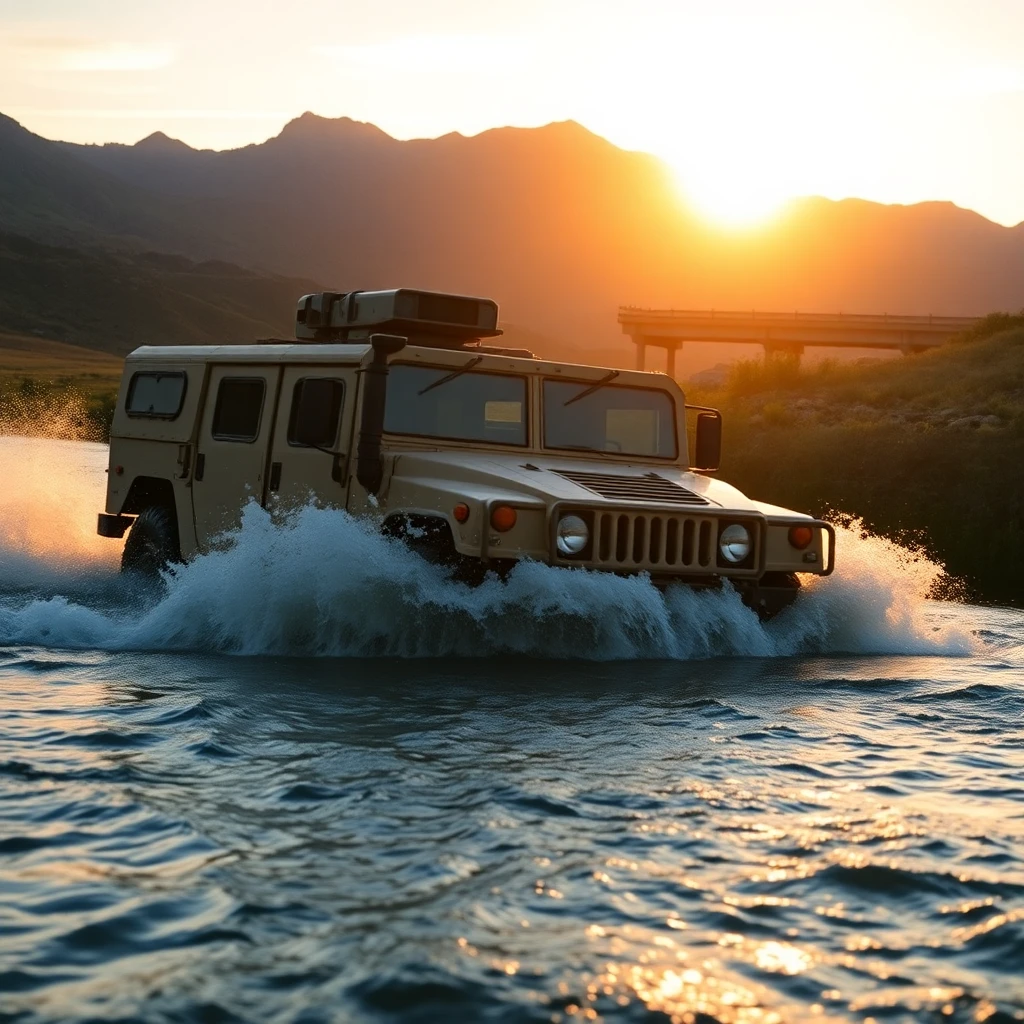
The M998 HMMWV and the Humvee are not the same thing, but they are closely related, and the confusion is everywhere. If you've bought surplus, or you're shopping for one, understanding the distinction matters, especially title documentation, DEMIL status, and registration paperwork. This guide breaks down the exact differences between the M998 military variant and the civilian Humvee platform, so you know precisely what you own or what you're buying.
You'll get a clear look at the military designation system, the variant lineup, how the AM General HUMMER fits into the picture, and what all of this means the moment you're ready to plate it and drive it on public roads.
Honestly, most buyers don't find this out until they're already holding a DD-1348 or an SF-97 and staring at paperwork that doesn't match what they expected.
What the M998 Designation Actually Means in the HMMWV Family
HMMWV stands for High Mobility Multipurpose Wheeled Vehicle. The military uses a structured alphanumeric designation system, and M998 is just one variant in a long production line built by AM General. The "M" prefix is a military item designator, and the number identifies the specific configuration.
The M998 is the baseline cargo/troop carrier variant, typically a two-door soft-top or hard-top with a 1.25-ton payload rating and an open rear cargo area. It entered service in the early 1980s as a replacement for the M151 MUTT and the M880 series trucks. Over time, AM General produced more than a dozen additional variants off the same platform.
Common M-Series Variants You'll See on the Surplus Market
- M998: Base cargo/troop carrier, two-door, rear cargo area
- M1025 / M1026: Armament carrier, configured for mounted weapons systems
- M1035: Soft-top ambulance variant
- M1037: S250 shelter carrier
- M1043 / M1044: Armament carrier with improved armor protection
- M1097: Heavy variant with increased GVW, common in surplus lots
- M1114: Up-armored variant, IED-era production, rare on the civilian market
All of these share the same core drivetrain, the 6.2L or 6.5L turbocharged diesel, the same portal-axle suspension, and the same 16-inch ground clearance profile. The variant number tells you the body configuration and intended use, not the underlying mechanical platform.
Why the Variant Number Matters for Your Title
When surplus HMMWVs enter civilian hands through GovPlanet auctions or DLA disposal, the paperwork, specifically the SF-97 (the military's Certificate to Obtain Title to a Vehicle), lists the exact NSN and model designation. If it says M998, that's what you're registering. Some states will ask for the body type. Knowing your variant avoids confusion at the paperwork stage.
More details on what to expect with title documentation are covered in our guide to the SF97 Title Process: How to Title Your Surplus Military Vehicle. That resource walks through exactly how the SF-97 feeds into a civilian title, step by step.
What "Humvee" Actually Means, and Where the Word Comes From
"Humvee" is a phonetic shorthand derived from HMMWV. It became the widely recognized name during the Gulf War era, largely because news coverage needed something pronounceable. AM General later trademarked "Humvee" as a commercial brand name, so technically every military HMMWV is also a Humvee, but not every Humvee is an M998.
Ready to register your vehicle?
Join thousands of vehicle owners who use HMMWV Registration to handle their registration quickly.
Get Started →The term gets used loosely in three different contexts, and mixing them up causes real problems when buying or registering one.
Three Ways "Humvee" Gets Used
- Informally for any military HMMWV variant, regardless of designation. M998, M1097, M1114, all get called "a Humvee" in casual conversation.
- As the AM General commercial brand, used in marketing and trademark filings. When AM General sells directly to non-military buyers, they use the Humvee name.
- To describe the civilian H1, built by AM General starting in 1992, which is a street-legal version built to civilian safety standards rather than military specs.
The third use is where the real difference lives. The civilian H1, sold as the Hummer H1, has a VIN, factory lighting, DOT-compliant glass, and all the safety features required for civilian road use. A surplus M998 HMMWV does not come from the factory with any of those. That's the core functional distinction between a military HMMWV and a Humvee in the commercial sense.
M998 HMMWV vs Civilian Humvee: Spec and Feature Comparison
Here's where the differences get concrete. If you're deciding between a surplus M998 and a civilian H1, or trying to figure out what modifications your M998 needs before it can be plated, this comparison is the place to start.
| Feature | M998 HMMWV (Military Surplus) | Civilian Humvee (AM General H1) |
|---|---|---|
| Manufacturer | AM General (DoD contract) | AM General (commercial production) |
| Production Start | 1984 | 1992 |
| VIN Format | NSN / military serial, no standard VIN | Standard 17-digit VIN |
| DOT Safety Compliance | Not factory-equipped for civilian roads | Factory DOT-compliant |
| Lighting | Blackout / tactical lighting only | Full civilian headlight and signal package |
| Engine (typical) | 6.2L or 6.5L turbo diesel | 6.2L or 6.5L turbo diesel (same block) |
| Ground Clearance | 16 inches | 16 inches |
| Width | 86.5 inches | 86.5 inches |
| GVWR | 7,700 lbs (M998), up to 10,000 lbs (M1097) | ~8,600 lbs |
| Title Document | SF-97 (Certificate to Obtain Title) | Manufacturer's Certificate of Origin (MCO) |
| Registration Path | Requires state title application, often Montana or SD | Standard civilian title process |
| DEMIL Required | Depends on variant and DD-1348 classification | Not applicable |
| Street-Legal Out of the Box | No | Yes |
The mechanical platform is virtually identical. The differences live in the documentation, the safety equipment, and the compliance path. That's what makes registering a surplus M998 HMMWV a specialist process rather than a standard DMV transaction.
For a detailed look at what modifications your M998 actually needs before it can run on public roads, see our guide on Humvee Street Legal Modifications: What Your HMMWV Actually Needs.
Where AM General, the HUMMER Brand, and the H2 Fit In
This is where most people get confused. AM General built the military HMMWV. AM General also commercialized the H1. But in 1999, GM licensed the Hummer name and brand to produce the H2 and later the H3, which are entirely different vehicles built on GM truck platforms.
AM General HUMMER H1 vs GM Hummer H2 vs Military HMMWV
The H2 shares essentially no mechanical DNA with the military HMMWV. It rides on a GMT820 truck frame (related to the Tahoe and Suburban), has a standard civilian drivetrain, and was marketed on brand association rather than military heritage. The width, the portal axles, the 16-inch ground clearance, and the diesel powertrain are all absent on the H2.
The H1 is the closest civilian equivalent to an M998, built on the same platform, but engineered for the road from day one. It has a VIN, factory DOT compliance, and a standard MCO rather than an SF-97. Buying one is straightforward. Registering a surplus M998 is a different process entirely.
The H3, introduced in 2005, moved even further from the military origins, using a compact truck platform with no connection to AM General production.
What Buyers Confuse Most Often
Sellers on the civilian market sometimes list M998 surplus units as "Humvees" without specifying which they mean. If the listing shows an SF-97 or DD-1348 as the title document, you're looking at a surplus military vehicle, not a civilian H1. That distinction changes your registration path significantly.
Our guide Military Vehicle Title Red Flags Every Buyer Needs to Know covers the documentation issues to watch for before you buy.
What the M998 Designation Means for Registration and Title Work
Military HMMWVs don't come with a standard 17-digit VIN. They use a National Stock Number (NSN) and a military serial. Some states refuse to title them directly. That's why Montana and South Dakota have become the go-to registration paths for surplus military vehicle owners across the country.
Why Montana Works for M998 Registration
Montana has no sales tax, no emissions testing requirement, and a title process that recognizes the SF-97 as a valid ownership document. Registration is managed remotely, and plates ship to you regardless of where you live. For a vehicle that might represent $20,000 to $60,000 in value, avoiding sales tax alone is a significant number.
The Montana path also works for M1097s, M1025s, M1114s, and other variants. The process doesn't change based on HMMWV variant, but your DEMIL paperwork must be clean. A more complete breakdown of what Montana registration involves is available in our resource on Register Military Vehicle in Any State: What Every HMMWV Owner Needs to Know.
DEMIL Status and Why It Affects Your Title
DEMIL stands for demilitarization. Before a military vehicle enters the surplus market, it's supposed to have certain military-only systems removed or disabled. The DD-1348 disposal document should reflect the DEMIL code assigned to the vehicle.
Most M998 HMMWVs that reach GovPlanet or DLA surplus auctions carry a DEMIL B or DEMIL Q code, meaning some demilitarization was required but the vehicle itself is transferable. If a vehicle has an unresolved DEMIL A classification, it cannot be titled or sold on the civilian market. Understanding what your paperwork says before you buy prevents serious headaches later.
After you've cleared DEMIL status, the next step is working through the safety requirements for road use. Our guide on Military Vehicle Safety Requirements: What Every Surplus Owner Must Know covers what your HMMWV needs to be compliant for street use.
The SF-97 Is Your Starting Point
The SF-97 is the Standard Form 97, officially titled "Certificate to Obtain Title to a Vehicle." This is the primary ownership document for surplus military vehicles released to civilian buyers. Without it, or with a damaged or incomplete one, getting a civilian title is significantly more complicated.
Some buyers end up needing a bonded title or a court-ordered title if the SF-97 is missing. It's worth knowing this before you hand over money at auction. The full process is covered in our HMMWV Title Transfer: What You Need, What It Costs, and How to Get It Done guide.
Frequently Asked Questions
Is an M998 HMMWV the same as a Humvee?
Not exactly. The M998 is a specific military variant within the HMMWV family, designated as the baseline cargo and troop carrier. "Humvee" is the colloquial and trademarked name for the HMMWV platform broadly, but it also applies to the civilian AM General H1. Every M998 is a Humvee in the loose sense, but the civilian H1 Humvee is a different product with a standard VIN and factory DOT compliance that the M998 lacks.
What is the difference between a Humvee, HMMWV, and an AM General HUMMER?
HMMWV is the military designation. Humvee is the phonetic shorthand and AM General's commercial trademark. The AM General HUMMER (H1) is the civilian production version built from 1992 to 2006, sharing the same platform as the military HMMWV but manufactured to civilian road standards. The GM-produced Hummer H2 and H3 are unrelated vehicles built on civilian truck platforms and share no mechanical DNA with the military HMMWV.
What are some common problems with the HMMWV military Hummer?
Surplus M998 HMMWVs are mechanically tough but come with known issues. The 6.2L naturally aspirated diesel is prone to head gasket failures if overheated. Electrical systems degrade after years of field use. Central Tire Inflation System (CTIS) lines crack and leak. Steering gearboxes wear out and replacements can be expensive. The A-arm upper ball joints are a known wear point on high-mileage units. Budget for a full fluid service and inspection before putting any surplus HMMWV on the road.
What is the difference between a Jeep and a Humvee or HMMWV?
The Jeep and the HMMWV serve similar tactical roles but are entirely different vehicles. The Jeep, specifically the M151 MUTT series, was the HMMWV's predecessor in U.S. military service. The HMMWV is significantly larger, wider, heavier, and more capable off-road, with portal axles providing 16 inches of ground clearance compared to the Jeep's conventional solid axles. The Jeep platform was much more car-like in its construction. The HMMWV is a purpose-built tactical vehicle with no civilian road-legal equivalent until the commercial H1 appeared in 1992.
What is the flat black box on the front bumper of an HMMWV?
That flat black box is typically the Pioneer Tool Rack or a mounting bracket for a tow pintle or recovery equipment. On some variants, it houses a blackout driving light assembly or a slave receptacle cover for jump-starting with NATO slave cables. On vehicles equipped with a front-mounted winch, the box may be part of the winch fairlead or control housing. The specific purpose depends on the variant and any modifications made during its service life.
Does Montana registration work for all HMMWV variants, not just the M998?
Yes. Montana registration assistance applies to the full M-series lineup, including M998, M1097, M1025, M1035, M1114, and other variants. The process doesn't change based on which HMMWV variant you own. What matters is the condition of your SF-97, your DEMIL documentation, and whether the vehicle has a clean title path. Montana has no emissions testing and no sales tax, which makes it the preferred registration path for surplus military vehicle owners nationwide. Our team works through the paperwork requirements specific to your vehicle's documentation.
Where can I find M998 HMMWV surplus vehicles for sale?
GovPlanet is the primary auction platform for DoD surplus HMMWVs, operating under the DLA Disposition Services program. Vehicles are listed with condition grades and photos, and the SF-97 is typically included. IronPlanet and PublicSurplus also list military surplus equipment periodically. After you've won an auction, the registration paperwork is the next step. Our guide on GovPlanet Military Vehicle Registration: What to Do After You Win the Auction walks through exactly what happens post-purchase.
Ready to Register Your M998 HMMWV or Civilian Humvee?
Whether you own a surplus M998 HMMWV with an SF-97, an M1097 from a GovPlanet auction, or a civilian H1 that needs Montana plates, the registration process has specific requirements that generic DMV guidance won't cover. We specialize in military-surplus vehicle registration, and we assist with the paperwork from title conversion through plate delivery, fully remote, in all 50 states.
Use the link below to tell us about your vehicle. We'll identify your registration path and get your HMMWV plated and road-ready.
Related Reading