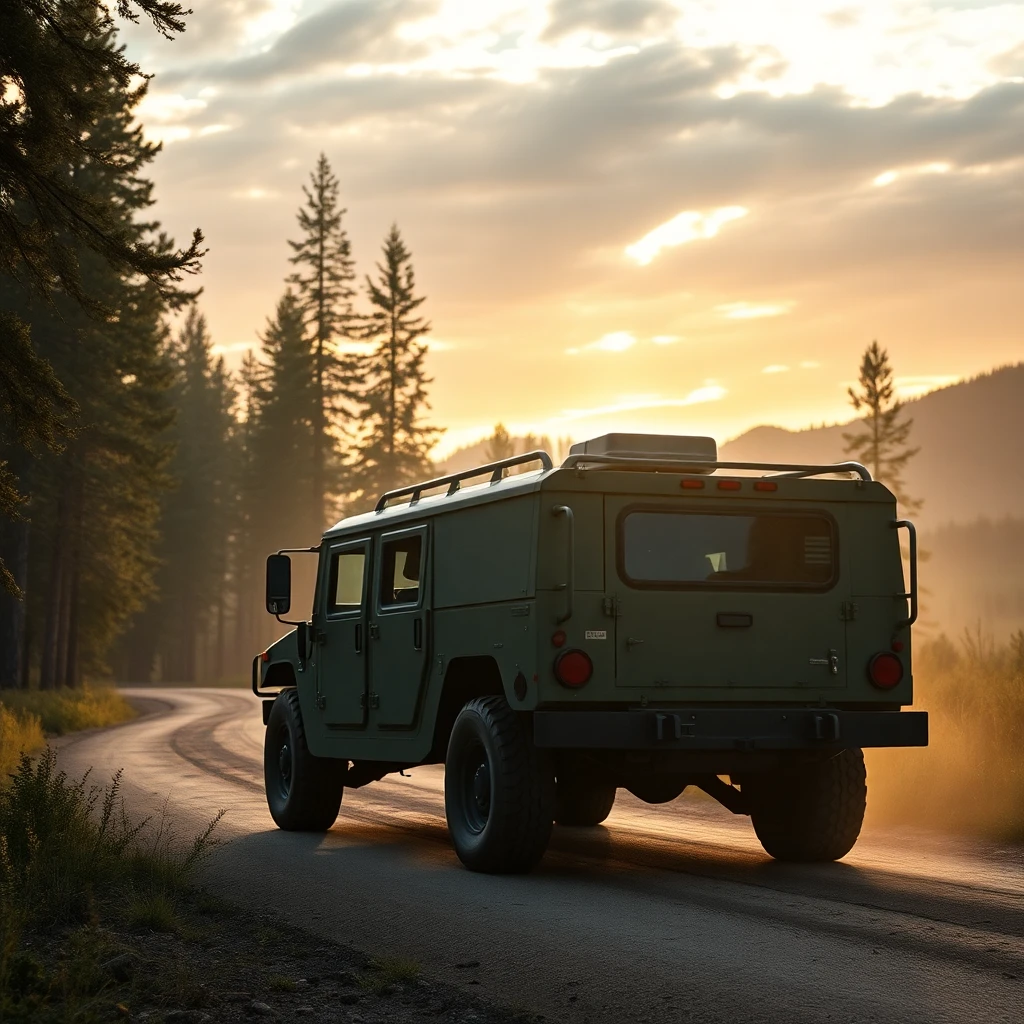
The difference between a Jeep and a Humvee or HMMWV is bigger than most people realize. Both carry military pedigrees, both show up in surplus auctions, and both attract serious owners, but they were built for completely different missions and perform very differently on public roads. This guide breaks down what sets them apart, what each platform actually is, and what you need to know as a current or prospective owner who wants to get one street-legal and plated.
The HMMWV (High Mobility Multipurpose Wheeled Vehicle) is a post-Vietnam-era tactical platform, introduced in 1984 and built by AM General. The Jeep, in its military form, traces back to World War II. They share almost nothing mechanically, and understanding those differences matters, especially once you're looking at titling, registration, and getting your vehicle on the road.
Read through to the end. You'll know exactly which vehicle is which, how they stack up side-by-side, and what registration path fits your situation.
What Is a Humvee or HMMWV Military Vehicle?
The HMMWV, universally called the Humvee, is the U.S. military's primary light tactical vehicle. AM General won the contract in 1983, deliveries began in 1984, and the platform has remained in active service ever since. It replaced the M151 jeep and a range of other light utility vehicles with one standardized chassis that could be configured for dozens of roles.
The Humvee wasn't designed for comfort. It was built for cross-country reliability, high ground clearance (16 inches), and the ability to ford 30 inches of water without preparation. The portal axle design drops the differential above the wheel centerline, which is why the vehicle sits so tall and the body is so wide (86 inches across).
HMMWV Variants: More Than One Vehicle
The M998 is the baseline cargo and troop carrier. The M1025 and M1026 are armament carriers. The M1097 is a heavy-duty variant designed for increased payload. The M1151 and M1152 are up-armored versions that saw extensive deployment in Iraq and Afghanistan. There are more than a dozen recognized variants, all sharing the same core drivetrain.
When you see a demilitarized HMMWV vs civilian Humvee comparison, the difference is mostly in armor and communications equipment. Demilitarized (DEMIL) vehicles have had weapons systems and classified components removed, but the core vehicle remains intact. The civilian H1 HUMMER, which AM General produced separately, shares the same basic architecture but was engineered for civilian sale from the start.
What Is the Difference Between a Humvee, HMMWV, and an AM General HUMMER?
HMMWV is the military designation. Humvee is the commercial name AM General trademarked. The H1 HUMMER is the civilian production model. All three share roots in the same AM General platform. The surplus military vehicles you find on GovPlanet are HMMWVs, not H1s, and the title and registration paperwork reflects that distinction. The SF-97 (Certificate of Release or Abandonment of Claim) or DD-1348 transfer form is what you'll start with, not a standard MSO.
A more detailed breakdown of that paperwork process is available in our SF97 Title Process: How to Title Your Surplus Military Vehicle guide, which walks through every document you'll need from day one.
What Is a Military Jeep and How Did It Evolve?
The military Jeep starts with the Willys MB and Ford GPW of World War II, a quarter-ton, 4x4 reconnaissance and general-purpose vehicle. It was small, light (roughly 2,400 lbs), and built to be air-dropped or pushed by infantry if needed. After the war, the design evolved into the M38, the M38A1, and eventually the M151 MUTT (Military Utility Tactical Truck), which stayed in service through the 1970s and into the early 1980s.
Ready to register your vehicle?
Join thousands of vehicle owners who use HMMWV Registration to handle their registration quickly.
Get Started →The civilian Jeep brand, now owned by Stellantis, shares DNA with those military origins but is a completely different product. A modern Wrangler or Gladiator is a consumer vehicle with emissions controls, airbags, and NHTSA compliance baked in from the factory. A surplus military Jeep, like an M38A1, is a vintage vehicle with a title history that may require bonded title work depending on the state.
Key Mechanical Differences Between a Jeep and a HMMWV
The HMMWV runs a 6.5L diesel V8 (or 6.2L in earlier models), paired with a three-speed automatic. It weighs between 5,200 and 10,000+ lbs depending on variant and armor. A military Jeep like the M38A1 runs a four-cylinder gasoline engine and weighs under 3,000 lbs. Ground clearance, payload capacity, and powertrain architecture are entirely different classes of vehicle.
Practically, this matters for street-legal operation. The Humvee's width alone (86 inches) means it technically qualifies as a wide load in some states. Speed is also a real consideration: the stock HMMWV tops out around 70 mph, and high-speed highway driving can stress the drivetrain. For a full picture of what highway operation actually involves, see our post on Street Legal Humvee: What It Actually Takes to Drive One on Public Roads.
Side-by-Side Comparison: Jeep vs Humvee vs HMMWV
The table below puts the most relevant specs side-by-side across three platforms: the WWII-era military Jeep (Willys MB), the M151 MUTT (the final military Jeep), and the baseline HMMWV M998. These are the vehicles most often discussed when owners ask about the difference between a Jeep and a Humvee.
| Specification | Willys MB (WWII Jeep) | M151 MUTT | HMMWV M998 |
|---|---|---|---|
| Era of Service | 1941, 1945 | 1960, 1984 | 1984, present |
| Engine | 2.2L 4-cyl gasoline | 2.2L 4-cyl gasoline | 6.2L / 6.5L V8 diesel |
| Curb Weight | ~2,450 lbs | ~2,360 lbs | ~5,200 lbs (base) |
| Ground Clearance | 8.75 inches | 10 inches | 16 inches |
| Width | 62 inches | 64 inches | 86 inches |
| Top Speed | ~65 mph | ~65 mph | ~70 mph |
| Drivetrain | 4x4 solid axle | 4x4 independent suspension | 4x4 portal axle |
| Payload (base) | 800 lbs | 1,250 lbs | 2,500 lbs |
| Civilian Version Available | CJ-2A (postwar Jeep) | No direct equivalent | H1 HUMMER (AM General) |
| Title Document (surplus) | Varies by state / bonded | SF-97 or bonded title | SF-97 or DD-1348 |
Registration Differences Between a Military Jeep and a HMMWV
Older military Jeeps, particularly the M38 and M38A1, are often old enough to qualify as antiques in many states, which simplifies registration significantly. The M151 MUTT presents a different challenge: it was subject to DEMIL restrictions that prevented civilian sale for decades. Many M151s on the market today carry bonded title or bill-of-sale-only paperwork, making a Montana LLC registration path one of the cleaner options available.
HMMWVs sold through DLA Disposition Services or GovPlanet typically come with an SF-97, the DoD document that functions as the manufacturer's statement of origin for surplus military vehicles. That document is the foundation for titling. Watch for red flags before you buy, and read our guide on Military Vehicle Title Red Flags Every Buyer Needs to Know.
Street-Legal Operation: Jeep vs Humvee on Public Roads
A modern civilian Jeep Wrangler rolls off the line street-federally recognized for road use — your home state's residency and tax rules still apply. A surplus military Jeep or HMMWV does not. Both require titling, registration, and in most cases, safety modifications before you can drive them on public roads. The question "is a HMMWV street legal?" comes up constantly, and the short answer is: it depends on your state and what modifications have been made.
The Humvee needs, at minimum, proper lighting (turn signals, brake lights, mirrors), a speedometer, and a valid title and registration. Some states add emissions requirements, which is one reason Montana registration is popular among HMMWV owners. Montana has no emissions testing requirement, no sales tax on vehicles, and allows out-of-state owners to title and plate through a Montana LLC.
Can You Drive a HMMWV on the Highway?
Yes, with the right setup. The HMMWV is rated for highway operation, but the stock 6.5L diesel runs best below 65 mph. Sustained highway speeds put real load on the drivetrain. Owners who regularly run their Humvees on the highway typically add transmission coolers and monitor fluid temperatures. The vehicle is also wide enough that lane positioning takes some adjustment coming from a standard pickup.
The modifications required to make a HMMWV highway-ready overlap heavily with what states require for street-legal compliance. Our post on Humvee Street Legal Modifications: What Your HMMWV Actually Needs covers the specific equipment list, state by state. If you need the DOT angle, the DOT Requirements for Military Vehicles: What Every HMMWV Owner Needs to Know guide goes deeper on federal standards.
Common HMMWV Problems Owners Should Know Before Buying
The 6.5L diesel is known for a few recurring issues: injector pump failures, cracked heads on high-mileage engines, and HEUI injector problems on some variants. The cooling system needs attention on older vehicles, especially if the vehicle sat in storage for years. Transmission cooler lines are a known weak point. None of these are dealbreakers, but they factor into what you'll spend post-purchase.
Military Jeeps have their own wear patterns, mostly around the soft tops, body mounts, and brake components. Parts availability for M38-era vehicles is actually solid through military surplus suppliers, but it's not as straightforward as ordering from a civilian auto parts chain.
Which Vehicle Is Right for You, and What Comes Next?
If you want a vehicle that blends military heritage with manageable size and easier registration, an older military Jeep (M38, M38A1) can be a strong choice, particularly if it qualifies as a vintage or antique vehicle in your state. Registration is often simpler, insurance is typically lower, and parts are plentiful.
The HMMWV is the choice if you want capability, presence, and a vehicle that was actually built to go anywhere under any conditions. The registration path is more involved, but it's well-documented. Montana and South Dakota are the two states that make the most sense for out-of-state owners who want a straightforward path to plates without emissions testing or high fees.
Montana vs South Dakota Registration for Military Vehicles
Montana has no sales tax, no emissions testing, and a well-established Montana LLC registration path used by military vehicle owners across all 50 states. The Montana LLC holds title to the vehicle, which is titled and registered in Montana regardless of where you live. South Dakota is another strong option, particularly for owners who want to establish a physical residency connection. The South Dakota Division of Motor Vehicles handles SD registration, and fees are among the lowest in the country.
For a full breakdown of how to register your military vehicle in either state, see our guide on Register Military Vehicle in Any State: What Every HMMWV Owner Needs to Know. The guide covers Montana, South Dakota, and state-specific requirements for owners in all 50 states.
After You Buy: Title Transfer and Registration Timeline
Whether you bought your HMMWV at a GovPlanet auction, from a private seller, or through a surplus dealer, the title transfer process starts with the right documentation. The SF-97 is your baseline. If the vehicle changed hands multiple times after military disposal, you may be working with a chain of bills of sale instead. Our HMMWV Title Transfer: What You Need, What It Costs, and How to Get It Done guide walks through exactly what that process looks like and what to expect on timeline and cost.
Safety compliance is the other piece of the puzzle. Before your HMMWV hits public roads, read through the Military Vehicle Safety Requirements: What Every HMMWV Owner Needs to Know to make sure you're not missing anything that could get your registration rejected or your vehicle pulled over.
Frequently Asked Questions: Jeep vs Humvee vs HMMWV
What is the main difference between a Jeep and a Humvee?
A Jeep in its military form is a light reconnaissance vehicle, typically under 3,000 lbs, with a four-cylinder gasoline engine and modest ground clearance. A Humvee (HMMWV) is a heavy tactical vehicle, typically over 5,000 lbs, powered by a diesel V8, with 16 inches of ground clearance and a portal axle design. They were built for different missions across different eras of U.S. military history. A civilian Jeep (Wrangler, Gladiator) is a consumer vehicle that shares design heritage with the military Jeep but is a completely separate product built to meet NHTSA standards.
Is a HMMWV the same as a Humvee?
Yes. HMMWV stands for High Mobility Multipurpose Wheeled Vehicle, which is the military designation. Humvee is the commercial name AM General trademarked. The two terms describe the same platform. The AM General H1 HUMMER is a related but distinct civilian production model. When people say "Humvee," they almost always mean the military surplus vehicle or a direct reference to the AM General platform, not the civilian H2 or H3 HUMMER models, which were developed later by GM under a licensing arrangement.
Can you drive a HMMWV on public roads?
Yes, but the vehicle must be titled, registered, and modified to meet your state's street-legal requirements. Minimum requirements typically include turn signals, brake lights, mirrors, a working speedometer, and in some states, a horn and windshield wipers. Montana and South Dakota are the most popular registration states for HMMWV owners because neither requires emissions testing and both allow out-of-state owners to title through a Montana LLC or establish SD residency. For more detail, see our Street Legal Humvee: What It Takes to Drive Your HMMWV on Public Roads.
What is the flat black box on the front bumper of an HMMWV?
That flat, black box sticking up from the front bumper is typically the slave receptacle box, sometimes called the NATO slave port box. It's used to jump-start the vehicle from an external power source, which is standard military procedure for cold-weather or dead-battery situations. Some configurations also include brush guards, recovery hooks, or winch mounts in that front bumper area. The slave port is one of the components that identifies a vehicle as a genuine military surplus HMMWV rather than a civilian H1, which may or may not have been equipped with one depending on the trim level.
What documents do I need to title a surplus military HMMWV?
The primary document is the SF-97 (Standard Form 97), which the DoD issues as the equivalent of a manufacturer's statement of origin when releasing surplus vehicles to civilian ownership. If the vehicle was sold without an SF-97, you may have a DD-1348 transfer record or a series of bills of sale. Some states accept these for titling; others require a bonded title process. Montana and South Dakota have well-established paths for military vehicle titling using SF-97 documentation. Our SF97 Title Process: How to Title Your Surplus Military Vehicle covers every document and step in detail.
How much does it cost to register a HMMWV in Montana?
Montana registration fees vary based on vehicle age and declared value, but military surplus vehicles are typically classified in a way that keeps ongoing fees low. There is no sales tax on vehicle purchases in Montana, which can represent significant savings on a HMMWV that sells for $15,000 to $40,000 at auction. The Montana LLC formation adds a one-time setup cost and a small annual filing fee. The Montana Vehicle Title and Registration Fees page on the Montana DOJ site shows the current fee schedule. Contact us directly for a current cost breakdown specific to your vehicle.
What are common problems with the HMMWV?
The most frequently reported issues on surplus HMMWVs include 6.5L diesel injector pump failures, cracked cylinder heads on high-mileage engines, transmission cooler line leaks, and electrical gremlins from years of hard military use or storage. The cooling system is a priority inspection item on any HMMWV purchase. Rust in the body tub and frame is common on vehicles that operated in coastal or winter climates. None of these problems are unique to the HMMWV, and the platform's parts availability is solid given how many were produced, but budget accordingly for deferred maintenance on any surplus buy.
Where can I find a HMMWV for sale?
GovPlanet is the primary auction platform for DoD surplus vehicles, including HMMWVs sold directly from military units. You'll also find Humvees through private sellers, military vehicle dealers, and classified platforms. Pricing ranges widely based on variant, mileage, condition, and whether the vehicle comes with an SF-97. Up-armored variants like the M1151 tend to price higher. Always verify the title paperwork before bidding or buying. After purchase, the next step is the registration process, covered in detail on our GovPlanet Military Vehicle Registration: What to Do After You Win the Auction guide.
The Short Answer on Jeep vs Humvee vs HMMWV
The difference between a Jeep and a Humvee or HMMWV comes down to era, mission, and scale. Military Jeeps were reconnaissance and light utility vehicles. The HMMWV replaced them with a heavy tactical platform built for the modern battlefield. Both have legitimate places in military vehicle collections, and both require proper titling and registration to operate on public roads.
If you own a HMMWV or M-series vehicle and want a clear path to Montana plates with no sales tax and remote paperwork support, our team specializes in exactly this. We know the SF-97 process, the DoD documentation chain, and what each state requires. You can also check our Vehicle Info for Military Surplus Owners: What You Need to Register Your HMMWV page to see what information you'll need ready before you start.
Related Reading