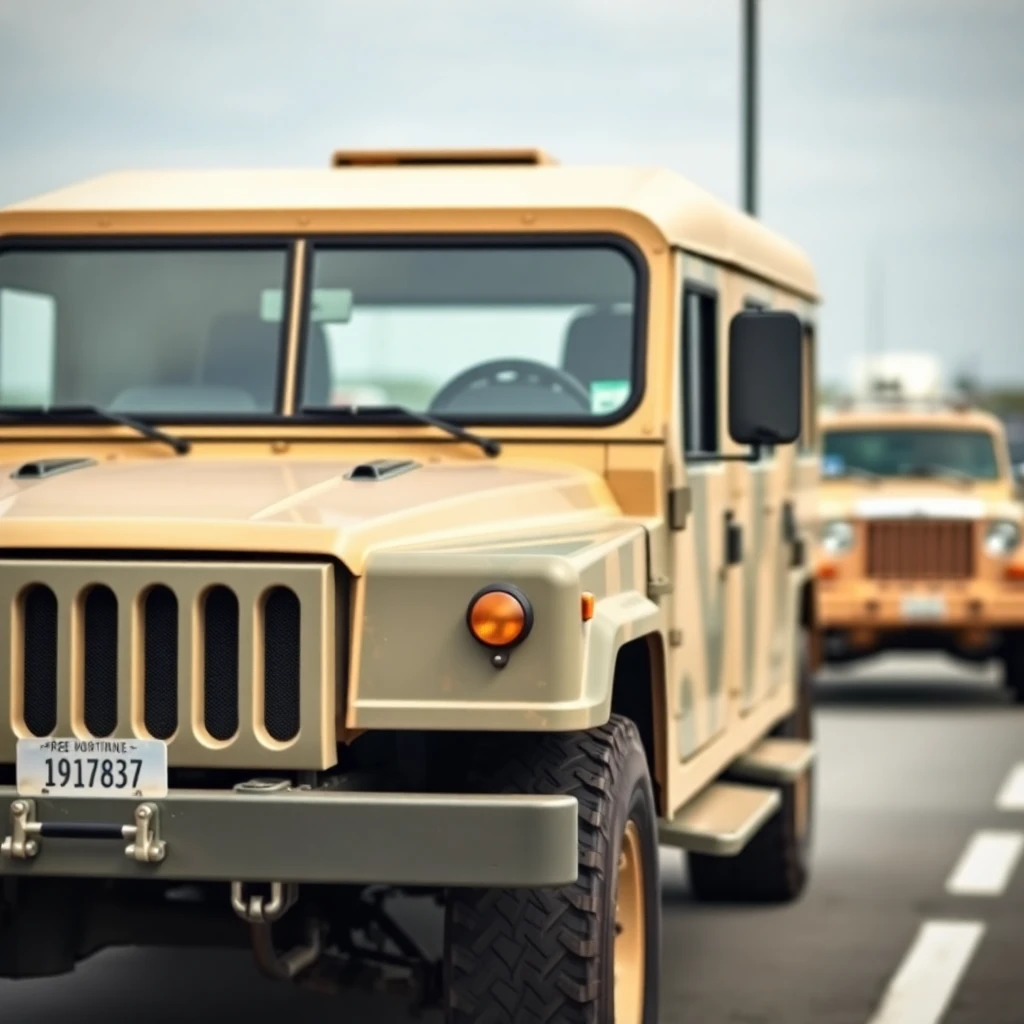
DOT requirements for military vehicles are one of the most misunderstood parts of getting a surplus Humvee or M-series truck street-legal. Most people assume their HMMWV either automatically qualifies or automatically fails federal road standards. Neither is true, and getting this wrong means spending money on the wrong mods or paperwork.
This guide breaks down exactly what the Department of Transportation (DOT) expects from army surplus military vehicles, what your state adds on top of that, and how to sort out the paperwork without losing a month to bureaucratic back-and-forth.
I've been through this process personally with a 1985 HMMWV and have helped dozens of other owners work through the same questions. Here's what actually matters.
What DOT Requirements for Military Vehicles Actually Cover
The Department of Transportation sets federal motor vehicle safety standards (FMVSS) that apply to vehicles manufactured for civilian sale. Here's the catch: HMMWVs and other surplus M-series military vehicles were never built to FMVSS standards. They were built to meet military specifications (MIL-SPEC), which prioritize battlefield survivability over highway safety compliance.
That means a stock HMMWV rolling off a surplus auction doesn't carry a DOT-compliant manufacturer certification. It never had one. The question isn't whether the vehicle failed DOT standards, it's whether your state requires modifications to bring it into compliance before it can be registered and driven on public roads.
Federal Versus State Authority on Surplus Vehicles
The federal DOT sets minimum safety standards for new vehicle manufacturing. But registering and titling a vehicle is a state-level process. Once a military vehicle leaves DoD hands and enters the civilian market, the feds step back and your state's motor vehicle laws take over.
This is why how to register a military vehicle varies so much by state. Texas has different inspection requirements than Montana. California has its own emissions overlay. Montana has almost none of the above. Understanding which rules apply where you'll be registering, not where you drive the most, is the first decision you need to make.
DEMIL Code and Street Use
DEMIL (demilitarization) code is the DoD classification assigned to surplus equipment indicating how thoroughly it must be disabled before civilian sale. Most HMMWVs sold through GovPlanet or DLA Disposition Services carry DEMIL Code A or Q, meaning the vehicle itself is cleared for transfer without destruction. DEMIL Code B or higher usually means certain components (weapons mounts, armor systems) must be removed or rendered inoperable before the vehicle leaves military custody.
DEMIL code doesn't directly determine street-legal status, but it affects which documents come with the vehicle. A proper SF-97 (Standard Form 97, the Certificate to Obtain Title to a Vehicle) or DD-1348 (DoD issue/receipt document) is what you'll need to establish title. Learn the difference between DD-1348 and SF-97 documents and which one you need before you start any title transfer.
Core Equipment Standards That States Commonly Require
Even in states with minimal vehicle inspection requirements, most DMVs expect military vehicles to meet a baseline set of safety equipment standards before issuing road-use plates. These aren't arbitrary, they're the items most likely to cause a roadside rejection or failed inspection.
Lighting and Visibility Requirements
This is where most stock HMMWVs fall short. Military lighting systems were designed for convoy use and blackout operations, not civilian traffic. Common issues include:
- Headlights that don't meet DOT minimum lumen output for civilian roads
- Tail lights and brake lights not wired to civilian SAE standards
- No turn signals, or turn signals not positioned at standard civilian heights
- Missing or non-compliant reflectors on the front, rear, and sides
Fixing lighting is usually one of the first modifications owners tackle. The complete guide to Humvee lighting requirements for street-legal use covers the exact components, part numbers, and installation sequence that work for most states.
Braking and Tire Standards
HMMWVs run a Central Tire Inflation System (CTIS) that allows the driver to adjust tire pressure on the fly. That system works fine on public roads, but the tires themselves need to be DOT-rated. Military-spec tires often carry no DOT marking, or carry ratings that have been superseded. Check the sidewall for the DOT code before your inspection. If the tires are military-only rated, budget for replacements.
Brake systems on the M998 and M1097 variants generally translate well to civilian use, but brake fluid and line condition matter. A vehicle that's been sitting in a motor pool for five years may have degraded lines. That's a safety issue before it's a compliance issue.
Mirrors, Glass, and Windshield Standards
Most states require a minimum of two rearview mirrors (one driver-side, one interior or passenger-side) with specific field-of-view coverage. Stock HMMWV mirrors often don't meet civilian specs on their own. Adding a second mirror or upgrading mirror mounts is a straightforward fix, but it needs to happen before inspection.
Windshields are another common sticking point. A cracked or fogged windshield that passed a pre-usement check won't pass a civilian safety lane. Factor in glass condition when you're buying, especially from auction photos that don't always show the full windshield.
State-Level Inspection Requirements on Top of DOT Baselines
Once you've handled the federal-equivalent equipment standards, state-specific rules come into play. These vary significantly and can make the same vehicle easy to register in one state and nearly impossible in another without major work.
States With Emissions Testing for Military Vehicles
California, Colorado, and a handful of other states apply emissions testing to older diesel vehicles above certain gross vehicle weight ratings (GVWR). A HMMWV with a 6.2L or 6.5L diesel engine typically falls into this zone. In California specifically, the requirements for older diesel engines on a vehicle like a Humvee can be significant enough to make registration impractical without an engine swap.
The complete guide to HMMWV registration in California covers the exact emissions categories, exemptions for pre-1975 model years, and the workarounds most owners use when California rules make direct registration difficult.
VIN Inspection Requirements
Many states require a physical VIN inspection before issuing a title to a military surplus vehicle. This is because most HMMWVs enter the civilian market without a standard state title, they come with DoD transfer documents, not a certificate of title. A VIN inspection confirms the vehicle's identity before the state will create a new title record.
Montana, South Dakota, and several other states have relatively straightforward VIN inspection processes for military vehicles. Other states route you through a more involved inspection lane. The VIN inspection requirements guide for military vehicles by state breaks down what each state's process looks like and what documents to bring.
Why Montana and South Dakota Work Well for M-Series Registration
Montana has no emissions testing and no state sales tax on vehicles. South Dakota has low fees and a straightforward title process. Both states have been used by military vehicle owners across the country to register HMMWVs, M35 deuce-and-a-half trucks, M939 5-ton trucks, and other surplus M-series vehicles without the roadblocks common in other states.
Montana registration via an LLC is a widely used approach that lets non-residents register in Montana, access the no-sales-tax benefit, and receive Montana plates without relocating. Montana LLC vehicle registration benefits covers the full picture on how this works and who it's right for. You can also verify Montana's registration fee schedule directly through the Montana Vehicle Title and Registration page.
HMMWV-Specific DOT Inspection Considerations
The HMMWV (High Mobility Multipurpose Wheeled Vehicle) is the most common military surplus vehicle in civilian hands. M998, M1025, M1026, M1097, and LSSV variants each have slightly different starting points for street-legal compliance work.
M998 and M1097 Variants
The M998 is the baseline cargo/troop carrier and the most commonly available variant on the surplus market. The M1097 is a heavier-payload version. Both share the same basic platform. Neither comes with civilian-standard lighting, mirrors, or DOT-rated tires from the factory.
Most owners can get an M998 or M1097 street-legal with a lighting upgrade kit, DOT tires, and correct mirror setup. Depending on your state, that may be the full list. The M1097 vs M998 registration differences guide covers what changes between variants and how that affects your compliance checklist.
M1025 and Armed Variants
The M1025 (armament carrier) and similar armed variants come with weapon mount hardware that must be removed and properly documented before civilian registration. DEMIL requirements typically cover this at the point of sale, but buyers should confirm what was removed and get written documentation. An undocumented weapon mount bracket can create title issues in some states. The M1025 and M1026 HMMWV armed vehicle registration guide walks through the documentation steps that prevent downstream problems.
Deuce-and-a-Half and 5-Ton Trucks
The M35 (deuce-and-a-half) and M939 (5-ton) series trucks carry their own set of DOT considerations. At their gross vehicle weights, they often fall under commercial vehicle regulations in addition to standard passenger vehicle rules. Some states require a commercial driver's license (CDL) to operate them on public roads, depending on loaded weight. The M35 deuce-and-a-half Montana registration guide covers the weight thresholds, CDL requirements by state, and the registration path that works for most owners.
| Vehicle | Common DOT Issues | Typical Modifications Needed | Registration Complexity |
|---|---|---|---|
| M998 HMMWV | Lighting, mirrors, tires | Lighting kit, DOT tires, mirror upgrade | Low to moderate |
| M1097 HMMWV | Lighting, mirrors, tires, weight class | Same as M998 plus weight documentation | Moderate |
| M1025 HMMWV | Weapon mount removal documentation | DEMIL confirmation, lighting, mirrors | Moderate |
| M35 Deuce-and-a-Half | Weight class, CDL requirements, brakes | Brake inspection, weight documentation | Moderate to high |
| M939 5-Ton | Commercial vehicle regs, CDL, weight | Commercial compliance documentation | High |
The Paperwork Side: Title and Registration for Surplus Military Vehicles
Meeting DOT equipment standards gets your vehicle road-ready. The title and registration paperwork is what makes it road-street-legal in the eyes of your state's motor vehicle system. These are two separate tracks that both need to close before you drive.
Documents You Need for HMMWV Title Transfer
Most HMMWVs come with one of two primary transfer documents. The SF-97 is the standard transfer form used when the military conveys a vehicle directly to a civilian buyer. The DD-1348 is the issue/receipt document used in DoD inventory transactions and sometimes accompanies vehicles sold through surplus channels.
Some states accept both. Some only accept the SF-97 for titling purposes. If your vehicle came with only a DD-1348, you may need additional steps. Texas, for example, has a specific process for HMMWVs with SF-97 documentation. The HMMWV Texas registration guide covering SF-97 and Montana LLC options is a useful reference for owners in that situation.
Montana LLC Registration as a Nationwide Path
For owners in states with heavy inspection requirements, emissions testing, or high sales tax exposure, Montana LLC registration is a well-established path. A Montana LLC owns the vehicle, and the vehicle is registered in Montana. Montana has no sales tax, no emissions testing, and no vehicle inspections at the state level. Montana specialty plates are available in over 200 designs, which matters to owners who want their HMMWV to carry plates that reflect their military service or unit.
This path works for all 50 states. It's remote paperwork support, meaning you don't need to travel to Montana. The complete guide to registering a HMMWV in all 50 states shows exactly how the Montana LLC path applies to your state's situation.
HMMWV Insurance Before You Drive
DOT compliance and registration don't replace insurance. Military surplus vehicles have specific insurance considerations that don't apply to standard passenger vehicles. Most standard auto insurers won't write a policy on a HMMWV, and the few that do may undervalue it significantly. Agreed-value specialty policies through military vehicle insurers are the right move. The complete guide to HMMWV insurance for military surplus vehicles covers carriers, policy types, and what HMMWV insurance requirements look like state by state.
Frequently Asked Questions About DOT Requirements for Military Vehicles
Do military vehicles have to meet DOT standards to be driven on public roads?
Military vehicles were not manufactured to civilian FMVSS (Federal Motor Vehicle Safety Standards), so they don't carry DOT manufacturer certification. However, to be driven on public roads, they must meet state safety equipment requirements, which often mirror DOT standards for lighting, mirrors, brakes, and tires. The level of required compliance varies significantly by state. Montana and South Dakota have minimal inspection requirements. California, New York, and Texas have more stringent processes that may require specific modifications before registration.
What modifications does a HMMWV typically need to be street-legal?
Most M998 and M1097 HMMWVs need at minimum: DOT-rated tires (the stock military tires typically aren't DOT-marked), a civilian lighting upgrade covering headlights, tail lights, brake lights, and turn signals, and compliant mirror placement. Depending on your state, you may also need a horn, windshield in good condition, and working seatbelts. Emissions testing is an additional requirement in California and a few other states for diesel vehicles above certain weight thresholds. A full modification checklist is in the Humvee street-legal modifications guide.
Can I register a military HMMWV in Montana if I don't live there?
Yes. Montana allows non-residents to form an LLC and register a vehicle under that LLC. The vehicle is then titled and registered in Montana, which has no state sales tax and no emissions testing requirement. This is a well-established path used by military vehicle owners nationwide. You don't need to visit Montana in person. The process is handled remotely through a private registration specialist. The Montana LLC vehicle registration benefits page covers the full process, costs, and compliance requirements including the annual LLC filing due each April 15 through the Montana Secretary of State annual report.
What documents do I need to title a military surplus vehicle?
The primary documents are the SF-97 (Certificate to Obtain Title to a Vehicle) or DD-1348 (DoD issue/receipt document). Which one you have, and which your target state accepts, affects your title path. Some states require an SF-97 specifically. Others will work with a DD-1348 plus a bill of sale from the surplus auction. If you bought through GovPlanet, the auction platform provides documentation that typically covers the transfer. You'll also need a VIN inspection in most states before a new civilian title is issued. See the full breakdown in the DD-1348 vs SF-97 military vehicle documents guide.
Is a CDL required to drive a deuce-and-a-half or M939 5-ton on public roads?
CDL requirements depend on the vehicle's gross vehicle weight rating (GVWR) and your state's commercial vehicle thresholds. In most states, a vehicle with a GVWR over 26,001 lbs requires a Class B CDL for operation. The M35 deuce-and-a-half has a GVWR around 14,000-15,000 lbs unloaded, which typically falls below CDL thresholds in most states. The M939 5-ton is heavier and may trigger CDL requirements depending on state law and loaded weight. Check your state's commercial vehicle weight thresholds directly, as these vary. The M939 5-ton military truck Montana registration guide covers this in detail for the most common registration states.
What is the HMMWV DOT inspection process in states that require it?
States with safety inspections typically route HMMWVs through a standard safety lane or a designated heavy vehicle inspection. The inspector checks lighting (including turn signals and brake lights), tires (DOT rating and tread depth), mirrors, horn, windshield condition, and brake function. Some states add an emissions check for diesel vehicles. Vehicles that fail get a rejection slip noting what needs to be corrected before re-inspection. Montana does not state safety inspections, which is one reason many owners choose Montana registration as their primary path. See the full inspection breakdown at the HMMWV inspection requirements Montana guide.
Can I use a bonded title if my HMMWV came without proper transfer documents?
Yes, in many states. A bonded title is issued when a vehicle's ownership history can't be fully documented through standard transfer records. You purchase a surety bond for a percentage of the vehicle's value, and the state issues a title with a "bonded" notation. After a holding period (typically three years), the bonded notation is removed and a clean title is issued. This path works for HMMWVs and other surplus vehicles that were bought without a proper SF-97 or where the paperwork chain has gaps. A private registration specialist can help determine whether your situation qualifies and what bond amount is required. The surplus military vehicle title guide covers bonded title options in detail.
Getting Your Military Vehicle Properly Registered
DOT requirements for military vehicles aren't a single checkbox, they're a combination of federal equipment expectations, state-specific inspection rules, and documentation requirements that vary based on your vehicle, your state, and what came with it when you bought it. Getting it right means knowing which of those layers apply to you before you spend money on modifications that may not be required, or skip ones that are.
Whether you're working through a Montana LLC registration path, sorting out title documents from a GovPlanet purchase, or figuring out what modifications your HMMWV actually needs, the process is manageable with the right guidance. HMMWV Registration provides private registration assistance and paperwork support for surplus military vehicle owners across all 50 states.
Reach out through the contact page and a specialist will walk you through your specific situation, your vehicle's documents, and the registration path that makes the most sense for where you are and how you want to run the vehicle.
HMMWV Registration is a private third-party service and is not affiliated with any DMV, state agency, or government office. Services involve assistance and guidance with vehicle paperwork, Montana LLC filings, title support, and related registration processes.
Related Reading