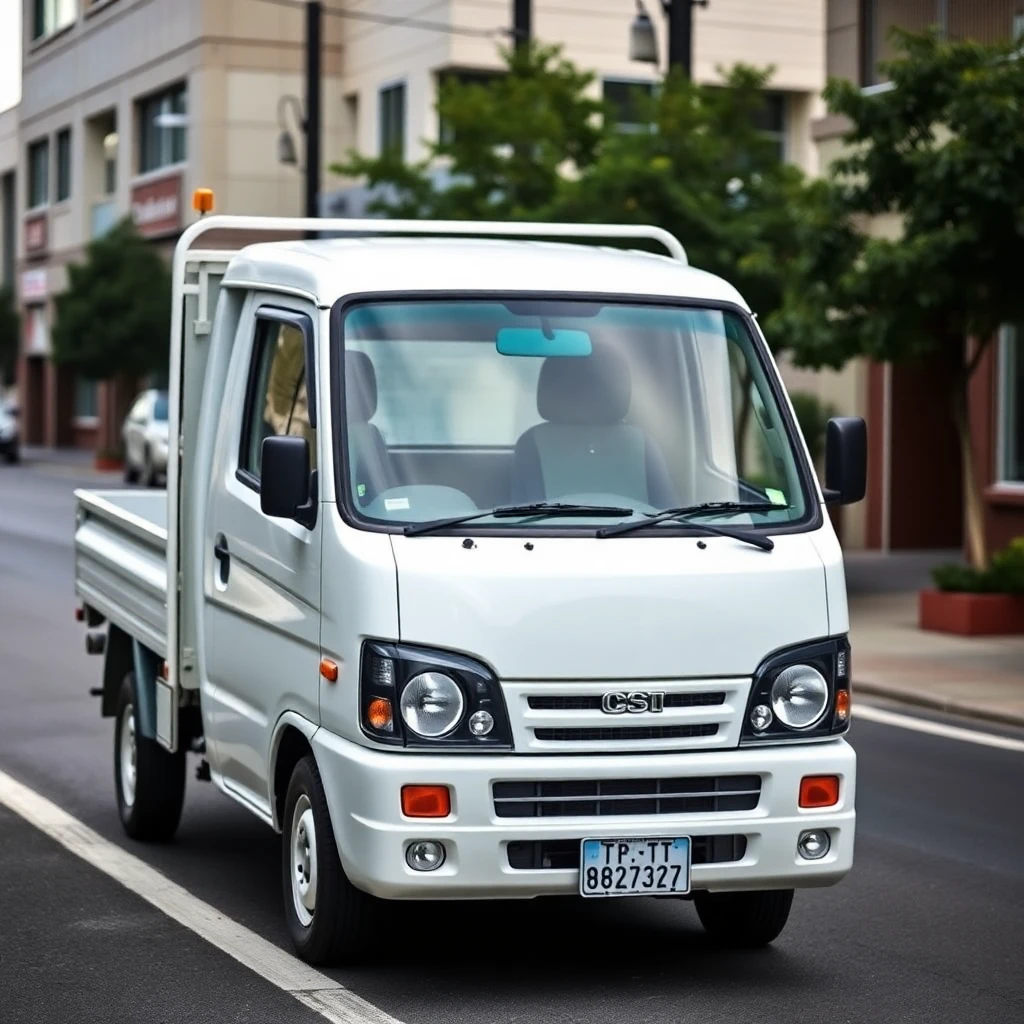
A kei truck street legal conversion sounds simple until you start making calls to your county DMV and realize nobody knows what a Subaru Sambar is. I've been through this rodeo. Three years ago I was trying to get my HMMWV titled in Montana and kept hitting walls because the paperwork didn't match what clerks expected. Kei trucks have the same problem, and then some.
This guide covers what the conversion actually involves, which states make it harder than it needs to be, and how Montana registration can cut through most of the friction. By the end, you'll know exactly what modifications are required, what documents you need, and what your best registration path looks like.
Not just the theory. The real process.
What a Kei Truck Street Legal Conversion Actually Requires
Kei trucks, called keitora in Japan, were built to Japanese Domestic Market (JDM) specs. That means right-hand drive, metric everything, and zero consideration for US Federal Motor Vehicle Safety Standards (FMVSS). To get one street-legal in the US, you're working through two separate challenges: federal importation compliance and state registration compliance.
The 25-Year Import Rule and Why It Matters
Federal law prohibits importing non-FMVSS-compliant vehicles unless they're 25 years old or older. Most kei trucks hitting the US market right now are from the late 1990s and early 2000s, which puts them right in that sweet spot. A 1999 Suzuki Carry is now import-compliant. A 2005 Honda Acty is not yet.
If your truck qualifies under the 25-year rule, NHTSA doesn't require you to bring it up to US safety standards. That's a big deal. You can check your VIN and model year against the NHTSA VIN Lookup tool to confirm compliance status.
State-Level Equipment Requirements for Street Use
Federal clearance is step one. State requirements are step two, and they vary a lot. Most states require at minimum:
- Working headlights, taillights, and brake lights
- Turn signals front and rear
- Mirrors (driver side at minimum, most states require both)
- Horn
- Windshield wipers
- Speed rating sufficient for road use (most kei trucks top out at 55-65 mph, which passes)
- DOT-rated tires
- Seatbelts (lap belts often acceptable for older vehicles)
The good news: most kei trucks already have nearly all of this from the factory. The common gaps are DOT-rated tires, mirror placement for left-side traffic, and occasionally lighting intensity that meets US minimums. These are fixable for a few hundred dollars in most cases.
For a closer look at how lighting requirements work on military and specialty vehicles, the guide on humvee lighting requirements street legal covers the same principles in useful detail, since the compliance logic runs parallel for any non-standard vehicle.
Registration Challenges Unique to Right-Hand Drive Import Trucks
Getting the physical truck compliant is actually the easier half. The harder half is convincing a state titling system that your vehicle exists. Kei trucks don't have a US title history. They arrive with a Japanese export certificate (called a jidosha yusouyoushomeisho) and sometimes a bill of lading. That's it.
Why Most State DMVs Struggle With Kei Truck Title Applications
Standard DMV database lookups pull from AAMVA records tied to FMVSS-compliant vehicles. A 1998 Daihatsu Hijet doesn't appear in those databases. Clerks don't know how to classify it. Is it a truck? A farm vehicle? An ATV? Some states have defaulted to off-road-only titles for kei trucks, which means no plates, no street use.
The path forward usually involves a bonded title, a VIN inspection, or in some states, a court-ordered title. All of them work, but all of them take time and require knowing which process applies in your state. The guide on vin inspection military vehicle state requirements guide walks through the VIN inspection side of this in detail, and most of it applies directly to kei trucks too.
The Montana Path: Why It Works Better for Imports
Montana doesn't have the same database-dependency problem most states have. The titling process handles specialty and imported vehicles more flexibly, and there's no sales tax, no emissions testing, and no safety inspection requirement on registration. For a kei truck owner, that's a significant advantage.
You form a Montana LLC, register the truck under the LLC, get Montana plates, and drive compliantly in your home state under reciprocity. The registration is handled entirely remotely. You don't travel to Montana. The kei truck registration complete guide on this site goes deeper on the full Montana LLC process specifically for kei trucks.
A broader look at why this structure saves money is covered in Montana LLC vehicle registration benefits, which is worth reading before you decide on a registration path.
Physical Modifications: What You Actually Need to Do
Honest answer: not as much as people think. Kei trucks aren't exotic. They're practical little workhorses, and most of the factory equipment already meets or is close to meeting US requirements.
Tires and Wheels
Japanese domestic tires aren't always DOT-rated. That's the most common physical change kei truck owners make before registration. Standard 12" or 14" tires in the right load rating are cheap and widely available. Budget $200-400 for a full set depending on the truck.
Mirrors and Lighting
Right-hand drive means the driver is on the right. US traffic laws assume your primary mirror covers the left side. You may need to add or reposition the driver-side mirror to meet your state's sight-line requirement. Some states are relaxed about this for historic or specialty vehicles. Others aren't.
Lighting is usually fine from the factory. But if your truck has yellowed or damaged lenses, swap them before any inspection. The DOT requirements for military vehicles page explains the federal lighting standards in plain terms, and kei trucks face the same benchmarks.
Speedometer and Odometer
Japanese kei trucks display speed in km/h. Some states require mph-readable speedometers. The fix is either a replacement cluster (available on eBay for most models, $50-150) or an overlay sticker with mph equivalents. Check your state's specific requirement before spending money on a new cluster.
| Modification | Required In Most States? | Typical Cost | DIY or Shop? |
|---|---|---|---|
| DOT-rated tires | Yes | $200-400 | Either |
| Driver-side mirror reposition | Often | $20-80 | DIY |
| Seatbelts (if worn/missing) | Yes | $50-200 | Shop recommended |
| Speedometer conversion | Some states | $50-150 | DIY |
| Lighting upgrades | If damaged | $30-100 | DIY |
| Horn | Yes (usually already present) | $0-30 | DIY |
How Montana Registration Works for Kei Trucks Specifically
Montana has processed specialty, military, and imported vehicles for decades. The state has no emissions testing program and no mandatory safety inspection tied to registration. That combination is why collectors and import owners from all 50 states use it.
The Montana LLC Structure Explained
You form a single-member LLC in Montana. The LLC purchases and owns the vehicle. The LLC registers the vehicle in Montana. You, as the LLC's manager, drive the vehicle. Montana plates are issued to the LLC.
Montana LLC formation and paperwork support from anywhere in the US, fully remote.
Get a Free Quote Call 760-477-4191No sales tax applies because Montana has no sales tax. That's not a workaround. That's Montana state law, confirmed on the Montana Department of Revenue site. For a kei truck that might have cost $6,000-15,000, skipping a 6-10% sales tax is real money.
The full cost breakdown and why fleet and specialty vehicle owners choose this structure is laid out in Montana Plates FAQ: Costs, Process and Requirements, which covers fees and timelines clearly.
Documents You'll Need for Kei Truck Montana Registration
The exact document list depends on how your truck entered the country. Typically you'll need:
- Japanese export certificate or bill of lading
- CBP Form 7501 (US Customs entry summary)
- HS-7 declaration form (for vehicles 25+ years old)
- Proof of LLC ownership (operating agreement)
- Odometer disclosure (Montana requires this)
Missing one of these is the most common reason kei truck registrations stall. A registration specialist can identify gaps before you submit anything, which saves weeks of back-and-forth.
Comparing Registration States for Kei Truck Owners
Montana is the most popular choice, but South Dakota is a real alternative for owners who want a straightforward titling process with low annual fees. The full comparison is covered in south dakota vehicle registration vs montana comparison. Both states are collector-friendly. Montana wins on no sales tax. South Dakota wins on simplicity for owners who want actual residency.
Kei Trucks vs. Other Military-Adjacent Specialty Vehicles: What's Different
I spend most of my time on HMMWVs and M35 deuce-and-a-halfs, so the kei truck world was new to me when I started helping owners work through the process. The registration logic is similar, but the documents are completely different.
No SF-97 or DD-1348, No DEMIL Concerns
Military vehicle owners deal with DoD documents like the SF-97 (Certificate to Obtain Title to a Vehicle) and DD-1348 (the demilitarization / disposal record). Kei trucks have none of that. Your paperwork trail is commercial, not federal. That actually makes some parts of the process easier, and it's one reason kei truck registrations typically move faster than HMMWV registrations when the import documents are in order.
If you're also working through military vehicle registration, the guide on dd-1348 vs sf-97 military vehicle documents which do you need explains exactly how those forms interact with the title process. It's a different world from import certificates, but worth understanding if you own both types.
Street-Legal Humvee Modifications as a Comparison Point
The modification checklist for a street-legal Humvee is more demanding than for a kei truck. HMMWVs were built for the military, not for road use, which means they often need significant lighting upgrades, mirror additions, and sometimes speedometer work. Kei trucks were designed as commercial road vehicles in Japan, so they start closer to US requirements.
The humvee street legal modifications guide covers the HMMWV side in detail. If you own both, it's useful to read both guides back to back, because the philosophy is the same even when the specifics differ.
Frequently Asked Questions About Kei Truck Street Legal Conversion
Can a kei truck be street-legal in all 50 states?
Yes, with the right approach. A 25-year-old kei truck cleared through US Customs, registered in Montana under an LLC, can be driven compliantly in all 50 states under Montana registration. Individual states have different equipment requirements, so you may need minor physical modifications depending on where you live. The core registration structure works nationally, and Montana plates are recognized everywhere.
How long does kei truck registration take with Montana?
Typically 3-6 weeks from the time your documents are in order. LLC formation in Montana takes a few days. Title processing and plate issuance adds 2-4 weeks depending on county workload. If your import documents are complete and ac, the process moves quickly. Missing or incorrect customs paperwork is the most common delay cause. A registration specialist can review your documents before submission.
Do I need a special driver's license to drive a kei truck on public roads?
No. Kei trucks fall under standard passenger/light commercial vehicle classifications in most US states. A standard Class C driver's license is sufficient. They don't require a CDL because they're under the 26,001 lb GVWR threshold by a significant margin. Most kei trucks have a GVWR under 2,000 lbs.
Are kei trucks subject to emissions testing?
It depends on your state. Montana has no emissions testing requirement, which is one reason Montana registration is attractive for import owners. States like California, Colorado, and others do have emissions programs, but vehicles 25+ years old are often exempt or subject to relaxed standards. Check your specific state's rules. The emissions requirements military vehicles page covers how exemptions typically work for older specialty vehicles.
Can I use my kei truck commercially with Montana registration?
Yes, for light commercial use on private property or in states that permit it. Montana registration covers the vehicle regardless of use type at the personal vehicle level. If you're using your kei truck as part of a business operation on public roads, check your state's commercial vehicle regulations. Most kei trucks fall below the weight threshold that triggers commercial vehicle licensing requirements.
What's the difference between registering a kei truck vs. a HMMWV in Montana?
The LLC structure and Montana registration process are the same. The document requirements are different. A HMMWV comes with DoD paperwork like an SF-97 or DD-1348. A kei truck comes with Japanese export certificates and US Customs forms. Both require a VIN that Montana can process. HMMWVs sometimes need VIN assignments if the military used a different numbering system. Kei trucks typically have factory VINs that transfer cleanly.
Is Montana LLC registration worth it for a kei truck under $10,000?
Usually yes, if your home state has sales tax. On an $8,000 kei truck in a state with 8% sales tax, you're avoiding $640 upfront. Add the avoided annual registration fees that some states pile on specialty vehicles and the math works. Montana LLC maintenance runs about $49/year in state fees. Most owners recover that cost in year one on the tax savings alone.
What happens if I can't find my kei truck's original import documents?
You have options. CBP records can be requested through a Freedom of Information Act request if you know when and where the truck entered the country. A bonded title process can also establish ownership when documentation is incomplete. This is more common than people expect with older imports that passed through multiple US owners. A registration specialist can help you identify which path applies to your situation.
A kei truck street legal conversion is more paperwork than wrenching, which is honestly the case for most specialty and import vehicles. Get the physical requirements sorted, get your import documents in order, and choose a registration-friendly state. Montana has handled thousands of specialty vehicle registrations and the process is fully remote. If you're sitting on a kei truck that's been parked since it arrived at the port, this is the path that gets it plated and on the road.