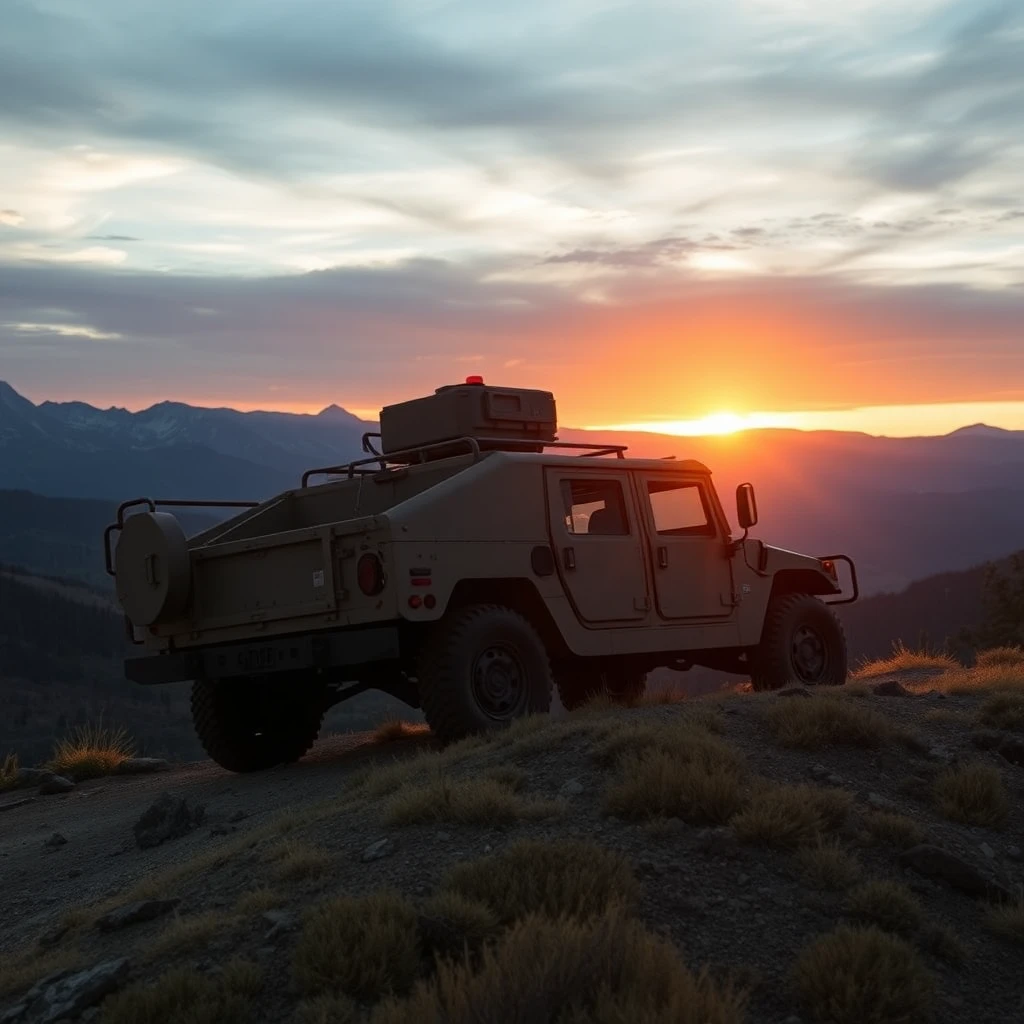
Could the up-armored HMMWV survive any IED hit? That question has a complicated, sobering, and operationally important answer. This isn't a simple yes or no, and anyone who tells you otherwise hasn't looked at the field data. What we can do is break down what armor variants exist, what protection levels they were designed for, where the limits are, and why this matters for surplus HMMWV owners today.
The HMMWV military vehicle went through several armor generations during its service life. Each one reflected hard lessons from real-world combat, particularly from Iraq and Afghanistan. Understanding those variants helps you know exactly what you own, what it was built to do, and what it wasn't.
This guide covers the armor system evolution, documented survivability, known failure points, and what all of this means if you're registering a surplus up-armored M1097, M1114, or M1151 for civilian use.
The Up-Armored HMMWV: Armor Variants and What They Were Designed to Stop
The HMMWV wasn't originally designed for blast protection. The M998 in its base configuration was a soft-skin utility vehicle. That changed fast once combat deployments in the 1990s and early 2000s showed the vulnerability clearly. The Army's response was a series of armor upgrade programs, each escalating in protection level.
Add-on Armor Kits (AoA) vs. Factory Up-Armored Models
Early solutions were field-expedient, using add-on armor kits bolted to existing M998 and M1025 platforms. These kits used steel plates and ballistic glass to provide basic small-arms protection. They worked against direct rifle fire but added significant weight, degrading the suspension and drivetrain performance considerably.
Factory up-armored models like the M1114 represented a purpose-built approach. The M1114 used an expanded capacity vehicle (ECV) chassis, upgraded suspension, and a 6.5L turbocharged diesel specifically because the weight increase demanded it. Armor protection on the M1114 included hardened steel doors, a reinforced floor, and ballistic glass rated against rifle fire and fragmentation.
What Protection Level Did the M1114 Actually Carry?
The M1114 was rated to protect against 7.62mm NATO ball rounds, fragmentation from 155mm artillery at specified distances, and small IED blasts below a defined threshold. That threshold matters. Early-generation IEDs in Iraq frequently exceeded what the M1114 floor and door panels were rated for, which drove further escalation to the M1151 and eventually the MRAP family.
The M1151 added improved floor armor and side protection, but the fundamental limitation of the HMMWV platform, which is a relatively low ground clearance and a cab-forward design, meant blast energy from mines and IEDs beneath the vehicle still transferred significantly to occupants.
What the Field Record Shows About HMMWV IED Survivability
Documented combat records from Iraq and Afghanistan are the most honest assessment of what the up-armored HMMWV could and couldn't do. The picture is mixed, and that's worth being direct about.
Ready to register your vehicle?
Join thousands of vehicle owners who use HMMWV Registration to handle their registration quickly.
Get Started →Survivable Incidents: Where the Armor Delivered
Against command-wire IEDs using smaller charges, side-road fragmentation devices, and early pressure-plate designs, up-armored HMMWVs frequently protected crews. Door armor and ballistic glass stopped rounds and fragments that would have been lethal in soft-skin versions. For small-to-medium blast events, occupants walked away where they would not have in unprotected vehicles.
The M1114 and M1151 with Frag Kit 5 or 6 added slat armor to reduce RPG effectiveness further. These kits aren't IED-specific, but they added layered protection that improved overall survivability in high-threat environments.
The Limits: When the HMMWV Couldn't Absorb the Blast
Large-charge IEDs, particularly EFPs (explosively formed penetrators) and deep-buried anti-tank mines, exposed the platform's structural limits. The HMMWV's V-shaped hull concept was never fully developed the way MRAPs were. The flat-floor variants were especially vulnerable to underbelly blasts from high-yield devices.
Honestly, this is why the MRAP program accelerated. The Army and Marine Corps recognized that the HMMWV, even in its most protected configuration, couldn't stand up to the IED threat as it evolved. That's not a design failure, it's a mission-scope mismatch. The HMMWV was not designed as a mine-protected ambush vehicle. It was designed for speed, off-road mobility, and utility. You can also read about how the LSSV LMTV MRAP Military Vehicle Registration Guide covers the MRAP family and how those vehicles transitioned to surplus ownership.
HMMWV Armor Variant Comparison: Protection Levels at a Glance
Below is a reference table comparing the main HMMWV armor configurations. Protection ratings are approximate, based on publicly available DoD program documentation.
| Variant | Armor Type | Small Arms Protection | IED/Mine Protection | Weight (approx.) |
|---|---|---|---|---|
| M998 (base) | None (soft skin) | None | None | ~5,200 lbs |
| M1025/M1026 (ASK) | Add-on armor kit | 7.62mm ball (limited) | Minimal fragmentation | ~7,700 lbs |
| M1114 (ECV) | Factory hardened steel + ballistic glass | 7.62mm NATO | Small blast / fragmentation | ~12,000 lbs |
| M1151 (Frag Kit 5/6) | Improved floor + slat armor | 7.62mm + fragmentation | Medium blast / EFP partial | ~13,500 lbs |
| M1152 (cargo/armor) | Partial armor (cab only) | 7.62mm (cab area) | Cab fragmentation only | ~11,500 lbs |
What Up-Armored HMMWVs Mean for Civilian Ownership and Registration
Here's where this gets directly relevant to surplus owners. If you've acquired an M1114, M1151, or any up-armored variant through GovPlanet or a DoD surplus sale, the vehicle's armor configuration affects both your title documentation and your registration path.
How Armor Affects Vehicle Weight Classification
An M1114 pushing 12,000 lbs or an M1151 at 13,500 lbs puts these vehicles in a different weight class than a standard M998. That affects registration fees, state weight limits for road use, and whether the vehicle qualifies under standard registration tiers or needs commercial classification. Montana and South Dakota both have registration pathways that work well for surplus military vehicles, but weight is a variable you need to confirm upfront.
For a detailed breakdown of what modifications your HMMWV may need before hitting public roads, read Humvee Street Legal Modifications: What Your HMMWV Actually Needs. That guide covers the practical compliance work specific to up-armored and standard variants.
Titling an Up-Armored HMMWV From Surplus
Surplus military vehicles typically come with a Standard Form 97 (SF-97), the DoD's Certificate to Obtain Title. The SF-97 is your starting document. Some up-armored variants may have additional documentation related to their armor configuration, DEMIL codes, or modification history. Getting the title right from the start is the cleanest path forward.
The SF97 Title Process: How to Title Your Surplus Military Vehicle guide covers exactly what to do with your SF-97, what additional forms you may need, and how to work through the process from surplus acquisition to clean civilian title.
Red flags on military vehicle titles are more common than buyers expect. Before you complete any purchase of an up-armored HMMWV, review the Military Vehicle Title Red Flags Every Buyer Needs to Know guide to protect yourself from documentation problems that can stall your registration.
Is a Street-Legal Up-Armored HMMWV Realistic?
Yes, with the right modifications. The armor itself doesn't disqualify the vehicle from street-legal status, but the weight, lighting, and safety equipment requirements still apply. You'll need to confirm your state's requirements or use a favorable registration state like Montana or South Dakota. A full breakdown of what street-legal compliance looks like for these vehicles is in Street Legal Humvee: What It Actually Takes to Drive One on Public Roads.
For up-armored variants specifically, the weight and width may create additional considerations depending on your home state. Check the DOT Requirements for Military Vehicles: What Every HMMWV Owner Needs to Know guide for the federal-level standards that apply regardless of your state.
Registering Your Up-Armored HMMWV: The Practical Path Forward
Owning a piece of real military history is a serious commitment, and the registration process for an up-armored HMMWV is more specialized than a standard M998. You're dealing with a heavier vehicle, specific documentation, and potential state-by-state complications.
Montana and South Dakota: Why They Work for Military Vehicle Owners
Montana has no sales tax on vehicles, no emissions testing, and no inspections, making it a strong registration option for surplus military vehicles across all 50 states. South Dakota offers low fees and an accessible process. Both states have established pathways for military surplus titling and registration that handle the SF-97 and DoD documentation correctly.
We manage the out-of-state paperwork with our paperwork support, so you don't have to move to Montana or South Dakota to take advantage of either state's registration system. For a complete look at what Montana registration means for your bottom line, review the Montana No Sales Tax Vehicle Registration: What Every Owner Needs to Know guide.
State-by-State Registration for Up-Armored Variants
Whether you're trying to figure out how to register a HMMWV in California, Texas, Florida, or New York, the underlying process has common elements: SF-97 or equivalent title document, proof of insurance meeting your state's military vehicle insurance requirements, and confirmation of any safety or emissions exemptions that apply. Our Register Military Vehicle in Any State: What Every HMMWV Owner Needs to Know guide covers the state-specific details across all major registration states.
For insurance specifically, up-armored variants may require specialized coverage given their weight and modified configuration. The Military Vehicle Insurance Requirements: What Every HMMWV Owner Must Know guide covers what policies typically work for these vehicles and what to watch for.
Frequently Asked Questions About the Up-Armored HMMWV and IED Protection
Could any up-armored HMMWV survive every IED hit?
No. The up-armored HMMWV was designed to protect against a defined threat spectrum, not every possible IED configuration. Against small-to-medium blast devices, particularly early-generation IEDs, the M1114 and M1151 demonstrated real survivability. Against large-charge EFPs, deep-buried anti-tank mines, or high-yield explosively formed penetrators, the platform reached its structural limits. That reality is why the MRAP program replaced HMMWVs in the highest-threat roles rather than simply adding more armor to an existing design.
What was the difference between the M1114 and M1151 in IED protection?
The M1114 was the first factory-built up-armored variant, offering protection against small arms and fragmentation from smaller blast events. The M1151 built on that with improved floor armor plating and compatibility with Frag Kit 5 and 6, which added slat armor for RPG protection and improved side blast resistance. The M1151 represented a meaningful upgrade in survivability, particularly for the underbelly threat that exposed limitations in earlier armor kits and the base M1114 floor design.
Can you drive an up-armored HMMWV on public roads?
Yes, in most cases, with the proper modifications and registration. The armor configuration itself doesn't disqualify the vehicle from street-legal status, but you'll need to confirm weight limits, lighting compliance, and registration requirements for your state or a favorable registration state like Montana or South Dakota. Up-armored variants typically weigh between 12,000 and 14,000 lbs, which puts them in a heavier vehicle class and may trigger additional requirements depending on where you register and where you drive.
How much does HMMWV registration cost for an up-armored variant?
Registration costs vary by state and by vehicle weight classification. Montana registration fees are based on vehicle age, with older surplus vehicles often falling into lower fee tiers. South Dakota uses a flat-fee structure that's also favorable for military surplus. The weight of an up-armored variant may push fees slightly higher than a base M998 depending on the classification used. Our team can give you a specific cost estimate once we know the variant and your target registration state. You can also check the Montana Vehicle Title and Registration Fees page for the current Montana fee schedule.
What documents do I need to title an up-armored HMMWV?
The primary document is the SF-97 (Standard Form 97), the DoD-issued Certificate to Obtain Title. You'll also need a bill of sale from the surplus dealer or auction, proof of identity, and documentation of any DEMIL actions taken on the vehicle. Some up-armored variants may have additional configuration documentation that needs to match the title application. Getting a clean title from the start avoids complications later. A full walkthrough is available in the SF97 Title Process: How to Title Your Surplus Military Vehicle guide.
Is the M1151 better than the M1114 for civilian ownership?
From a capability standpoint, the M1151 is a more capable platform with better protection and a more current drivetrain. For civilian ownership, the key differences are weight, availability, and price. M1151s are heavier, which affects registration classification and road-use considerations. They're also less commonly available in surplus channels compared to older M1114s and base-variant HMMWVs. Both are viable civilian ownership candidates, but make sure your registration path accounts for the actual weight and configuration of the specific vehicle you're acquiring.
Where can I get my surplus up-armored HMMWV registered?
Montana and South Dakota are the two most common registration states for surplus military vehicles, particularly for owners outside those states who want to take advantage of favorable fee structures, no sales tax in Montana's case, and established pathways for military surplus documentation. We provide remote paperwork support with our paperwork support for owners across all 50 states. You can start the process at hmmwvregistration.com/contact or review your vehicle-specific options at Vehicle Info for Military Surplus Owners: What You Need to Register Your HMMWV.
Ready to Get Your Up-Armored HMMWV Registered?
The up-armored HMMWV is one of the most historically significant surplus vehicles in circulation. Whether you own an M1114, an M1151, or a field-armored M998 variant, getting it properly titled and registered is the mission between acquisition and the road. We specialize in military surplus vehicle registration, we know the SF-97 process, we know how up-armored weight classifications affect your paperwork, and we know which states make the process straightforward.
Remote paperwork support is available for owners across all 50 states. Tell us what you have, and we'll map the registration path. The Military Vehicle Safety Requirements: What Every HMMWV Owner Needs to Know guide is a strong next step if you're still working through compliance requirements before plating your vehicle.
Related Reading