
HMMWV and Humvee owners have strong opinions, and that's putting it mildly. Group drives bring out the best debates in the military-vehicle community, from who leads the convoy to whether your M998 counts as street-legal before you've touched the title paperwork. Knowing how to spot hazards from a high-clearance cab is a skill set of its own, and the arguments about it never really end. This guide covers the debates, the stereotypes, and the hazard-spotting habits that separate experienced HMMWV operators from first-time surplus buyers.
The Great HMMWV Debates That Never Get Old
Every military-vehicle community has its recurring arguments. Some of them are actually useful. The biggest one you'll hear at any surplus show or group drive: is a stock HMMWV safe to run on public roads before you've sorted the registration and title? The short answer is no, and the longer answer involves a SF-97, a Montana LLC, and a lot of patience.
The second-biggest debate is tactical vs. civilian configuration. Purists want the original canvas doors, blackout lighting, and NATO green. Others have installed LED headlights, civilian seats, and a backup camera. Neither camp is wrong, but both are loud about it. If you've been around any M-series Facebook group for longer than a week, you already know this.
Then there's the Humvee vs. HMMWV naming debate. Honestly, both are correct. HMMWV is the DoD designation, High Mobility Multipurpose Wheeled Vehicle. Humvee is the commercial name that stuck. You'll see both used on this site and in official surplus documentation. A deeper breakdown of the naming history lives in Humvee, HMMWV, and AM General HUMMER: What's Actually the Difference?, which also covers where the civilian H1 fits in.
One debate that actually has a clean answer: M998 vs. M1114. The M1114 is the up-armored variant built for a specific operational threat environment. They're not the same vehicle, and the registration path differs in ways that matter. Read the full breakdown in M998 HMMWV vs Humvee: What Are the Real Differences? before you assume your paperwork path is identical to someone else's.
Group Drive Stereotypes Every HMMWV Owner Recognizes
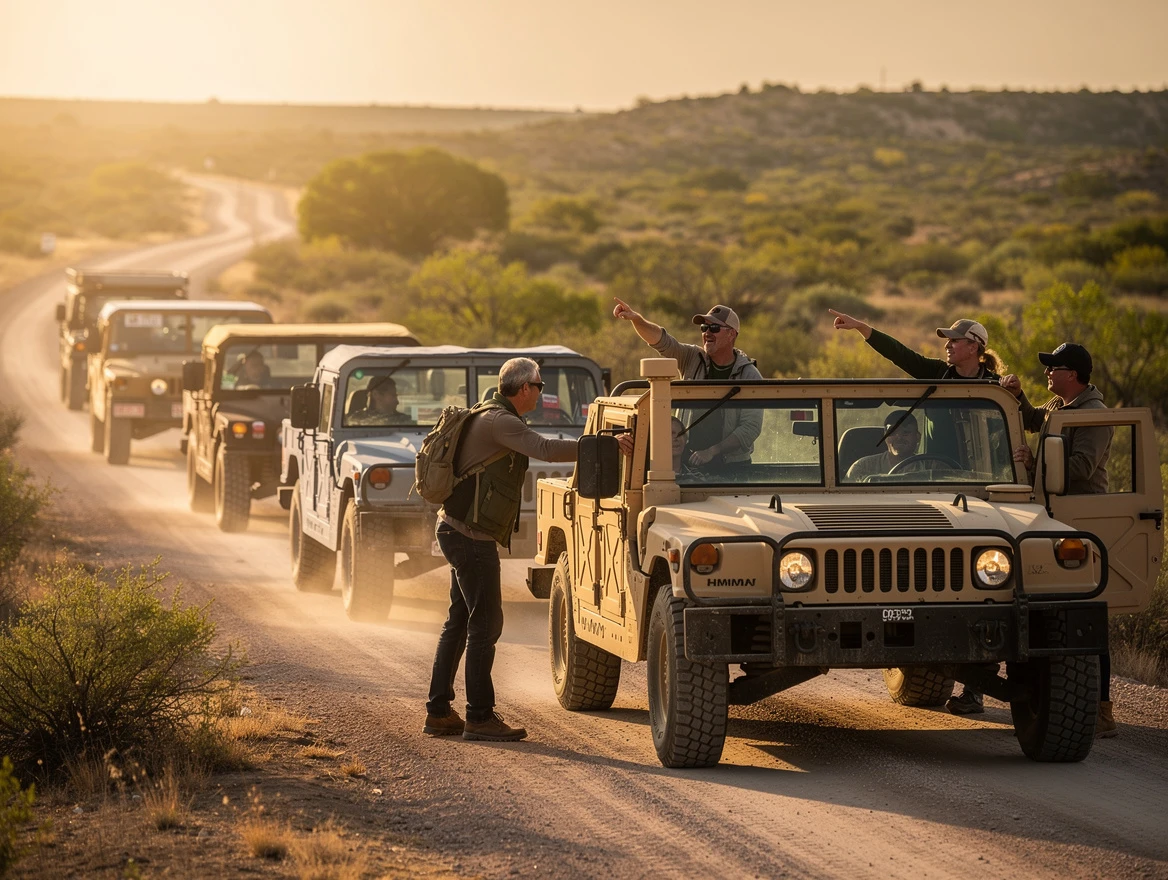
Group drives with military vehicles attract a specific cast of characters. You'll recognize all of them within the first twenty minutes of a staging area meetup.
Ready to register your vehicle?
Join thousands of vehicle owners who use HMMWV Registration to handle their registration quickly.
There's the guy who bought an army surplus military vehicle three weeks ago and has printed out seventeen pages of DEMIL documentation he wants everyone to review before the convoy moves. He means well. His SF-97 is in a plastic sleeve. Respect it.
There's the seasoned operator who's run the same M1097 for eight years and has opinions about tire pressure that he will share unprompted. His rig has 140,000 miles and looks like it just came off a deployment. He won't touch a torque wrench until the oil temperature reads right.
Then there's the collector who treats his HMMWV like a museum piece. Montana plates, matching chassis numbers, original paint. He won't take it off pavement. Nobody argues with him because his paperwork is impeccable and his vehicle is stunning.
Finally, the first-timer with a freshly purchased army humvee surplus unit from GovPlanet, still figuring out whether his DD-1348 is enough to title the thing in his home state. Spoiler: it usually isn't without some additional documentation work. The full post-auction process is covered in GovPlanet Military Vehicle Registration: What to Do After You Win the Auction.
Spot-the-Hazard: Reading the Road From a High-Clearance Cab
Driving a Humvee on public roads is a different experience than any civilian vehicle you've owned. The cab height, the wide track, and the limited rear sightlines all change how you read traffic and road surfaces. Most first-time owners underestimate this adjustment period.
Height Advantage, Blind-Spot Trade-Off
The elevated seating position gives you a sight-line advantage over standard traffic. You can see two to three cars ahead on the highway and spot debris, potholes, or stopped traffic earlier than the sedan behind you can. That's a genuine tactical advantage on long drives.
The trade-off is a steep front drop-off. The hood is long and flat, and the area directly in front of the bumper is a blind zone for the driver. Low objects, curbs, and small vehicles pulling tight to the front of your rig disappear from view. Experienced operators compensate with a spotter when parking in tight spaces.
Pavement Hazard Categories That Matter Most
| Hazard Type | Risk Level in HMMWV | What to Watch For |
|---|---|---|
| Edge drop-offs | Moderate | Wide track width puts tires near pavement edges on narrow roads |
| Overhead clearance | High | Drive-throughs, parking garages, low bridges, tree canopy on rural roads |
| Low-speed blind zones | High in urban settings | Cyclists, pedestrians, and small vehicles at intersections |
| Soft shoulders | Low to moderate | Vehicle weight compresses soft surfaces; watch for roadside pullouts |
| Debris and tire damage | Lower than average | Run-flat inserts handle most road debris; still avoid sharp metal |
Understanding these hazards is part of making a Humvee genuinely street-legal, not just registered. The modifications required to meet DOT standards also directly affect how the vehicle handles in traffic. A detailed look at those requirements is in DOT Requirements for Military Vehicles: What Every HMMWV Owner Needs to Know.
Getting Your HMMWV Plated Before the Next Group Drive
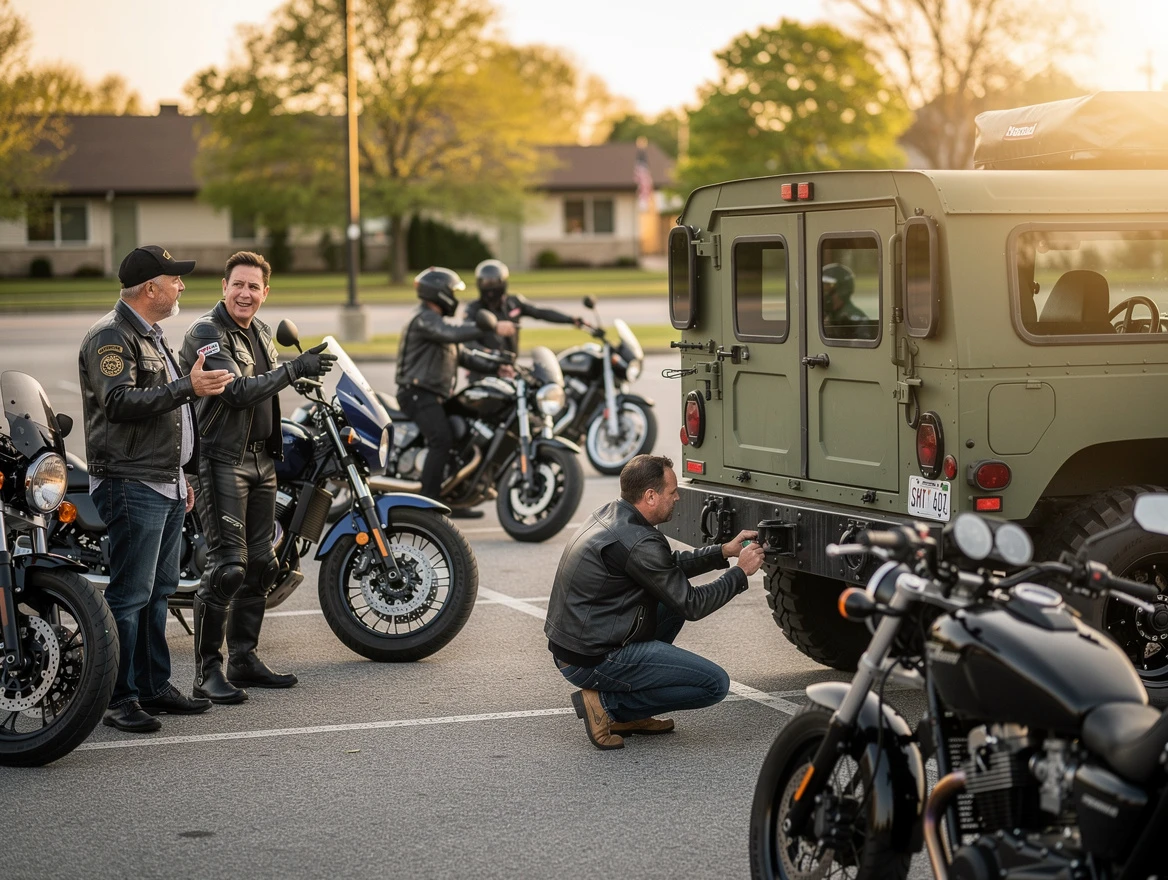
Most group-drive debates end the same way: someone's rig isn't plated, and the whole convoy has to route around public roads. Getting your military vehicle titled and registered isn't complicated if you approach it correctly, but it does require the right documentation from the start.
The SF-97 is the core transfer document issued by the DoD when surplus military property moves to a civilian buyer. Without it, or a substitute document the receiving state will accept, you don't have a clear path to a civilian title. Some states are more flexible than others. Montana is consistently one of the most practical options for HMMWV owners because it has no sales tax, no emissions testing, and handles surplus military vehicle titles through an established process.
Montana specialty plates are also worth knowing about. With 221 designs available, collectors who want their HMMWV to reflect something beyond a standard plate have real options. The montana license plates specialty vehicles path is available to out-of-state owners who form a Montana LLC, which keeps the registration and title under that entity regardless of where the vehicle physically sits.
If you're still working through the documentation side, SF97 Title Process: How to Title Your Surplus Military Vehicle walks through exactly what the form does, when you need it, and what happens if yours is missing or damaged. Also worth reviewing: Military Surplus Vehicle Title Transfer: What Every Collector Needs to Know covers the broader transfer landscape including bonded titles and lien situations.
One customer summed it up well: "I showed up to three group drives with no plates before I finally sorted the title. The Montana LLC route took two weeks. Wish I'd done it before the first event."
FAQ: HMMWV Group Drives, Debates, and Hazard Spotting
Do I need a special license to drive an HMMWV on public roads?
In most states, a standard Class C driver's license covers HMMWV operation on public roads, provided the vehicle is under the commercial weight threshold. Some states require a Class B or higher for vehicles above 26,000 lbs GVWR. Check your state's specific weight classification rules before your first public road drive. The Military Vehicle Safety Requirements: What Every HMMWV Owner Needs to Know post covers this in detail.
Is a DD-1348 enough to title my surplus HMMWV?
A DD-1348 documents the transfer of surplus property from DoD custody, but most states require a SF-97 (Certificate to Obtain Title to a Vehicle) to issue a civilian title. The DD-1348 supports your file but typically can't stand alone. Bring both documents if you have them, and confirm what your state's title office requires before submitting.
Can I register a Humvee in Montana if I don't live there?
Yes. Out-of-state owners form a Montana LLC that holds the vehicle as an asset. The registration and title are issued in Montana through that entity. You don't need to be a Montana resident. This is a straightforward structure that montana llc out of state vehicle registration specialists handle routinely. More detail is at Montana LLC Setup for HMMWV Owners: What You Need to Know.
What's the biggest hazard HMMWV drivers underestimate?
Overhead clearance. Most HMMWV owners think carefully about ground clearance but forget that the vehicle's height creates real risks at drive-throughs, parking structures, and rural roads with low-hanging canopy. Know your exact roof height before you pull into any covered structure. The variant matters too, since a soft-top M998 and an armored M1114 have different profiles.
Where can I find group drives and surplus vehicle events?
Military vehicle owner associations like the Military Vehicle Preservation Association (MVPA) organize national and regional events. Facebook groups organized around specific platforms (M998, LMTV, deuce-and-a-half) also coordinate local drives. Getting your vehicle plated and road-ready before attending any public event is strongly recommended, both for your peace of mind and the convoy's route flexibility.
Does Montana registration cover my HMMWV in all 50 states?
Montana-registered vehicles are titled and plated in Montana through your LLC. You can drive them in any state. However, some states have specific rules about long-term garaging of out-of-state vehicles. If you're keeping the vehicle primarily in one state for an extended period, review that state's residency and registration requirements. The full picture is in Register Military Vehicle in Any State: What Every HMMWV Owner Needs to Know.
Ready to get your HMMWV plated before the next group drive? Our specialists manage the out-of-state paperwork with our paperwork support, so you can focus on the road.